Purple Trapezoid PS2 With a HiFD Floppy Drive and Blocky Silver DualShock 3: Inside PlayStation's Wildest Unreleased R&D Concepts
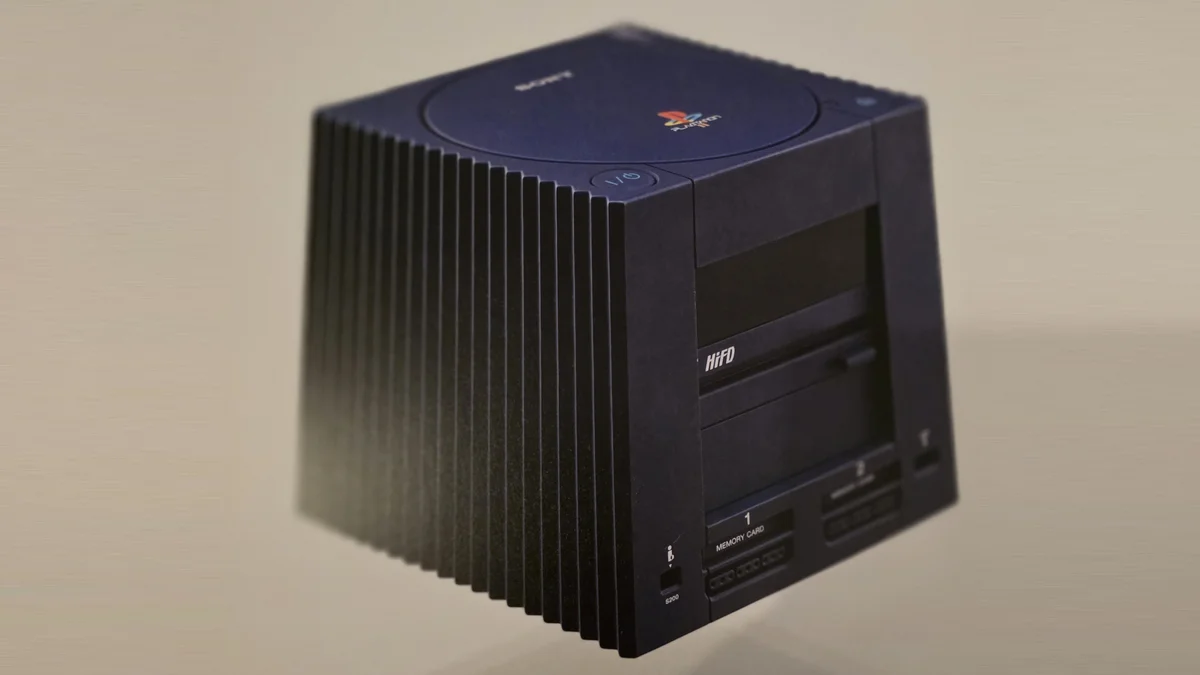
What if the best-selling home console in gaming history had launched as a deep-purple, top-loading cube equipped with a high-density floppy disk drive,a full year before Nintendo unveiled the GameCube? As early copies of the monumental 400-page visual history PlayStation: The First 30 Years begin revealing secrets from Sony's Tokyo R&D vaults, newly shared spreads highlighted by hardware preservation database Consolevariations and publisher Read-Only Memory have uncovered two extraordinary unreleased mockups: a purple trapezoidal PlayStation 2 prototype and an ergonomically baffling silver DualShock 3 concept.
A Deep-Purple Trapezoid PS2 With a Top-Loading Lid and a 200MB HiFD Floppy Drive
Before legendary industrial designer Teiyu Goto finalized the sleek, black monolithic silhouette of the PlayStation 2,famously inspired by the monolith from 2001: A Space Odyssey and the Atari Falcon030 MicroBox,Sony Interactive Entertainment engineers experimented with a radically different form factor. Rather than a flat horizontal or vertical slab, this early study model features a cubic, trapezoidal chassis whose deeply ribbed vertical cooling fins taper inward toward the top surface.
Even more fascinating is how closely the prototype bridges the gap between the 1994 original and the 128-bit era,a contrast anyone who has compared the classic 1994 PlayStation 1 chassis and its circular top-loading lid will immediately spot. The trapezoid PS2 retains a circular top-loading optical bay stamped with a golden PlayStation II Roman numeral logo alongside a large circular I/O power button on the upper front corner, all dressed in a deep indigo-purple finish that predated Nintendo's purple GameCube reveal by over a year. On the tall front fascia, right above the dual Memory Card 1 & 2 slots and an i.LINK S200 (IEEE 1394 FireWire) port, sits a built-in HiFD drive bay. Co-developed by Sony and Fujifilm in 1998, the HiFD was a 3.5-inch high-capacity floppy disk format capable of holding 200 MB per disk,proving Sony seriously weighed giving the PS2 removable magnetic storage before committing to 8 MB MagicGate memory cards and the rear Expansion Bay.
| Sony R&D Prototype | Key Industrial Design & Hardware Features | Final Retail Production Decision |
|---|---|---|
| "Trapezoid" PlayStation 2 (1998-1999 Study) | Purple tapered cube with deep side vents, top-loading disc lid, front 200MB HiFD floppy bay, and i.LINK S200 port | Black monolith with motorized front disc tray, i.LINK S400 port, and 8MB MagicGate cards (SCPH-10000 / 30000) |
| Blocky Silver DualShock 3 (PS3-Era Study) | Flat rectangular face pillars, edge-mounted D-pad, closer analog sticks, slanted Start/Select buttons, and mic aperture | Retained the classic DualShock 2 silhouette for the Sixaxis (2006) and DualShock 3 (2007) after scrapping the E3 2005 Boomerang |
| Modular PlayStation 1 (1993 Study) | Forward-protruding circular CD bay flanked by angled cylindrical Power/Open pods and a bulky rear I/O brick | Symmetrical grey rectangular housing designed by Teiyu Goto (SCPH-1000 launched December 3, 1994 in Japan) |
Rounded Grips Meet Flat Rectangular Pillars: The Unwieldy PS3-Era DualShock Concept
While the infamous silver "Boomerang" prototype from E3 2005 remains PlayStation's most notorious unshipped gamepad, the newly published R&D archives show it was far from the only wild experiment cooked up during the PlayStation 3 development cycle. Photographed in high-resolution studio lighting by Benedict Redgrove for the $125 (€115) hardcover tome, this silver prototype attempts to fuse rounded outer handgrips with two stark, flat-topped vertical blocks.
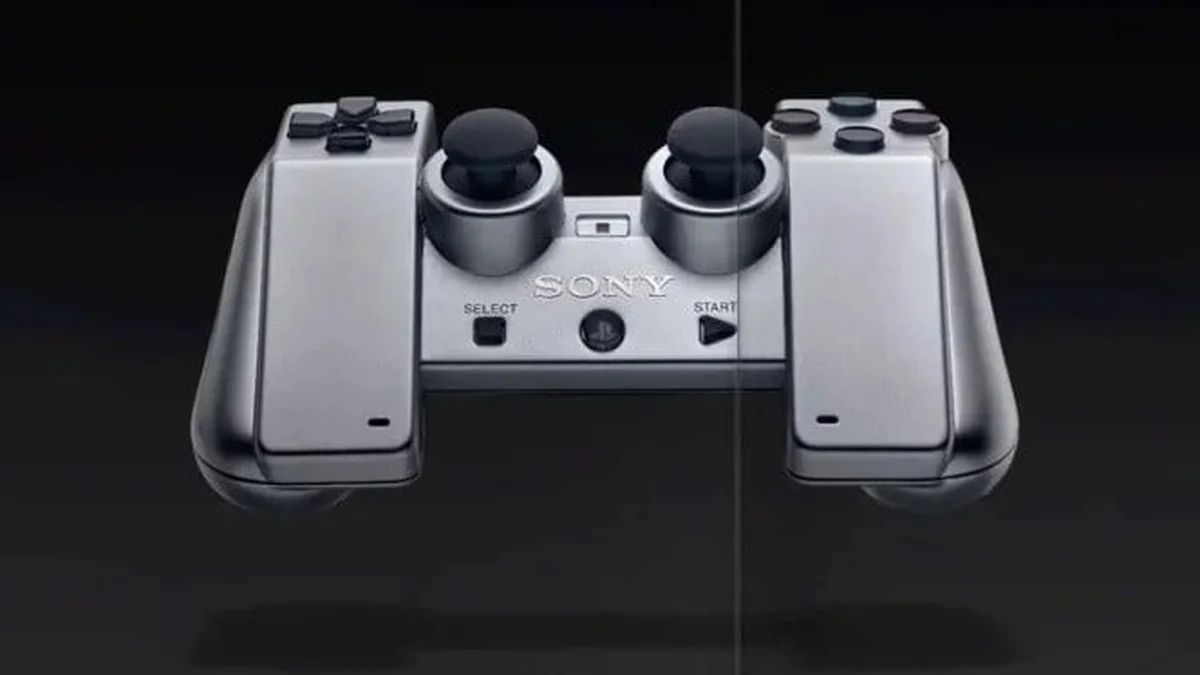
Instead of resting on contoured circular islands, the D-pad and signature geometric face buttons are perched at the very top edges of those flat rectangular slabs. Meanwhile, the two analog thumbsticks are pulled closer together inside thick cylindrical collars, separated by a small rectangular microphone or sensor aperture above the SONY wordmark, the central round PS button, and slanted SELECT and START keys. Even as modern hardware modders continue reimagining Sony's classic form factors,such as the custom PlayStation 2 DUO 7.8-inch foldable handheld,seeing how close the DualShock came to losing its timeless ergonomics before culminating in today's DualSense is a fascinating glimpse into hardware history.
Check Availability for DualSense and PlayStation Gear on Amazon→

My Perspective
I honestly have a huge soft spot for that deep-purple trapezoid PlayStation 2 prototype! Between its chunky vertical cooling fins, the retro top-loading CD lid, and the built-in 200 MB HiFD floppy drive on the front fascia, it looks like a late-90s cyberpunk workstation straight out of Serial Experiments Lain. As for that blocky silver DualShock 3 prototype, however, we clearly dodged a massive bullet: my thumbs are cramping up just looking at how high that D-pad is perched on the sharp edge of a flat plastic slab. It is a great reminder that even Sony's legendary industrial design team had to build a few lab monsters before landing on the iconic hardware we grew up loving.

Based on the outskirts of New York City, Chaya 'Chayane' spent five years studying software engineering in Montreal before returning to her home state. A Full-Stack developer and Deep Learning AI architecture researcher, she explores neural networks and algorithmic optimization while engineering data pipelines for Retrocharting and Gamescharting alongside Grimtag. A gamer for over 20 years and an avid collector of Nintendo history and The Legend of Zelda, she explored World of Warcraft's Azeroth before bringing her deep technical background to video game analysis.