Pro Esports Player Contracts: Fixed-Term Deals, Buyout Clauses, and W-8BEN Explained

For years, the competitive video game industry operated in a global legal gray zone. Young competitors regularly signed one-sided agreements without legal counsel, surrendering streaming rights and facing arbitrary benchings without pay.
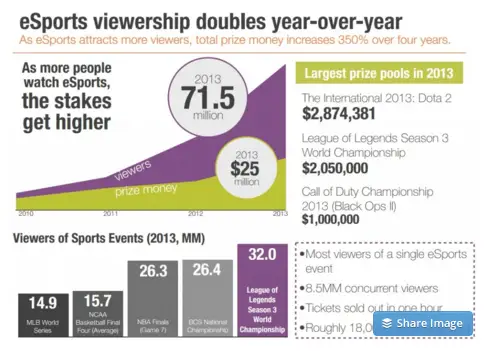
Today, with franchised circuits like the LCS, LEC, VCT, and ESL Pro Tour, esports contracts have transformed into sophisticated corporate agreements.
Currently, thousands of professional players worldwide rely on competitive contracts as their primary livelihood, navigating complex legal frameworks across North America, Europe, and Asia.
As competitive gaming matured into a multi-billion dollar ecosystem, governing bodies and national labor laws stepped in to establish formal standards. Here is an essential breakdown of what every player, manager, and agent must know before putting pen to paper.
From minimum guaranteed salaries in franchised leagues to the legal intricacies of international prize distribution, understanding your rights is paramount.
Let us dive deep into the essential clauses governing modern pro esports contracts.

Fixed-Term Employment vs. Independent Contractor Status
The foundation of any pro gamer contract begins with worker classification: are you an employee on a fixed-term contract or an independent contractor?
Historically, esports organizations misclassified players as independent contractors (such as 1099 contractors in the US or sole proprietors in Europe) to sidestep payroll taxes, healthcare obligations, and statutory protections.
Today, major franchised leagues like Riot's LCS and LEC mandate formal fixed-term employment contracts with statutory benefits, workers' compensation, and defined terms ranging typically from one to three years.

In the European Union and South Korea, dedicated sports legislation guarantees esports athletes structured fixed-term agreements with social security protections, preventing abusive sudden terminations.
This framework allows pro players to sign designated professional contracts rather than relying on precarious freelance gigs.

This status offers critical stability: teams cannot withhold guaranteed base pay when benching a player, and minimum salary floors (such as the $75,000 annual minimum in the LCS) protect players from predatory non-payment.
Buyout Clauses and Transfer Fees Explained
In competitive esports, buyouts have become high-stakes chess matches between tier-one organizations.
 A buyout clause dictates the pre-agreed sum a competing organization must pay to release a player from their contractual obligations before their deal expires.
During the venture capital bubble, aggressive teams inserted multi-million dollar buyout clauses that effectively locked bench players into contract prison, preventing them from signing elsewhere even when not competing.
Today, savvy player agents insist on descending buyout scales (where the buyout price drops each transfer window) or performance-release clauses allowing players to leave if the team fails to qualify for international events.
Without clearly defined transfer windows and buyout rules, players remain vulnerable to contractual gridlock.
In comparison to established traditional athletes, pro gamers historically operated under precarious terms.
 In South Korea, the pioneer of modern esports, KeSPA (Korea e-Sports Association) established standardized labor templates early on, setting global precedents for housing, health checks, and youth protections.
Pioneering Western players frequently relocated overseas to build legitimate competitive careers, exemplified by early StarCraft stars like Elky.
In North America, the implementation of P-1A athletic visas officially categorized esports competitors as professional athletes, enabling foreign imports to legally earn US salaries and prize money without immigration hurdles.
Prize Money Splits, Revenue Sharing, and Streaming Rights
Tournament prize pools and digital revenue sharing (such as CS2 sticker money or Valorant Champions skin bundles) can eclipse base player salaries.
Industry standard contracts typically award 80% to 90% of tournament cash prizes directly to players and coaches, with the organization retaining a 10% to 20% cut to cover tournament travel and operational overhead.
Beware of predatory clauses that demand 50% cuts of personal Twitch stream revenues or individual brand sponsorships.

Contract clarity is equally critical regarding commercial obligations: players must know how many hours of sponsor activations, photo shoots, and streaming broadcasts are mandatory per month.
Furthermore, transparent accounting procedures must be explicitly written into every deal to ensure prize distributions occur within strict 30-day windows.
The global competitive gaming market now represents a multi-billion dollar economy, making standardized commercial standards mandatory.

Whenever an international player competes in a tournament hosted in the United States (or receives prize money distributed by a US-based publisher like Valve or Riot Games), they encounter the IRS Form W-8BEN (Certificate of Foreign Status of Beneficial Owner for United States Tax Withholding).
Without an accurate W-8BEN on file, the IRS automatically withholds a staggering 30% flat tax on all prize money and royalties at the source.
By completing the form and claiming bilateral tax treaty benefits between the US and your country of tax residence, withholding rates can often be reduced to 0% to 15%, preventing double taxation.
Understanding international tax compliance is vital for every competitor traveling internationally for LAN tournaments.
Tax treaties between North American, European, and Asian jurisdictions require meticulous documentation of where income is earned.
Never sign an esports contract without independent legal representation.
A sports attorney or certified agent pays for themselves tenfold by catching hidden clawback clauses, unfair exclusivity restrictions, and unilateral extension options.
International player associations have emerged across multiple titles to advocate for standardized, enforceable player rights.
Global organizations and player associations (like the LCSPA in North America or the ELPA in Europe) have championed standardized contracts to ensure competitive integrity.
These bodies work to eliminate one-sided non-compete covenants that previously barred players from competing for up to a year after leaving a squad.

The 4 Red Flags to Audit Before Signing

Before executing your contract, watch out for these dangerous traps:
- Unilateral Bench Pay Reductions: Clauses that slash your monthly salary by 50% or more if moved to reserve status.
- Perpetual Name, Image, and Likeness (NIL) Rights: Clauses granting the team ownership of your gamertag or likeness indefinitely after contract expiration.
- Indefinite Buyout Lockouts: Astronomical buyout sums with no performance-based reduction schedule.
- Vague Prize Payout Timelines: Lack of strict deadlines for forwarding tournament earnings to players.
The pro gaming scene has outgrown the handshake era. In 2026, building a lasting esports career requires understanding your legal worth, protecting your intellectual property, and ensuring that every agreement on paper matches the dedication you bring to the server.

SEO consultant for over 20 years and digital entrepreneur, Charles 'Grimtag' Ronchain is the founder of Pro-Gamer.gg, Retrocharting.com, and Gamescharting.com. A competitive gamer, streamer, and retro game collector, he has worked in the video game industry for over 15 years, notably as a consultant for leading game price comparison platforms. Passionate about real-time performance data and gaming technology, he analyzes competitive esports, gaming hardware benchmarks, and creator workflows on Pro-Gamer.gg with an authentic player perspective.