Outdoor Radiator at -4°C, Arduino Valve, and a 37°C RTX 4070 Ti Super: How a PC Modder Built a Winter Split-Cooling Loop

Running a high-end gaming rig inside a room with underfloor heating quickly turns a study into a sauna, even when outdoor winter temperatures drop to -4°C (25°F). Rather than constantly cracking open a window between matches, Reddit modder u/Motor_Attention1865 on r/pcmasterrace engineered a split water-cooling loop that operates like a residential mini-split heat pump. By routing an auxiliary radiator to the outside wall of his home and automating coolant mixing with an Arduino Mega, he keeps his graphics card at 37°C and his processor at or below 50°C under gaming loads without a single drop of condensation.
Delidded Core Ultra 7 270K Plus, Water-Cooled DDR5-8400, and Dual D5 Pumps
Even before the tubing passes through the wall, the internal loop inside the chassis checks every box for extreme custom liquid cooling. The Intel Core Ultra 7 270K Plus processor has been delidded and paired with a Thermal Grizzly LGA 1851 Mycro Direct-Die Pro water block using Conductonaut Extreme liquid metal, following the same enthusiast cooling philosophy seen on the Thermal Grizzly DeltaMate MPII Intel 1851 water block.
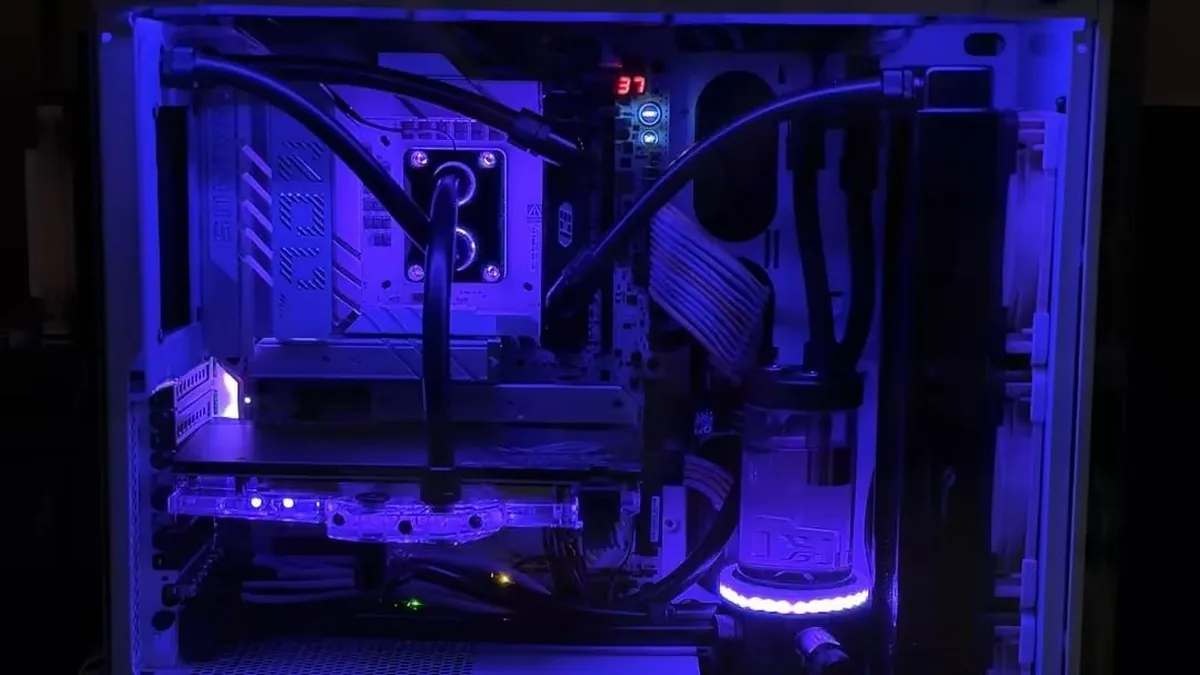
His NVIDIA GeForce RTX 4070 Ti Super is fitted with a Bykski water block, while the 2x24GB (48GB) kit of G.Skill DDR5-8400 memory uses Bykski heat spreaders topped by a dual-channel IceManCooler memory block. Under light workloads, the internal loop dissipates heat through a 360mm front radiator and a 120mm rear radiator driven by an EK-Quantum Kinetic D5 pump-reservoir combo.

Thermal Grizzly Direct-Die & Liquid Cooling Gear
- LGA 1851 Direct-Die Water Blocks
- Conductonaut Extreme Liquid Metal
- Enthusiast Thermal Performance
An Outdoor Alphacool XE240 Radiator and Antifreeze Rated Down to -28°C
To dump excess thermal energy straight outside when gaming workloads spike, the modder built a secondary enclosure positioned right next to the PC. This box houses a second Bykski D5 pump and reservoir that pushes coolant through a cored, vapor-sealed wall opening wrapped in thick closed-cell foam pipe insulation.
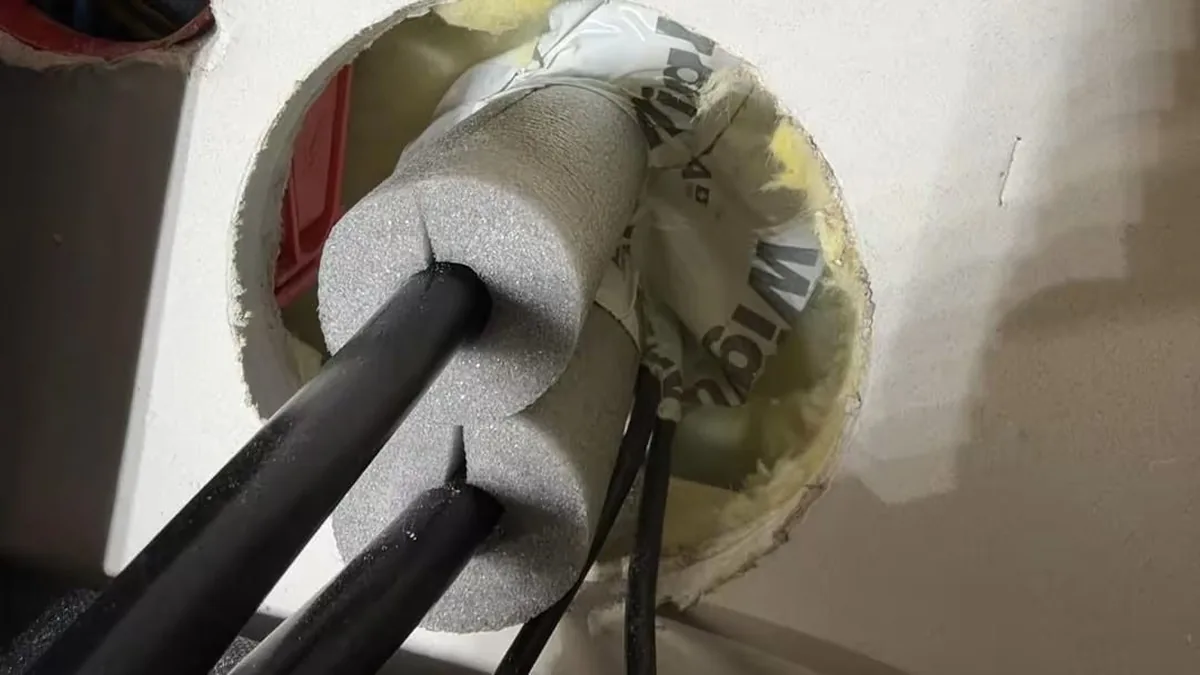
Mounted outside under the eaves, a thick 240mm Alphacool NexXxoS XE240 radiator is paired with two industrial Noctua NF-F12 iPPC-3000 PWM fans rated up to 3,000 RPM. Unlike a self-contained indoor dock such as the Colorful Star Wind S1 external watercooling dock, this outdoor heat exchanger sits directly in sub-freezing winter air. To prevent the coolant from freezing solid when the system is powered down, the builder mixed pure ethylene glycol into his Aquacomputer Double Protect Ultra Clear fluid, dropping its freezing point from -18°C down to -28°C.
Check Availability for Noctua NF-F12 iPPC-3000 on Amazon→
Arduino Mega Three-Way Valve Automation: Beating Condensation and Load Benchmarks
The biggest threat when pumping sub-zero outdoor coolant into an indoor PC is condensation: if the liquid temperature drops below the room's dew point, moisture from the indoor air will rapidly condense into water droplets across fittings, motherboard VRMs, and the GPU backplate. To prevent hardware damage, the PC launches a Python script at boot that communicates continuously with an Arduino Mega microcontroller.
The Arduino reads data from three inline coolant temperature probes alongside three ambient temperature and humidity sensors placed inside the case and around the room. Using real-time dew point calculations, it dynamically adjusts a motorized three-way valve and modulates the outdoor Noctua fan speeds. The outdoor radiator stays bypassed during idle tasks and only blends in enough chilled fluid under load to keep the loop safely above the condensation threshold.
- GeForce RTX 4070 Ti Super Gaming Temps: 37°C during normal gaming sessions (and 48°C under the heavy 3DMark Steel Nomad stress test).
- Intel Core Ultra 7 270K Plus Gaming Temps: 45°C to 50°C while gaming (peaking at just 52°C during multi-core Cinebench R23 runs).
- Dew Point Protection: Automated three-way motorized valve and fan control with automatic outdoor loop cutoff if sensor communication drops.
My Take on the Spec Sheet
I have seen plenty of winter cooling experiments where enthusiasts simply hung a radiator out an open window, only to short out a motherboard forty minutes later once condensation started dripping off the fittings. What makes Motor_Attention1865's build stand out to me is the closed-loop industrial control logic behind it. By combining a motorized three-way mixing valve with live humidity and dew point telemetry on an Arduino Mega, he gets chiller-grade thermal headroom without the power bill or the mess of insulating his motherboard socket with neoprene foam. The only unintended side effect is a funny one: the internal case radiators now blow such cool air under his desk that his feet get cold while gaming. We have not yet had a physical unit on our desk,if the manufacturer's team would like to send over a review sample so we can put it through our full real-world testing protocol, our lab doors are wide open.

PC hardware enthusiast and competitive gamer, Arthur 'Heimdall' splits his time between France and the UK working in enterprise B2B software solutions. A business school graduate passionate about component benchmarking, he has been building, modding, and tuning PCs since childhood, optimizing every thermal degree and millisecond of display latency. An avid gamer across Assassin's Creed and sandbox titles, he forged his alliance with Grimtag and Chaya during late-night World of Warcraft raids before joining Pro-Gamer.