Over 50,000 CUDA Cores and 7th-Gen NVLink on a Single Chip: NVIDIA Unveils the Rubin HPC GPU for 2028
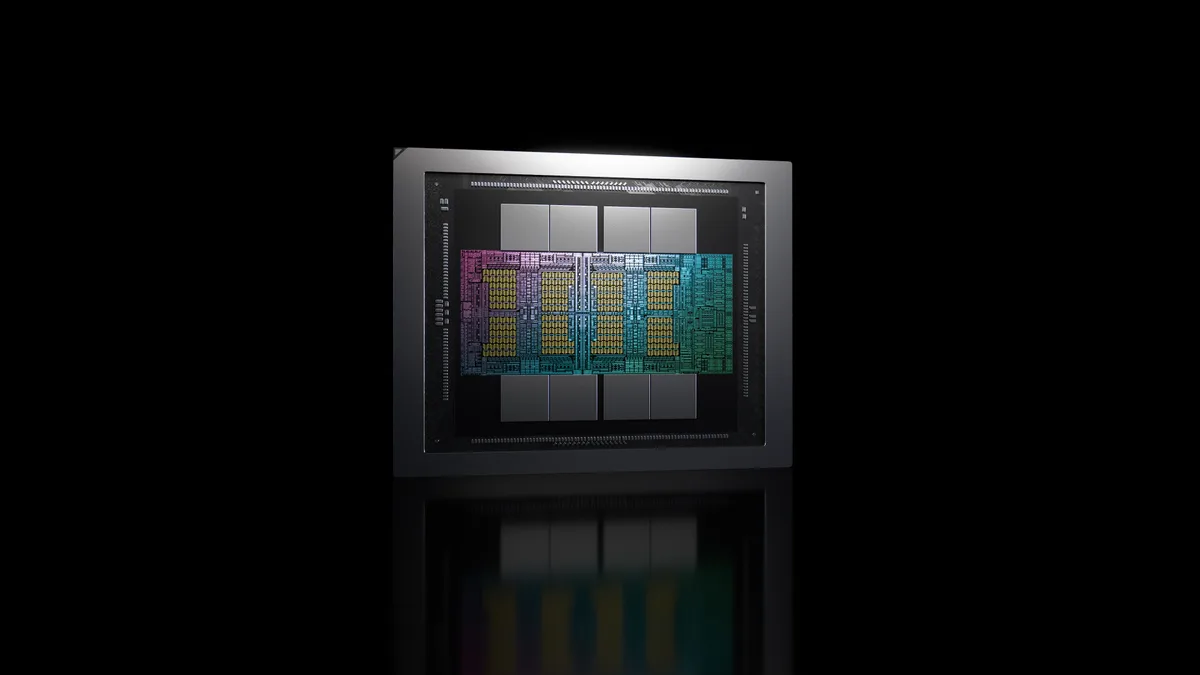
Breaking the 50,000 CUDA core barrier on a single GPU is officially a reality on NVIDIA's hardware roadmap. During the opening of the SC26 (Supercomputing 2026) conference on November 16, 2026, NVIDIA unveiled the Rubin HPC, a specialized graphics processor within the NVIDIA Vera Rubin platform engineered to accelerate scientific simulations, industrial engineering, and large-scale data analytics.
To put that silicon density into perspective for PC hardware enthusiasts, today's flagship consumer graphics card, the GeForce RTX 5090 (powered by the GB202 Blackwell die), ships with 21,760 active CUDA cores, while custom enthusiast boards like the GALAX GeForce RTX 5080 HOF Extreme push current consumer silicon to its thermal limits. By packing more than 50,000 CUDA cores onto a single GPU, Rubin HPC more than doubles the compute array of a top-tier desktop graphics processor.
Over 50,000 CUDA Cores, 7th-Generation NVLink, and Sparse Data Acceleration
Scaling raw compute units to such heights introduces a classic architectural bottleneck: keeping tens of thousands of cores fed with data so they do not sit idle waiting on memory fetches. Across climate modeling, computational fluid dynamics, genomic sequencing, and financial risk analysis, workloads constantly reach into massive datasets to gather scattered values before computing a result.
To prevent memory starvation, NVIDIA designed the Rubin HPC to scale data movement and compute together through three core pillars:
- Hardware Sparse Data Acceleration: A dedicated subsystem that supplies the 50,000+ CUDA cores with scattered data streams, accelerating recurring simulation patterns including sparse matrix operations, stencil computations, sorting, and reductions.
- Seventh-Generation NVIDIA NVLink: While initial Vera Rubin systems utilize 6th-generation interconnects, Rubin HPC debuts 7th-generation NVLink technology to dramatically boost GPU-to-GPU bandwidth across multi-node clusters.
- NVIDIA CUDA-X Library Integration: Optimized software pipelines that allow AI agents to propose candidate molecules or structural designs and immediately validate them through physics-based simulations.
A 2028 Launch Window and What It Means for the PC GPU Roadmap
According to Ian Buck, Vice President of Hyperscale and High-Performance Computing at NVIDIA, the processor is built specifically for workflows where autonomous agents and researchers iterate on physical prototypes: "For agents tackling science and engineering, faster simulation means faster discovery. Rubin HPC accelerates the simulations agents use to test ideas and guide their next steps, helping scientists and engineers explore more possibilities and bring breakthroughs closer."
NVIDIA expects the Rubin HPC GPU to become available in 2028. At a time when the company's long-term strategic leadership is under intense scrutiny, as seen in recent reports on NVIDIA's succession planning around Jensen Huang and Arm CEO Rene Haas, this 2028 target underscores how deeply enterprise AI and supercomputing contracts lock down advanced TSMC wafer capacity and high-speed memory supply for years ahead. While PC gamers will eventually benefit from Rubin's architectural efficiency in future GeForce RTX 60-series cards, enterprise silicon clearly remains at the front of the fabrication queue.
Check Availability for NVIDIA GeForce RTX on Amazon→
My Take on the Spec Sheet
Looking closely at the architectural specifications Ian Buck shared at SC26, what stands out to me most is not just the headline figure of 50,000 CUDA cores, but how NVIDIA is tackling memory starvation head-on. On my test bench, even today's fastest Blackwell GPUs frequently hit memory subsystem ceilings before exhausting their raw shader compute in bandwidth-heavy workloads. Pairing 7th-generation NVLink with dedicated sparse data acceleration shows that the Rubin architecture is built around feeding cores efficiently rather than just inflating TeraFLOPS on paper. It is an impressive engineering milestone for 2028, even if desktop gamers will have to wait their turn behind hyperscale laboratories to experience Rubin silicon firsthand.

PC hardware enthusiast and competitive gamer, Arthur 'Heimdall' splits his time between France and the UK working in enterprise B2B software solutions. A business school graduate passionate about component benchmarking, he has been building, modding, and tuning PCs since childhood, optimizing every thermal degree and millisecond of display latency. An avid gamer across Assassin's Creed and sandbox titles, he forged his alliance with Grimtag and Chaya during late-night World of Warcraft raids before joining Pro-Gamer.