Wiretaps and $4.8 Billion in AI GPUs: How U.S. Intelligence Uncovered a Suspected Beijing Operative Inside Jensen Huang's Circle
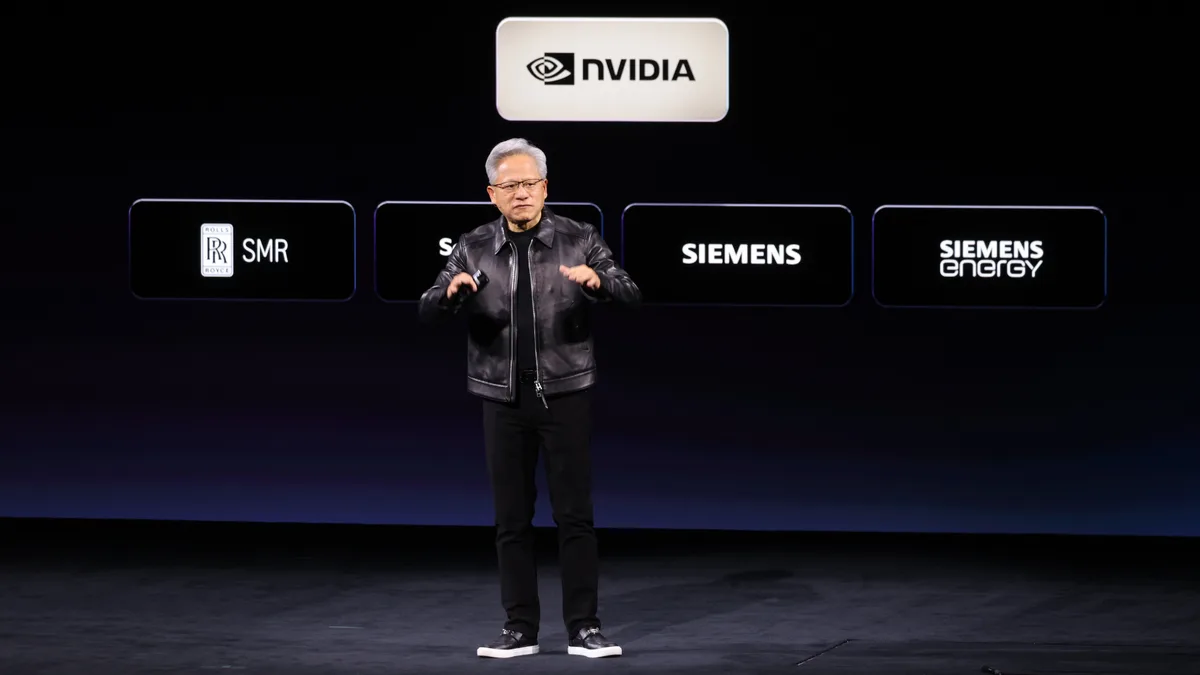
At the height of the global semiconductor race, the high-profile banquets and night-market gatherings on the sidelines of Taipei's Computex trade show have taken on the contours of a modern espionage thriller. According to an investigation published by The New York Times, U.S. intelligence agencies discovered that Nvidia CEO Jensen Huang developed a close professional and social rapport in 2024 and 2025 with a regional cloud executive who was under long-term U.S. electronic surveillance and assessed by Washington to be acting as an intelligence asset for Beijing.
An Intelligence Unmasking That Revealed the Nvidia Chief
The investigation began far from Silicon Valley, inside U.S. national security agencies tracking the global flow of restricted artificial intelligence hardware. Intelligence officials had placed Alice Huang (also known as Huang Le, and unrelated to the Nvidia co-founder) under electronic surveillance. A Chinese citizen, she served as a top executive at Megaspeed, a Singapore-based data center and AI cloud provider formed in 2023 after spinning off the international operations of Chinese gaming and cloud computing company 7Road.
As U.S. analysts monitored Alice Huang over suspicions that she was relaying commercial and strategic information to Beijing, they noticed repeated communications with a U.S. person whose identity was initially redacted under standard foreign intelligence privacy rules. When officials approved a formal unmasking request to identify the American on the other end of the line, they realized she was in regular contact with Jensen Huang himself.
$4.8 Billion in Nvidia Hardware and High-Profile Dinners in Taipei
How did an executive at a newly minted regional cloud firm gain direct access to the world's most sought-after technology chief? Trade records and federal export reviews cited in the investigation point to massive hardware orders. Between 2024 and 2025, Megaspeed and its Malaysian subsidiary Speedmatrix purchased or imported between $4.6 billion and $4.8 billion worth of servers packed with advanced Nvidia AI chips.
Photographed socializing alongside Jensen Huang at industry dinners and gatherings in Taipei around Computex 2024 and 2025, Alice Huang appeared to represent the booming Southeast Asian cloud sector. Inside Washington, however, national security officials worried about a dual threat: first, that Megaspeed's sprawling server farms in Malaysia and Singapore could be used to funnel restricted AI compute or hardware to Chinese entities, at a time when over $100 million in AI data center servers and GPUs have already been stolen from U.S. freight trucks since June; and second, that her proximity to Nvidia's chief executive could give Beijing insight into upcoming chip roadmaps and White House export policy discussions.
White House Restraint and Nvidia's Official Pushback
According to The New York Times, U.S. investigators found no evidence that Jensen Huang knew of Alice Huang's alleged intelligence role. Yet despite briefing President Donald Trump on the findings roughly a year ago, the administration opted against taking immediate disruptive action or delivering a formal defensive counterintelligence briefing to the Nvidia CEO, reportedly out of concern that doing so could disrupt multibillion-dollar chip sales and delicate U.S.-China trade negotiations.
Addressing the report, Nvidia spokesperson John Rizzo dismissed suggestions that sensitive secrets were ever at risk, noting that Jensen Huang meets with thousands of customer executives every year and that Megaspeed received only standard commercial support provided to regional cloud partners rather than national security information or proprietary trade secrets. Nvidia also stated that its own compliance checks of Megaspeed's facilities found no evidence of illegal chip diversion, while Chinese Embassy spokesperson Liu Pengyu rejected the U.S. findings as "groundless speculation and pure smears."
On the hardware front, the episode underscores the sheer scale of capital chasing every wafer coming out of Taiwan, right as Nvidia, AMD, and Intel commit $5 billion to Taiwanese ABF substrate lines to lock down future GPU and CPU packaging capacity.
My Take
Beyond the geopolitical spy drama making waves in Washington, one number in this investigation should stop every PC builder in their tracks: $4.8 billion worth of Nvidia hardware absorbed in less than two years by a single Southeast Asian cloud spin-off that barely existed three years ago. While everyday PC gamers deal with inflated GeForce RTX street prices and tight retail supply, billions of dollars in TSMC silicon and high-speed memory are being swallowed up by opaque middlemen racing to rent AI compute across borders. The fact that Washington reportedly sat on these findings for a year to avoid denting Nvidia's revenue tells you everything about where priorities lie right now: as long as multi-billion-dollar wires keep clearing, consumer GPU supply will remain an afterthought in a much larger geopolitical gold rush.

SEO consultant for over 20 years and digital entrepreneur, Charles 'Grimtag' Ronchain is the founder of Pro-Gamer.gg, Retrocharting.com, and Gamescharting.com. A competitive gamer, streamer, and retro game collector, he has worked in the video game industry for over 15 years, notably as a consultant for leading game price comparison platforms. Passionate about real-time performance data and gaming technology, he analyzes competitive esports, gaming hardware benchmarks, and creator workflows on Pro-Gamer.gg with an authentic player perspective.