'Easier Than Robbing a Bank': How Thieves Have Stolen Over $100 Million in AI Data Center Servers and GPUs Since June

A standard 53-foot semi-trailer loaded with artificial intelligence data center hardware now holds vastly more financial value than the vault of a regional bank branch. Since June 2026, organized criminal networks have stolen more than $100 million worth of critical computing equipment across U.S. highways. From liquid-cooled GPU server racks to pallets of enterprise DDR5 and HBM memory modules, highway freight has become the most exposed vulnerability in the global semiconductor supply chain.
Why AI Server Shipments Are Being Called Pure Gold Bars
The figures compiled by cargo security investigators illustrate an unprecedented shift in organized theft. Speaking in an investigative report published by NBC News, Keith Lewis, Vice President of Operations at supply chain risk firm Verisk CargoNet, summed up why criminal syndicates have pivoted to data center logistics: "It's like stealing pure gold bars. We've seen some of these thefts go up into 30-plus million dollars for one particular shipment. It's so much easier to steal this than to rob a bank."
Separate intelligence tracking from supply chain risk management firm Overhaul places cumulative annual losses tied to AI infrastructure equipment at over $150 million. Where highway cargo thieves historically targeted consumer televisions, appliances, or footwear that could be fenced locally, organized groups now target the extreme value density of enterprise silicon.
Mojave Desert Ambushes and GPS Spoofing in Texas
The surge documented since June 2026 combines brazen physical roadside interceptions with sophisticated digital infiltration of freight brokers. Two multi-million-dollar highway heists highlight how far criminal crews are willing to go to separate security teams from their trailers:
- The $13 Million Mojave Desert Heist: In early June, a semi-trailer hauling approximately $13 million in computer server equipment toward a data center campus in Fayetteville, Georgia, was crossing California's Mojave Desert. An unmarked vehicle carrying off-duty law enforcement officers was shadowing the truck as a private security escort. On the interstate, an accomplice vehicle intentionally rammed the escort car in a coordinated bump-and-run collision, forcing the officers to pull over while the tractor-trailer kept driving. Authorities recovered the trailer completely empty the next day in Stockton, California.
- The $10 Million San Jose-to-Texas Interception: Roughly three weeks later, a shipment carrying $10 million in server-rack components from San Jose, California, toward a Texas data center project suffered an identical ambush. After a staged collision disabled the security escort vehicle, thieves deployed GPS spoofing technology to feed false location telemetry back to dispatchers, making the trailer appear to be moving normally along its route while the hardware was unloaded into an unauthorized warehouse.
Beyond physical highway ambushes, Danny Ramon, Director of Intelligence and Response at Overhaul, notes that 92% of technology cargo thefts rely on digital deception rather than brute force. By compromising freight-broker accounts through phishing, hijacking legitimate carrier identities, and generating falsified dispatch paperwork, crime rings routinely walk away with tens of millions of dollars in processors and memory straight from loading docks.
From U.S. Highways to $12 Million Customs Seizures Overseas
How do criminal networks offload enterprise AI accelerators and server blades that carry serialized manufacturer tracking? Insatiable global demand for compute capacity alongside strict U.S. export controls has fueled an international gray market willing to purchase high-density servers outside official warranty channels.
Underscoring the scale of this global pipeline, the Royal Malaysian Customs Department announced this week that officers seized 30 high-performance AI server units inside the free trade zone at Kuala Lumpur International Airport (KLIA). Valued at 49.5 million Malaysian ringgit ($12.11 million USD), the servers had been falsely declared on customs manifests as standard "electronic components" to bypass export permits required under Malaysia's Strategic Trade Act 2010. According to airport customs director Aspalila Ag Tuah, the bust marks the fifth interception this year linked to the same smuggling syndicate, pushing total seizures from that single network past $24 million.
What Cargo Theft Means for the Broader PC Hardware Market
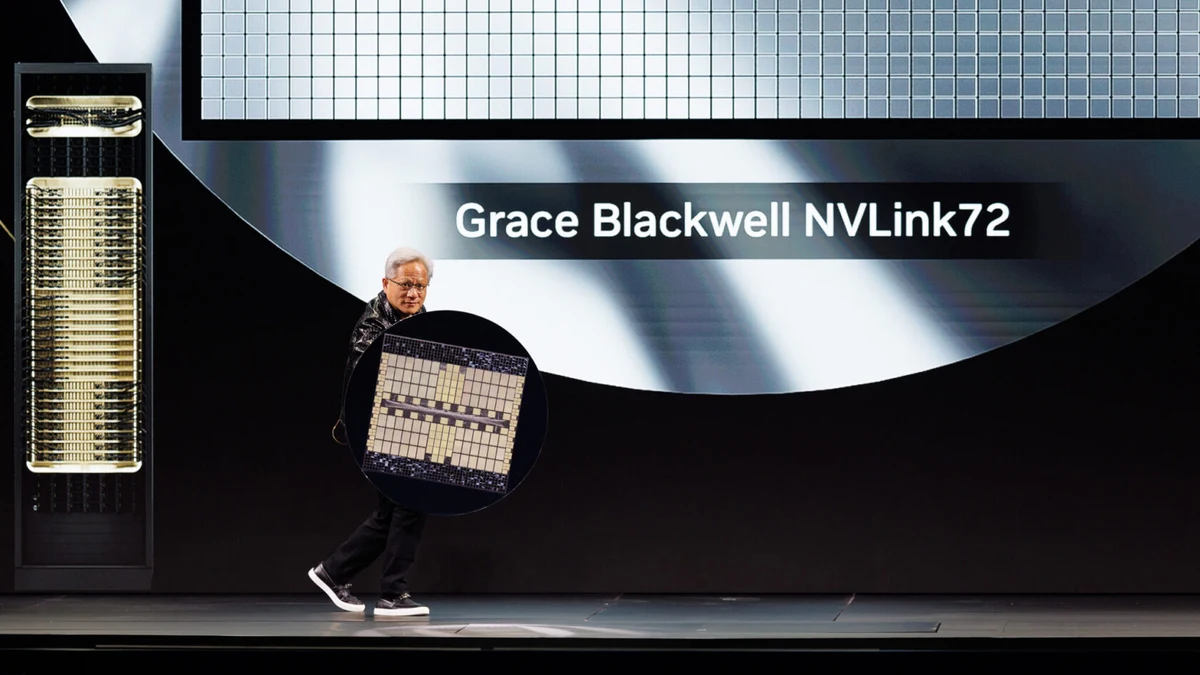
The economics behind the crime wave come down to unmatched value density per cubic foot. When a single NVIDIA GB200 NVL72 Blackwell cabinet packs 72 GPUs and 36 CPUs at a price tag near $3 million, just ten racks or a few pallets of enterprise DDR5 and HBM memory modules turn a standard truckload into a $30 million rolling vault.
For the wider hardware ecosystem, losing over $100 million in transit compounds the HBM4 boom keeping PC DDR5 RAM and NVMe SSD supply tight. Skyrocketing cargo insurance premiums, mandatory armed escort convoys, and urgent replacement orders for stolen silicon wafers all add friction and cost to the semiconductor supply chain just as PC builders look toward recent architectural upgrades across GeForce RTX GPUs.
My Take
When you look at the price-per-kilogram of an AI server pallet or registered DDR5 memory shipment in 2026, the real surprise is not that organized crime rings are targeting semi-trucks, but that shipments worth $10 million to $30 million were ever moving in standard trailers in the first place. A physical bank branch rarely keeps more than a few hundred thousand dollars in cash on hand behind time-locked vaults, whereas logistics contractors have been hauling multi-million-dollar loads of NVIDIA silicon and high-bandwidth memory behind a simple padlock and a GPS tracker. Until cloud hyperscalers and hardware vendors enforce hardware-level cryptographic locking and armored transport protocols, every hijacked trailer on the interstate ultimately feeds back into higher insurance overhead and tighter component supply for everyone else.

SEO consultant for over 20 years and digital entrepreneur, Charles 'Grimtag' Ronchain is the founder of Pro-Gamer.gg, Retrocharting.com, and Gamescharting.com. A competitive gamer, streamer, and retro game collector, he has worked in the video game industry for over 15 years, notably as a consultant for leading game price comparison platforms. Passionate about real-time performance data and gaming technology, he analyzes competitive esports, gaming hardware benchmarks, and creator workflows on Pro-Gamer.gg with an authentic player perspective.