From 1.2 to 79 FPS and 96% Less VRAM: How Microsoft's Biggest DirectX Raytracing Upgrade Since 2018 Boosts GeForce RTX, Radeon RX, and Intel Arc GPUs
Eight and a half years after the initial debut of DirectX Raytracing (DXR) in March 2018, Microsoft's DirectX engineering team has simultaneously released the DirectX 12 Agility SDK 1.620 Retail and Agility SDK 1.722 Preview packages. Detailed by Ross Coken, Isaac Bender, and Amar Patel on the official Microsoft DirectX Developer Blog, this update marks the most substantial architectural overhaul to real-time raytracing on Windows since its inception, building directly on February 2026's Shader Model 6.9 (DXR Tier 1.2) release that standardized Shader Execution Reordering (SER) and Opacity Micromaps (OMM).
The core mission of Agility SDK 1.722 is to eliminate the heaviest bottleneck in modern 3D engines: the prohibitive CPU overhead, GPU build time, and video memory (VRAM) footprint required to maintain raytracing acceleration structures across dynamic open worlds and micropolygon-dense environments.
Clustered Geometry (CLAS): Raytracing Full-Detail Meshes Instead of Low-Poly Proxies
Historically, DirectX 12 raytracing relied on rigid Bottom-Level Acceleration Structures (BLAS) that were computationally expensive to rebuild whenever meshes deformed, animated, or streamed into view. To stay within strict 16.6 ms or 8.3 ms frame budgets, developers frequently had to feed simplified low-poly proxy meshes into the raytracing pipeline rather than the high-detail geometry rendered during rasterization, causing mismatched raytraced shadows and reflections.
With Agility SDK 1.722 Preview and Shader Model 6.10, Microsoft brings native Clustered Geometry to the Direct3D 12 API, standardizing concepts previously restricted to vendor-specific implementations such as NVIDIA's RTX Mega Geometry. Instead of rebuilding monolithic meshes from raw triangles, Clustered Geometry breaks geometry down into modular, reusable building blocks called CLAS (Cluster Level Acceleration Structures), each containing an indexed mesh of up to 256 triangles and 256 vertices.
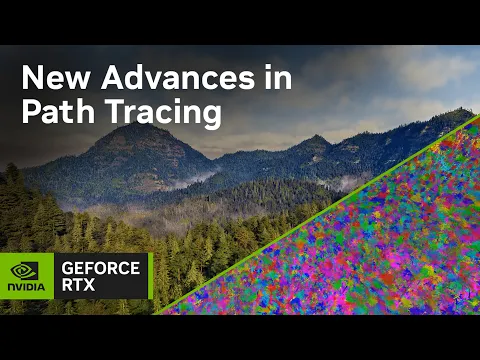
Applications assemble a Cluster BLAS from lists of CLAS references, aligning naturally with modern meshlet-driven rendering pipelines (such as Unreal Engine 5's Nanite). For deforming and animated meshes, the API introduces Cluster Templates: position-independent topology is precomputed once, allowing a compute shader to generate current vertex positions and instantiate CLAS on the fly every frame. Microsoft also added the COMPRESSED1 fixed-point vertex encoding format, which stores packed integer offsets from a shared cluster anchor and power-of-two scale rather than three full 32-bit floating-point coordinates per vertex.
From 1.2 FPS to 79 FPS: Inside Microsoft's 66x Performance Benchmark
To demonstrate the real-world impact of cluster-based acceleration structures, Amar Patel shared benchmark telemetry from Microsoft's new open-source D3D12RaytracingClusteredGeometry sandbox running on an AMD Radeon RX 9070 GPU. In a heavy test scene combining procedural objects and animated template instantiation, switching from traditional per-frame BLAS rebuilds to Clustered Geometry completely transforms performance:
| Metric (D3D12 Test Scene on AMD Radeon RX 9070) | Traditional BLAS Rebuild | Clustered Geometry (SDK 1.722) | Measured Delta |
|---|---|---|---|
| Average Frame Rate | 1.2 FPS | 79 FPS | ~66x higher |
| Per-Frame GPU AS Preparation / Build Time | 788 ms | 3.11 ms | ~254x less time |
| Per-Frame GPU Raytracing Time | 72.6 ms | 9.27 ms | ~7.8x less time |
| Animated AS Memory Footprint (VRAM) | 6,794 MiB | 244 MiB | 96.4% less memory |
| Total AS Memory (Including TLAS) | 7,519 MiB | 774 MiB | 89.7% less memory |
Cutting total acceleration structure memory from nearly 7.5 GB down to 774 MiB provides massive relief for 12 GB and 16 GB graphics cards running path-traced titles at 1440p and 4K.
Partitioned TLAS (PTLAS) and GPU-Driven Indirect Acceleration Builds
At the scene-wide level, Agility SDK 1.722 introduces Partitioned Top-Level Acceleration Structures (PTLAS). In vast open-world games, moving a handful of vehicles, characters, or destructible props traditionally forced engines to rebuild the entire top-level scene graph (TLAS) every frame. PTLAS divides the world into independent spatial partitions alongside a dedicated global partition for constantly moving entities.
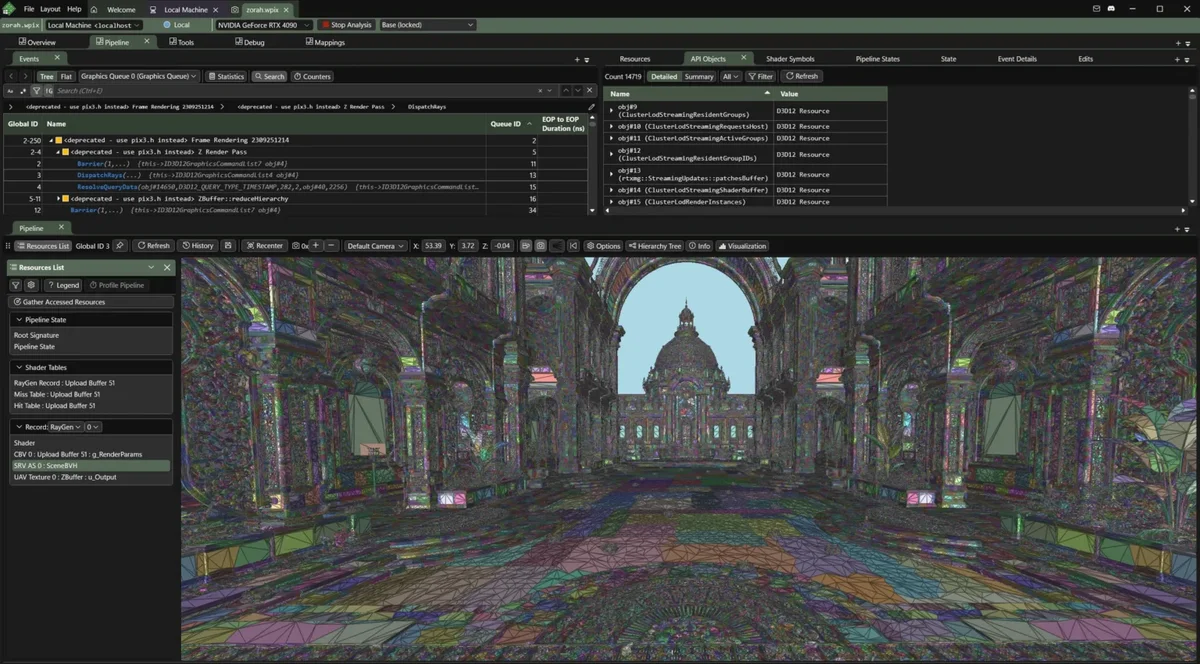
Instead of global rebuilds, update costs are isolated strictly to changed partitions via sparse operations (WRITE_INSTANCE, UPDATE_INSTANCE, and TRANSLATE_PARTITION). In Microsoft and NVIDIA's D3D12RaytracingPartitionedTLAS falling dominoes demo (ported from Pascal Gautron's Vulkan implementation), scene update time drops from 2.88 ms with a standard TLAS rebuild down to 0.79 ms using PTLAS across 4,702 localized writes. Both Clustered Geometry and PTLAS are driven through a unified GPU-driven API (ExecuteIndirectRTASOperations), allowing compute shaders to generate build arguments directly in GPU memory without CPU synchronization stalls.
Agility SDK 1.620 Retail: Advanced Shader Delivery and Retail GPU Crash Dumps
Alongside the 1.722 preview, Microsoft launched Agility SDK 1.620 Retail for immediate production deployment. It expands DirectX 12's Advanced Shader Delivery pipeline that already cuts shader compilation waits by 95% by introducing Partial Graphics Programs (allowing engines to reuse compiled shader components across pipeline variants to shrink download sizes) and Explicitly Specified PSDBs for per-DLC shader databases.
Version 1.620 also promotes DirectX Dump Files (.dxdmp post-mortem GPU crash diagnostics detailed by Greg Gonyea and Deepali Bhagvat), Fence Barriers Tier 1, Batched Asynchronous Command List APIs (complete with a compatibility fallback layer for older GPUs), and DirectX Compute Graph Compiler (DxCGC) runtime interfaces for MLIR machine learning graphs to retail status. Microsoft confirmed that Shader Model 6.10 will graduate from preview to retail in early December 2026 via Agility SDK 1.621 Retail.
Hardware and Driver Support Across NVIDIA, AMD, Intel, and Qualcomm
Crucially, Microsoft emphasized that Clustered Geometry, PTLAS, and Indirect AS Builds do not require brand-new GPU silicon beyond existing hardware raytracing units, relying instead on vendor driver validation:
- NVIDIA (GeForce RTX): As confirmed by Martin Stich (Senior Director of Engineering at NVIDIA), Clustered Geometry, PTLAS, and Indirect AS Builds are supported across all GeForce RTX GPUs (spanning RTX 20 Turing, RTX 30 Ampere, RTX 40 Ada, and RTX 50 Blackwell) via official NVIDIA Game Ready and Studio drivers available through the NVIDIA App.
- AMD (Radeon RX): Rodney Andre (Corporate VP of Software Development at AMD) confirmed immediate support for Clustered Geometry and PTLAS on Radeon RX 9000 Series (RDNA 4, including the RX 9070 and RX 9070 XT) via AMD Software: Agility SDK Developer Preview Edition 26.20.12.01. Retail SDK 1.620 features (Partial Graphics Programs, DirectX Dump Files, Fence Barriers Tier 1) are supported across both Radeon RX 7000 (RDNA 3) and RX 9000 Series in driver 26.20.12.02, complementing the broader raytracing push seen in AMD FSR Diamond and its Ray Reconstruction suite.
- Intel (Arc & Core Ultra): Matthäus Chajdas (Senior Principal Engineer at Intel) announced day-one support for Clustered Geometry and PTLAS on discrete Intel Arc B-Series (Battlemage) graphics cards and integrated GPUs in Intel Core Ultra Series 2 (200V Lunar Lake) and Series 3 (Panther Lake) processors via the Intel Graphics Beta Preview Feature Driver (build 931698).
- Qualcomm (Snapdragon): Qualcomm is collaborating with Microsoft to bring Clustered Geometry and PTLAS support to Snapdragon X2 compute platforms, with Adreno driver availability targeted for Q1/Q2 2027.
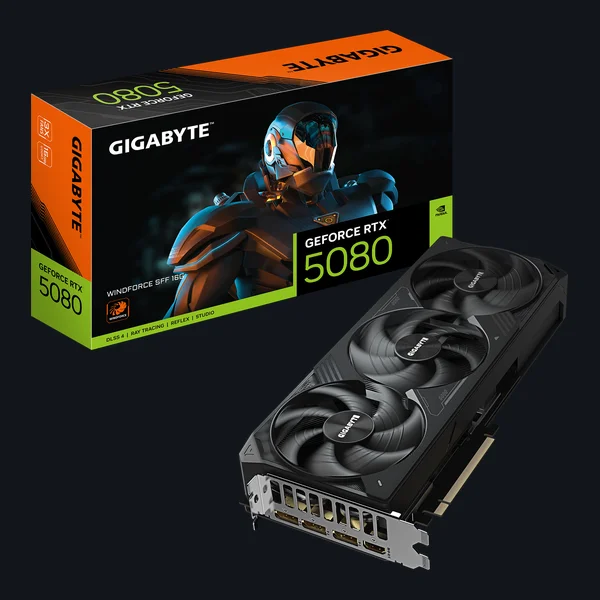
NVIDIA GeForce RTX 5070 Ti Graphics Card (16GB GDDR7)
- Full hardware support for DirectX 12 Clustered Geometry, Partitioned TLAS, and RTX Mega Geometry
- 16GB GDDR7 memory across a 256-bit bus with Shader Execution Reordering (SER) and Opacity Micromaps
- Built for high-frame-rate 1440p and 4K Path Tracing with DLSS 4 Multi-Frame Generation and Shader Model 6.10
My Take
Low-level API updates rarely grab flashy headlines, yet this is the exact kind of foundational engineering that determines how our graphics cards will age over the next four years. Since 2018, DirectX 12 raytracing has suffered from a brutal structural tax: whenever an Unreal Engine 5 open world tried to animate dense foliage or stream thousands of high-poly meshes in a city block, CPU frame times and VRAM usage spiked from constant BLAS and TLAS rebuilds. By standardizing 256-triangle clusters and spatial TLAS partitioning directly inside Direct3D 12, Microsoft is turning what used to be a proprietary NVIDIA showcase into an industry-wide baseline across GeForce RTX, Radeon RX 9000, and Intel Arc Battlemage GPUs. Above all, that 96.4% drop in animated acceleration structure memory is the real game-changer here: at a time when GDDR6 and GDDR7 memory prices keep climbing, shaving more than 6.5 GB of VRAM overhead off complex raytraced scenes will be a massive lifeline for 12 GB and 16 GB graphics cards in 2027's heaviest PC releases.

PC hardware enthusiast and competitive gamer, Arthur 'Heimdall' splits his time between France and the UK working in enterprise B2B software solutions. A business school graduate passionate about component benchmarking, he has been building, modding, and tuning PCs since childhood, optimizing every thermal degree and millisecond of display latency. An avid gamer across Assassin's Creed and sandbox titles, he forged his alliance with Grimtag and Chaya during late-night World of Warcraft raids before joining Pro-Gamer.