Switch 2 at $499.99: Why Q2 Shipments Dropped 41% Despite Nintendo's 216.5 Billion Yen Operating Profit
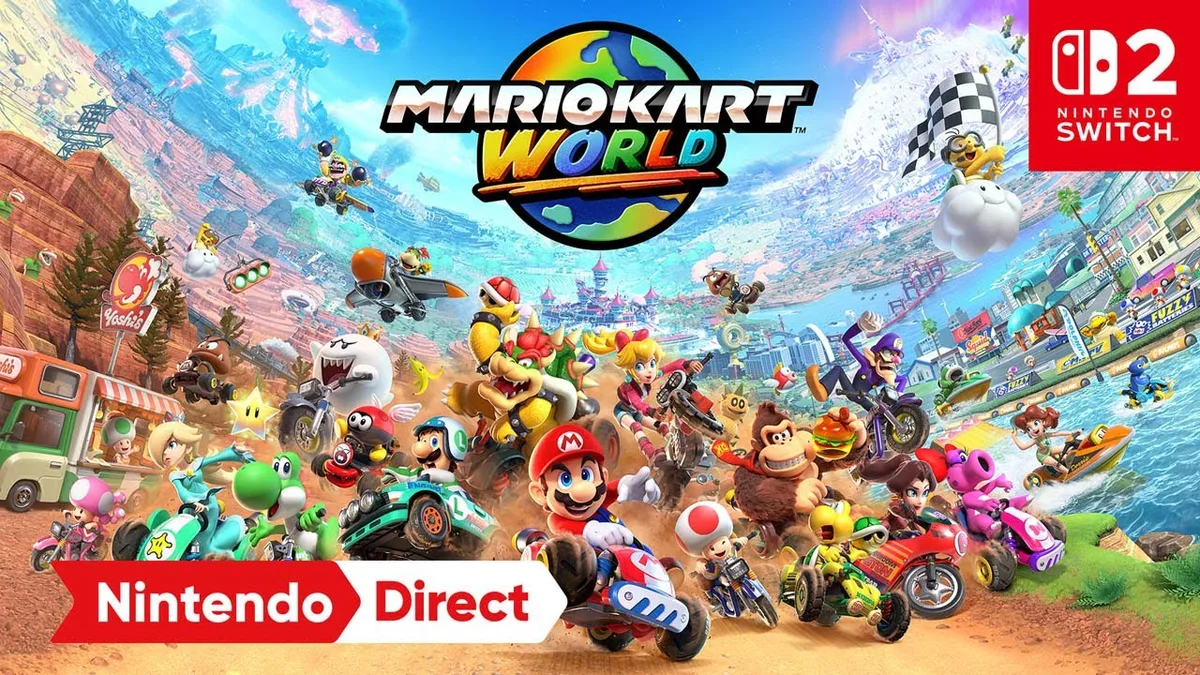
In its consolidated financial results for the first half of Fiscal Year 2027 (the six-month period ended September 30, 2026), Nintendo Co., Ltd. revealed a striking hardware paradox. While its hybrid successor has already climbed to 26.35 million cumulative units shipped worldwide, quarterly hardware shipments between July and September plunged 41% year-over-year, caught between surging memory chip procurement costs and September's retail price increase.
2.67 Million Switch 2 Consoles Shipped in Q2: A 41% Drop After Last Year's Launch Frenzy
Between July 1 and September 30, 2026, Nintendo shipped 2.67 million Nintendo Switch 2 consoles globally. Although that quarterly total narrowly edged out its primary living-room rival, as detailed in our breakdown of Sony's 2.6 million Q2 PlayStation 5 shipments, the year-over-year comparison underscores a sharp summer cooldown. During the second quarter of the previous fiscal year (July to September 2025), fueled by post-launch momentum, the Kyoto hardware maker moved 4.54 million units, representing an exact 41.2% year-over-year decline.
Across the full first half of the fiscal year (April through September 2026), Switch 2 hardware shipments reached 6.49 million units, lifting its lifetime installed base to 26.35 million consoles. Meanwhile, the original 2017 Nintendo Switch added 610,000 units during the quarter to reach 157.20 million lifetime shipments. Because of the softer hardware comparison against last year's launch window, Nintendo's six-month net sales fell 12.1% year-over-year to 966.04 billion yen (approximately $6.1 billion).
LPDDR5X Memory Crunch and the $499.99 Price Hike: How AI Data Centers Squeezed Margins
Behind the slower summer hardware velocity lies a fierce supply-chain squeeze across the global semiconductor sector. The rapid buildout of artificial intelligence data centers has absorbed vast amounts of global DRAM and NAND flash manufacturing capacity. For Nintendo, the component bottleneck hit the bill of materials directly: procurement prices for the 12 GB LPDDR5X memory modules inside every Switch 2 surged by roughly 41%, eroding hardware profit margins on each unit sold.
Confronted with component inflation that President Shuntaro Furukawa acknowledged would persist over the medium to long term, Nintendo broke with decades of console pricing tradition on September 1, 2026. Rather than cutting prices as the hardware matured, the standalone Nintendo Switch 2 rose from $449.99 to $499.99 in the United States (and from €469.99 to €499.99 in Europe, or £395.99 to £419.99 in the UK). While the $50 adjustment protected hardware profitability, crossing the $500 threshold visibly dampened impulse purchases during a late-summer quarter that lacked a single blockbuster debut on the scale of launch year.
216.5 Billion Yen in H1 Operating Profit and 73.21 Million Switch 2 Games Sold
Even as component costs pressured hardware margins in the second quarter, Nintendo's six-month bottom line surged ahead of expectations. First-half operating profit jumped 49.1% year-over-year to 216.5 billion yen (with net profit attributable to owners up 11% to 220.92 billion yen), allowing the company to maintain its full-year forecast of 370 billion yen in operating profit. Three high-margin pillars offset the hardware dip: a one-time first-quarter refund of U.S. tariffs, booming intellectual property royalties led by The Super Mario Galaxy Movie, and a lucrative digital software mix.
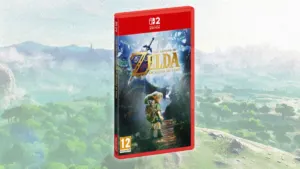
With 24.49 million Switch 2 games sold between April and September 2026, cumulative software sales have now reached 73.21 million units worldwide. The official million-seller chart through September 30, 2026 highlights the enduring pull of Nintendo's internal studios, even before holiday numbers factor in the landmark Zelda: Ocarina of Time remake co-developed with Monolith Soft:
| Nintendo Switch 2 Title | Cumulative Global Sales (as of Sept. 30, 2026) | Hardware Attach & Milestone Note |
|---|---|---|
| Mario Kart World | 16.48 million | 62.5% hardware attach rate |
| Donkey Kong Bananza | 5.05 million | Surpasses 5 million milestone |
| Pokémon Pokopia | 4.04 million | Major 2026 franchise hit |
| Pokémon Legends: Z-A (Switch 2 Edition) | 4.04 million | Next-gen edition milestone |
| Splatoon Raiders | 2.42 million | New multi-million seller |
| Kirby Air Riders | 1.94 million | Approaching 2 million copies |
| Fire Emblem: Fortune's Weave | 1.34 million | New million-seller entry |
My Perspective
This is arguably the first time in console history that artificial intelligence data centers have directly dictated the retail price of a family handheld. When semiconductor foundries pivot their wafer capacity toward high-bandwidth server memory and the 12 GB of LPDDR5X inside the Switch 2 spikes 41% in cost, everyday players inevitably absorb the shock at checkout. Crossing the $499.99 psychological barrier on September 1 was a gamble, and the 41% drop in summer hardware shipments proves that families think twice before buying a $500 system outside the holiday gift window.
Thankfully for Kyoto, its first-party software engine remains virtually immune to macroeconomic headwinds. Moving 16.48 million copies of Mario Kart World across a 26.35 million console base means nearly two out of every three Switch 2 owners bought the game. As long as evergreen exclusives like Donkey Kong Bananza, Splatoon Raiders, and Fire Emblem: Fortune's Weave keep selling millions at full retail price, Nintendo has all the software margin it needs to weather the memory chip storm.
Based on the outskirts of New York City, Chaya 'Chayane' spent five years studying software engineering in Montreal before returning to her home state. A Full-Stack developer and Deep Learning AI architecture researcher, she explores neural networks and algorithmic optimization while engineering data pipelines for Retrocharting and Gamescharting alongside Grimtag. A gamer for over 20 years and an avid collector of Nintendo history and The Legend of Zelda, she explored World of Warcraft's Azeroth before bringing her deep technical background to video game analysis.