A State-Run "French Steam" Backed by a 5.15% Game Tax: Why France's Video Game Preservation Bill Hit a Wall in Parliament

What happens when you pay full price for a video game, only for the publisher to pull the plug on its central servers a few years later without leaving an offline mode behind? Since Ubisoft permanently shut down The Crew in April 2024 and sparked the Stop Destroying Videogames European Citizens' Initiative,which gathered nearly 1.3 million signatures across the EU,the fight over digital ownership has reached national parliaments. In France, backed by an October 2026 Toluna Harris Interactive poll showing that 8 out of 10 French citizens support guaranteed long-term access to purchased online games, MP Ugo Bernalicis and the La France Insoumise (LFI-NFP) parliamentary group introduced Bill No. 3169 to create a state-backed preservation platform dubbed a public "French Steam." Yet between the publication of National Assembly Committee Report No. 3383 and the parliamentary session on Thursday, October 29, 2026, all three articles of the bill were stripped out in committee before the text ran out of time on the floor.
A Public Platform at France's National Library and a 5.15% Video Game Tax
On paper, the legislative framework drafted by MP Ugo Bernalicis and co-sponsor Marie Mesmeur rested on three pillars amending France's Cinema and Moving Image Code. Article 1 established a statutory "right to perpetual access" for consumers purchasing online video games,expanded in committee via Amendment AC25 to cover free-to-play titles as well,requiring publishers to build an end-of-life solution into their games from the design stage, such as a standalone offline mode, self-hosted private servers, or peer-to-peer (P2P) connectivity.
Article 2, however, became the center of controversy by tasking the National Library of France (Bibliothèque nationale de France, or BnF) with operating a "public platform for the preservation and distribution of video game heritage." Under the proposal, any publisher ending commercial support for a game without providing a working offline patch would be legally required to hand over all game files, updates, technical documentation, and server binaries to the BnF so the public institution could restore and host the service. Players who had previously bought the game would regain access for free, while the BnF could sell access at a minimal fee to new players and split the proceeds with rights holders. During Cultural Affairs Committee debates, Ugo Bernalicis explicitly pitched this "public French Steam" against Valve's storefront, arguing that Steam's standard 30% revenue cut (leaving 70% to publishers) proved a public distribution platform could be self-sustaining.
Finally, under Article 3, the rapporteur introduced Amendment AC28 to replace the bill's placeholder tobacco excise offset with a 5.15% sectoral tax levied on video game creation and sales in France across both physical and digital formats. Modeled directly on the 5.15% television services tax (TST-E) that funds French cinema, the new levy was designed to bankroll a standalone National Video Game Center (CNJV) separate from the existing National Center for Cinema and the Moving Image (CNC), whose selective video game grants currently total around €5 million per year within a French gaming market that hit a record €5.8 billion in revenue and 40.2 million players in 2025.
Why the BnF, Industry Unions, and Even Stop Killing Games Questioned a "State Steam"
Far from a purely partisan clash, the official hearing transcripts published in Parliamentary Report No. 3383 reveal why the "French Steam" concept hit a technical and financial wall as soon as experts weighed in. First in line, the National Library of France,represented at the hearings by Director General Philippe Lonné and Multimedia Service Head Laurent Duplouy,highlighted the sheer scale of the mandate. While the BnF already preserves between 22,000 and 25,000 video game titles (along with 55 historical consoles dating back to the 1974 Magnavox Odyssey) under France's legal deposit law enacted in June 1992, the institution estimates that 3,000 to 5,000 games per year excluding mobile apps fall under legal deposit, with digital collection still far from exhaustive. Crucially, foreign games without a French publisher are exempt from legal deposit, and publishers often do not even control the proprietary authentication layers locked down by console manufacturers. Operating under tight budgetary constraints (€253 million projected for 2027, following a real-term grant reduction of €3.3 million over two years cited by staff unions), the BnF warned lawmakers in writing that "the long-term sustainability of a public platform could not be guaranteed," recommending instead that publishers be required to provide an offline mode.
Even more tellingly, Stop Killing Games global coordinator Moritz-Maximilian Katzner and French representative Brendan Fourdan expressed reservations during their parliamentary hearing about handing live-service hosting over to a state platform. Their movement's Dead Game List tracked 1,225 server-dependent games as of February 2026, finding that 92.5% have no end-of-life plan and are either already unplayable or at risk. Citing estimates from independent studio Alderon Games, they noted that building an end-of-life offline or private server mode from day one costs less than 1% of a game's total budget (€5,000 to €20,000), whereas retrofitting one years later jumps tenfold to between €50,000 and €200,000. However, Stop Killing Games warned the committee that a centralized public platform would simply replace players' dependence on a private publisher's servers with a new dependence on a state-run server,while shifting ongoing maintenance costs onto taxpayers.
Representing the industry in a joint hearing, the Union of Leisure Software Publishers (SELL, represented by Managing Director Nicolas Vignolles and Public Affairs Manager Benjamin Niang) and the National Video Game Union (SNJV, represented by Managing Director Vanessa Kaplan) warned of severe economic fallout. As global scrutiny over digital video game ownership and server shutdowns intensifies, industry representatives pointed out that untangling a modern live-service game from proprietary netcode, anti-cheat software, middleware, and expiring third-party licenses (such as Ferrari or Porsche car licenses in racing games or licensed music tracks) years after release carries prohibitive costs and cybersecurity risks. Meanwhile, imposing a 5.15% tax,adding over €4 to an €80 game,drew fierce pushback in committee: according to CNC data cited during the hearing, nearly half of all French development studios currently operate at a loss, with domestic studios such as Spiders and Midgar Studios recently entering liquidation proceedings.
The European Law Roadblock vs. GOG and CD Projekt's DRM-Free Model
Beyond its uncosted infrastructure, Bill No. 3169 collided head-on with a legal barrier that its own explanatory memorandum acknowledged: European Union law. Heard by the committee, European Commission officials Emmanuelle du Chalard (Head of the Copyright Unit at DG Connect) and Isabelle Pérignon (Director for Consumers at DG Just) reminded lawmakers that video games are governed across the EU by Computer Programs Directive 2009/24/EC, InfoSoc Copyright Directive 2001/29/EC, and Digital Content Directive 2019/770. Under EU copyright and constitutional property rules, a single Member State cannot unilaterally force publishers to hand over proprietary code or server infrastructure for remote public distribution,and the EU's existing copyright exception for "out-of-commerce works" (Directive 2019/790) only applies 30 years after first publication while giving rights holders an unconditional opt-out.
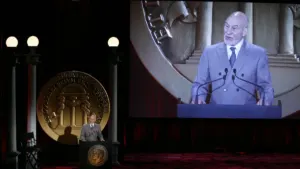
During the Cultural Affairs Committee vote on October 21, 2026, those legal and financial hurdles united a cross-party majority against the mechanism, spanning centrist lawmakers (Denis Masséglia for EPR, Laurent Croizier for Les Démocrates, Jérémie Patrier-Leitus for Horizons, Joël Bruneau for LIOT), the conservative Droite Républicaine (Virginie Duby-Muller), and the National Rally (Alexandre Sabatou, who unsuccessfully proposed amendments to legalize non-profit community private servers instead of a state agency). After stripping out Article 2 and rejecting the 5.15% tax, committee members even passed a pointed amendment (AC7) by MP Denis Masséglia renaming the bill a proposal "aimed at demagogically securing the vote of video game players ahead of the 2027 presidential election",prompting rapporteur Ugo Bernalicis himself to vote against the amended text in committee so the original version could be resubmitted for the floor. Placed eighth on the agenda for LFI's parliamentary niche day on Thursday, October 29, 2026, the bill ultimately failed to reach debate before the midnight cutoff.
While players await the European Commission's upcoming review of Directive 2019/770 at the end of 2026, the Créteil court ruling on French consumer group UFC-Que Choisir's March 31, 2026 lawsuit against Ubisoft over The Crew, and targeted US legislation such as the Power To The Players Act mandating offline modes and digital resale rights, Parliamentary Report No. 3383 highlights the one preservation model that already works without state servers or new taxes: Polish publisher CD Projekt (The Witcher 3, Cyberpunk 2077) and its storefront GOG.com, where every purchase includes standalone offline installers free of DRM that remain playable forever even if the platform's authentication servers go dark.
My Take
The core grievance behind this bill is 100% legitimate: paying $70 or €80 for a game like The Crew only to be locked out forever when a publisher flips a server switch is unacceptable for consumer rights and gaming history alike. However, promising a state-run "French Steam" operated by a national library that lacks both the network engineers and the budget to maintain thousands of orphaned multiplayer backends,while proposing a 5.15% tax at a time when nearly half of France's studios are in the red,was always going to collapse under scrutiny. As both the BnF and Stop Killing Games rightly pointed out during the hearings, players do not need a taxpayer-funded bureaucracy trying to play live-service publisher: we need a binding EU-wide rule requiring studios to bake an offline patch or dedicated server binaries into their games from day one.

SEO consultant for over 20 years and digital entrepreneur, Charles "Grimtag" is the founder of Pro-Gamer.gg, Retrocharting.com, and Gamescharting.com. A competitive gamer, streamer, and retro game collector, he has worked in the video game industry for over 15 years, notably as a consultant for leading game price comparison platforms. Passionate about real-time performance data and gaming technology, he analyzes competitive esports, gaming hardware benchmarks, and creator workflows on Pro-Gamer.gg with an authentic player perspective.