Screen-Reading AI and External Aim Automation: Why Call of Duty Is Changing How RICOCHET Hunts Cheaters
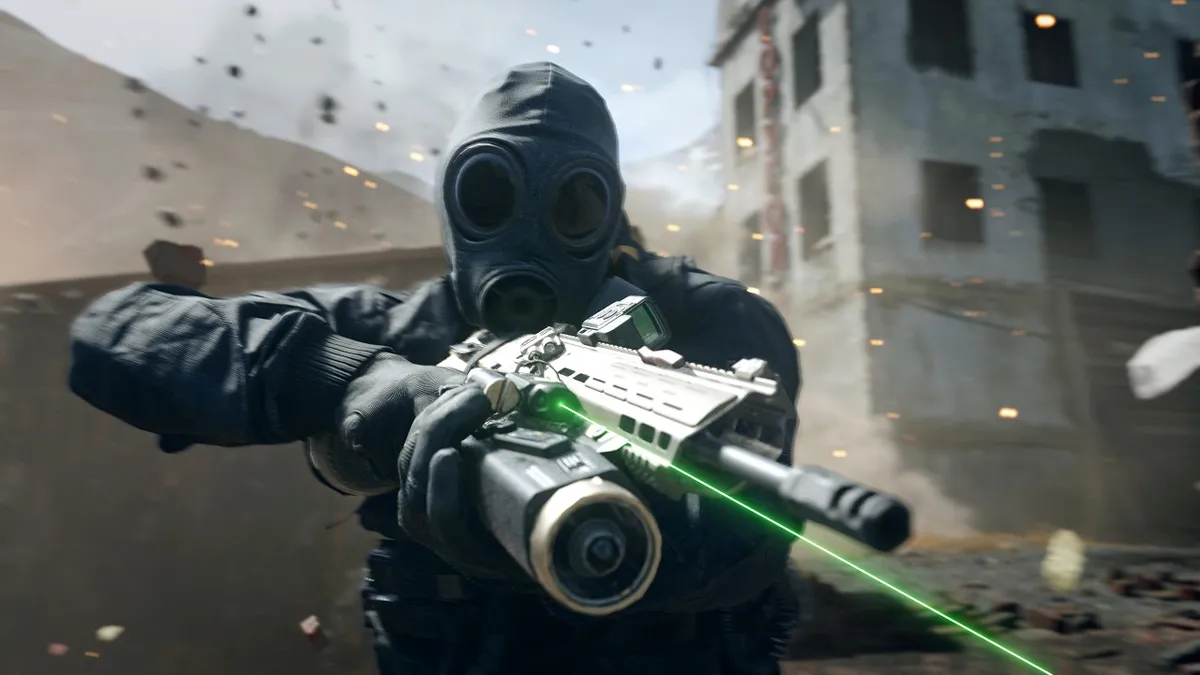
The cat-and-mouse war between cheat developers and security engineers has hit a major technological turning point across Call of Duty: Modern Warfare 4 and Warzone. In an official security breakdown posted on the Call of Duty X account, Activision and its RICOCHET Anti-Cheat team warned that AI-powered cheating tools are spreading across the gaming industry and bypassing conventional software checks.
Unlike legacy cheats that modify local game files or inject code directly into system memory, these newer AI-driven tools operate entirely outside the game client. Because they never touch the game's internal processes, traditional kernel-level and signature-based anti-cheat systems face steep new detection hurdles.
Computer Vision and External Inputs: How AI Cheats Bypass Traditional Scanners
Conventional anti-cheat software is built to flag unauthorized programs hooking into memory addresses or tampering with executable files. AI-assisted cheats sidestep that barrier by relying on computer vision: they read what appears on a player's screen in real time, acting like an external optical sensor watching the video output.
Once the visual model detects an enemy operator on screen, it translates those coordinates into automated aiming adjustments delivered through a separate external input path. To the PC or console, those commands masquerade as standard mouse or controller movements, echoing the hardware spoofing challenges seen when Apex Legends banned Cronus Zen and XIM controller cheaters across console and PC lobbies.
"AI cheats can read what appears on a player's screen and automate aim through external input. That can make the cheat itself difficult to see. RICOCHET's machine learning models study aiming behavior directly. They're trained to distinguish unnatural aim from normal aim."
This shift builds on Activision's broader server-side defense strategy, coming shortly after the security team demonstrated how RICOCHET neutralizes Call of Duty wallhacks by blinding cheaters through server-side data culling.
The "Smoothing" Trap: Forcing AI Tools to Mimic Human Flaws
Because an external computer-vision setup leaves no software footprint inside Call of Duty: Modern Warfare 4, the RICOCHET team is countering AI with its own server-side machine learning. Instead of hunting for a hidden executable on a player's drive, these behavioral models analyze live aiming telemetry, micro-corrections, and target acquisition speed during matches.
Activision also addressed a critical concern for high-skill players regarding false positives: RICOCHET's machine learning models never issue an automatic ban on their own. A suspicious aiming signal is only one piece of a broader investigation, helping security engineers identify anomalous patterns and prioritize cases before corroborating them with additional gameplay evidence.
- External Screen Reading: AI tools capture video output to spot targets without reading game memory or modifying local files.
- Direct Aim Telemetry Analysis: RICOCHET's server-side models evaluate in-game aiming mechanics to separate human reflexes from algorithmic tracking.
- Corroborated Enforcement: Machine learning prioritizes suspicious accounts for deeper review rather than making standalone ban decisions.
- Forced Aim Smoothing: Cheat forums are instructing buyers to dial back aim speed to appear human, stripping away the tool's unfair edge.
That behavioral tracking is already forcing cheat communities onto the defensive. According to Activision, cheat sellers and forums are now actively advising users to crank up their "smoothing" settings and play more legitimately to avoid tripping RICOCHET's behavioral alarms.
For the anti-cheat engineers protecting Modern Warfare 4 across PC, PS5, Xbox Series X|S, and Nintendo Switch 2, that hesitation is a strategic victory in itself. The more an external AI aimbot has to slow down, add human-like hesitation, and imitate natural player limitations just to stay hidden, the less competitive advantage it actually gives the person paying for it.
My Perspective
Anyone who has worked with computer-vision models knows why traditional anti-cheat drivers hit a wall here: a lightweight object-detection network reading an HDMI video feed through a capture card is completely invisible to the operating system running the game. It is honestly wild to see the absurd hardware contraptions some cheaters wire across their desks, stacking secondary PCs and input injectors just to fake a decent kill-death ratio.
What makes RICOCHET's response so smart is the smoothing paradox. If you pay a monthly subscription for an AI aimbot only to throttle its reaction speed and accuracy down to average human thumb reflexes so the server telemetry does not flag you, you are paying to play with training wheels. With Season 2's 4v4 Ranked Play right around the corner, a mode I have been gearing up to grind all month, watching RICOCHET target aiming biometrics directly is the best news legitimate competitive players could ask for.

Based on the outskirts of New York City, Chaya 'Chayane' spent five years studying software engineering in Montreal before returning to her home state. A Full-Stack developer and Deep Learning AI architecture researcher, she explores neural networks and algorithmic optimization while engineering data pipelines for Retrocharting and Gamescharting alongside Grimtag. A gamer for over 20 years and an avid collector of Nintendo history and The Legend of Zelda, she explored World of Warcraft's Azeroth before bringing her deep technical background to video game analysis.