Nearly 20 Years After Launch, ATI Radeon HD 2000 and 3000 GPUs Get a Linux 7.5 Video Decoding Fix Built With AI
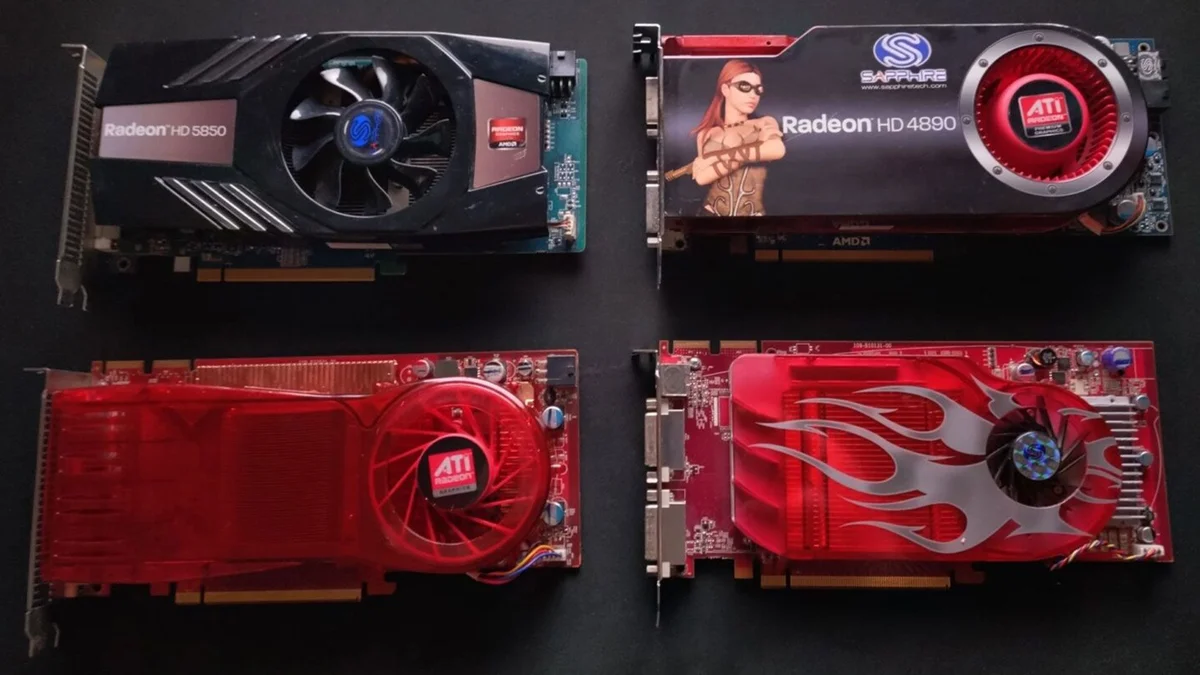
Released between spring 2007 and early 2008, the ATI Radeon HD 2000 and Radeon HD 3000 graphics card lineups have long been considered museum pieces of early unified-shader silicon. Yet nearly twenty years after they first hit retail shelves, a newly accepted kernel patch queued for the upcoming Linux 7.5 merge window has finally squashed a decades-old hardware video playback bug affecting TeraScale 1 (R600 family) GPUs. Even more remarkably, the root cause inside the legacy UVD (Unified Video Decoder) driver path was tracked down and resolved by a first-time contributor assisted by OpenAI's Codex.
A 19-Year-Old Memory Contention Bug Between 3D Draw Calls and UVD 1.0
To understand why this bug lingered for so long, it helps to revisit the debut of the first-generation UVD 1.0 hardware block in 2007. Introduced shortly after AMD completed its acquisition of ATI Technologies, UVD was designed to offload heavy H.264 and VC-1 Blu-ray and HD DVD video decoding from dual-core CPUs. On Linux, however, users running hardware-accelerated video playback on these cards frequently encountered severe frame corruption and visual artifacts whenever the GPU was simultaneously executing 3D rendering or desktop compositing draw calls.
Open-source contributor Ted Bullock stumbled upon the issue while troubleshooting video corruption on a mid-2007 Apple iMac 7,1 powered by an ATI Mobility Radeon HD 2400 XT (codenamed RV610 / M74, PCI device ID 1002:94c8) running Debian Linux. In his official patch submission on the Linux kernel mailing list, Bullock explained the exact hardware trigger: whenever the UVD engine read compressed video bitstreams directly from system memory (RAM via GTT) while the GPU was actively processing graphics draw commands, memory bus contention corrupted the decoded video frames.
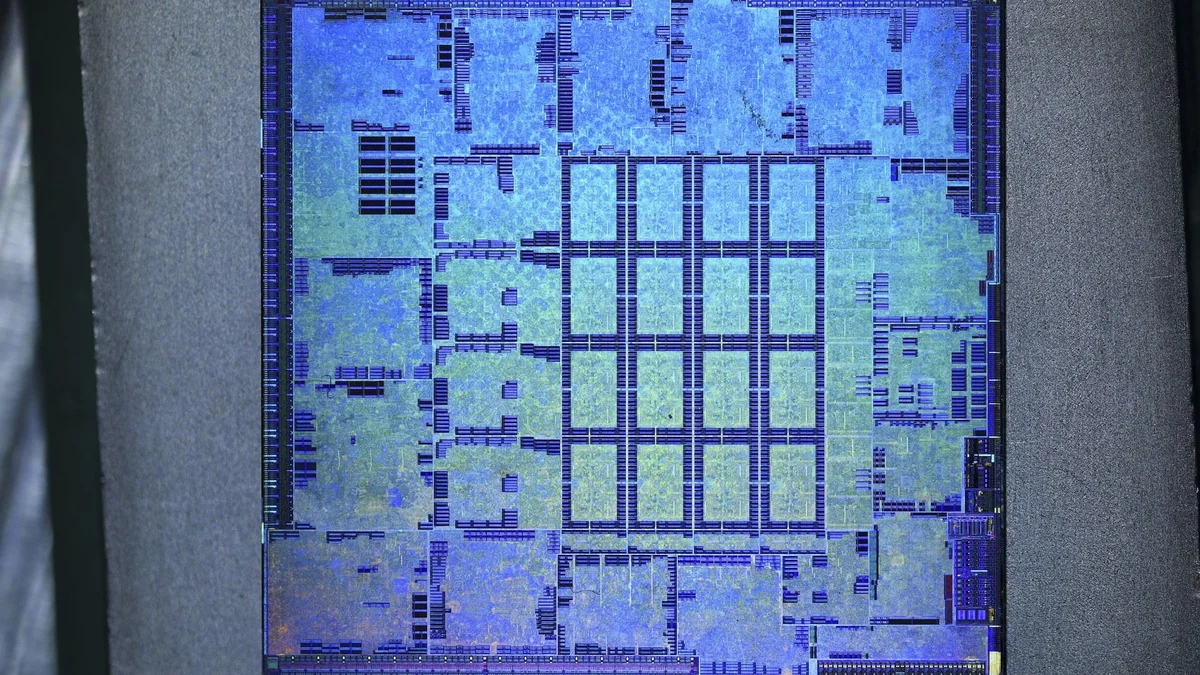
Pinning UVD Input Buffers in Dedicated VRAM Across Five RV6xx Chip Families
Navigating a nearly twenty-year-old legacy kernel driver is no small feat for a newcomer. Bullock turned to OpenAI's Codex to help audit the open-source drm/radeon command submission code, design validation tests, and structure the patch. That investigation revealed that the driver already enforced a specific workaround for other hardware: during UVD relocation parsing, the kernel strictly pinned all UVD buffers inside dedicated video memory (VRAM) for AGP graphics cards and older integrated RS780 and RS880 chipset GPUs to prevent image corruption, but allowed PCIe RV6xx chips to leave input buffers in system RAM.
By forcing UVD input buffers to remain pinned in dedicated VRAM across the entire RV6xx family sharing the legacy R600 UVD firmware, video playback corruption disappears completely even under active desktop and 3D loads. The patch covers five distinct ASIC families released across the 2007 and 2008 product cycles:
- RV610 (65nm): ATI Radeon HD 2400 Pro, Radeon HD 2400 XT, and Mobility Radeon HD 2400.
- RV630 (65nm): ATI Radeon HD 2600 Pro, Radeon HD 2600 XT, and mobile variants.
- RV670 (55nm): ATI Radeon HD 3850, Radeon HD 3870, and FireStream 9170.
- RV620 (55nm): ATI Radeon HD 3450 and Radeon HD 3470.
- RV635 (55nm): ATI Radeon HD 3650 and Mobility Radeon HD 3650.
Hardware veterans will note that the original flagship Radeon HD 2900 XT (built on the massive 80nm R600 die) is absent from this list for a purely architectural reason: unlike the mainstream RV610 and RV630 silicon that launched weeks later, the May 2007 flagship lacked a dedicated UVD hardware block and relied on its 320 stream processors for video acceleration.
Merged by AMD Maintainers for the Linux 7.5 Kernel Cycle
While proprietary Windows drivers for TeraScale 1 hardware were retired over a decade ago, the mainline Linux graphics stack continues to keep vintage silicon alive. Following the initial open-source UVD 1.0 enablement authored by AMD's Christian König back in 2014 for Linux 3.18, Bullock's fix was reviewed and queued this week by lead AMD Linux maintainer Alex Deucher in his latest drm-next pull request on dri-devel targeting Linux 7.5.
The upcoming kernel release is shaping up to be a fascinating crossroads for PC hardware history: just days after Linux 7.5 purged the last 1997 Intel MMX Pentium assembly optimizations, it is simultaneously improving multimedia stability on DirectX 10-era ATI graphics cards.
Meanwhile, on the modern amdgpu side of the kernel tree, AMD's engineers are already laying the groundwork for next-generation hardware, where more than 12,600 lines of new driver code recently introduced GFX13 support for RDNA 5 GPUs alongside current RDNA 4 graphics cards.
My Take on the Spec Sheet
Having spent countless hours building and tweaking PCs during the late-2000s transition to unified shaders, seeing the RV610, RV630, and RV670 ASIC codenames pop up in a 2026 Linux kernel pull request puts a genuine smile on my face. Anyone who built a home theater PC back in 2007 or 2008 remembers how big of a deal UVD was: while the power-hungry Radeon HD 2900 XT skipped the dedicated video block entirely, budget gems like the HD 2400 XT, HD 2600 XT, and the beloved 55nm Radeon HD 3870 allowed a modest Core 2 Duo or Athlon 64 X2 rig to play 1080p Blu-ray discs smoothly without pegging the CPU at 100%. Watching the open-source community fix a hardware erratum nineteen years after launch is the ultimate proof of why mainline Linux driver support matters for hardware preservation. We have not yet had a physical unit on our desk,if the manufacturer's team would like to send over a review sample so we can put it through our full real-world testing protocol, our lab doors are wide open.
I also have to tip my hat to our colleague Chaya "Chayane", who tracks AI tooling every day, because this patch is a textbook example of AI used right. Instead of generating bloated boilerplate, Codex helped a first-time kernel contributor trace a subtle VRAM-versus-system-RAM buffer placement oversight inside a twenty-year-old driver on a 2007 iMac. When paired with real hardware testing and sharp engineering curiosity, AI becomes a remarkably effective diagnostic probe for keeping classic silicon alive.

PC hardware enthusiast and competitive gamer, Arthur 'Heimdall' splits his time between France and the UK working in enterprise B2B software solutions. A business school graduate passionate about component benchmarking, he has been building, modding, and tuning PCs since childhood, optimizing every thermal degree and millisecond of display latency. An avid gamer across Assassin's Creed and sandbox titles, he forged his alliance with Grimtag and Chaya during late-night World of Warcraft raids before joining Pro-Gamer.