Medusa Point Mobile Processor (Zen 6): 10 Hybrid Cores, 3,100 Geekbench 7 Score, and +13% Over Strix Halo

An early engineering sample of AMD's next-generation Ryzen Zen 6 "Medusa Point" mobile APU has surfaced in the public Geekbench 7 database. Tested inside a Lenovo reference validation platform (board ID 22ETPF6DTA), the chip carries the OPN code 100-000001713-32_Y and provides our first concrete look at the core layout and single-thread leap coming to the Ryzen AI 500 laptop lineup expected in early 2027.
10-Core Hybrid Topology (4 Zen 6 + 6 Zen 6c), AVX-512, and Unified 16MB L3 Cache
According to the Geekbench 7 hardware log, this Medusa Point sample features a 10-core, 20-thread hybrid configuration split into two clusters: 4 full-performance Zen 6 cores paired with 6 dense Zen 6c cores engineered for multi-threaded power efficiency.
Each core is equipped with 1MB of dedicated L2 cache (10MB L2 total) backed by a 16MB shared L3 cache. The diagnostic telemetry also confirms full support for AVX-512 instruction sets (including AVX512-FP16 and AVX512-VNNI) alongside 64GB of quad-channel DDR5/LPDDR5X memory running at 5,188 MT/s, building directly upon the official AMD Ryzen mobile processor lineup.
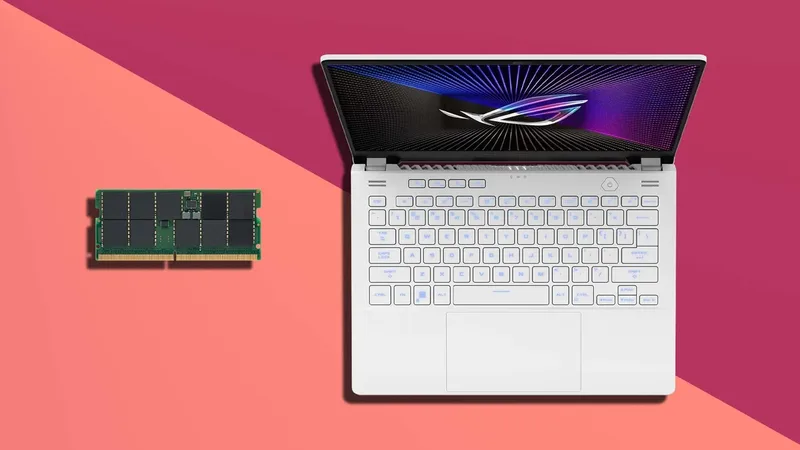
ASUS ROG Zephyrus G14 (AMD Ryzen AI 9 HX 370)
- AMD Ryzen AI 9 HX 370 processor (12 cores, 24 threads, 50 TOPS NPU)
- 14-inch ROG Nebula 3K 120Hz OLED display (0.2ms response time)
- Precision-machined 1.5 kg CNC aluminum chassis
- High-speed LPDDR5X memory and Tri-Fan thermal architecture
3,100 Single-Core Score in Geekbench 7 and RDNA 4m Integrated Graphics
Even though Geekbench read the early silicon's base and maximum clock sensors at a locked 2.00 GHz (1.99 GHz reported), engineering sample 100-000001713-32_Y delivered a standout 3,100 Single-Core score and 18,313 Multi-Core score in Geekbench 7.
In single-threaded workloads, that 3,100-point result already edges past several stock desktop Zen 5 processors (such as the Ryzen 9 9950X and 9900X) and posts roughly a 13% single-core lead over AMD's 16-core mobile flagship Ryzen AI Max+ 395 ("Strix Halo"). Those numbers align closely with the +16.5% IPC jump recently measured on AMD Zen 6c cores in Geekbench 7 as well as AMD's HIPRT 3.2 ray-tracing library confirming RDNA 4m (gfx1170 and gfx1171) integrated GPUs for Medusa.
| Specification | AMD "Medusa Point" (ES 100-000001713-32_Y) | AMD Strix Point (Ryzen AI 9 365) |
|---|---|---|
| CPU Architecture | Hybrid Zen 6 (4x Zen 6 + 6x Zen 6c) | Hybrid Zen 5 (4x Zen 5 + 6x Zen 5c) |
| Cores / Threads | 10 cores / 20 threads | 10 cores / 20 threads |
| L2 / L3 Cache | 10MB L2 (1MB/core) + 16MB shared L3 | 10MB L2 (1MB/core) + 24MB L3 (16+8MB split) |
| Expected iGPU Architecture | RDNA 4m (gfx1170 / gfx1171) or RDNA 3.5 | RDNA 3.5 (Radeon 880M) |
| Geekbench 7 (Single / Multi) | 3,100 pts / 18,313 pts (early ES) | ~2,720 pts / ~14,800 pts |
My Take on the Spec Sheet
Beyond the headline 3,100 single-core score showcasing Zen 6's raw IPC uplift, one architectural detail in this Geekbench log immediately stands out to me: the presence of a single shared 16MB L3 cache across all 10 cores (4 Zen 6 + 6 Zen 6c). On current Strix Point chips, splitting the Zen 5 and Zen 5c cores across two separate CCX clusters (16MB + 8MB) introduces cross-CCX latency penalties whenever a game thread migrates between clusters. Unifying all 10 cores onto a single L3 ring while pairing them with an RDNA 4m iGPU inside a 28W to 54W thermal envelope should deliver noticeably tighter 1% Low frametimes on thin-and-light gaming laptops and future handhelds. We obviously have not had our hands on this silicon yet at the lab: if AMD's hardware team would like to send over a Ryzen AI 500 "Medusa Point" review unit once production laptops ship for full real-world benchmarking, our test bench is wide open.

PC hardware enthusiast and competitive gamer, Arthur 'Heimdall' splits his time between France and the UK working in enterprise B2B software solutions. A business school graduate passionate about component benchmarking, he has been building, modding, and tuning PCs since childhood, optimizing every thermal degree and millisecond of display latency. An avid gamer across Assassin's Creed and sandbox titles, he forged his alliance with Grimtag and Chaya during late-night World of Warcraft raids before joining Pro-Gamer.