Why Apple’s Foldable iPhone Duo Drops Up to 20% Behind the iPhone 18 Pro in Sustained AAA Gaming
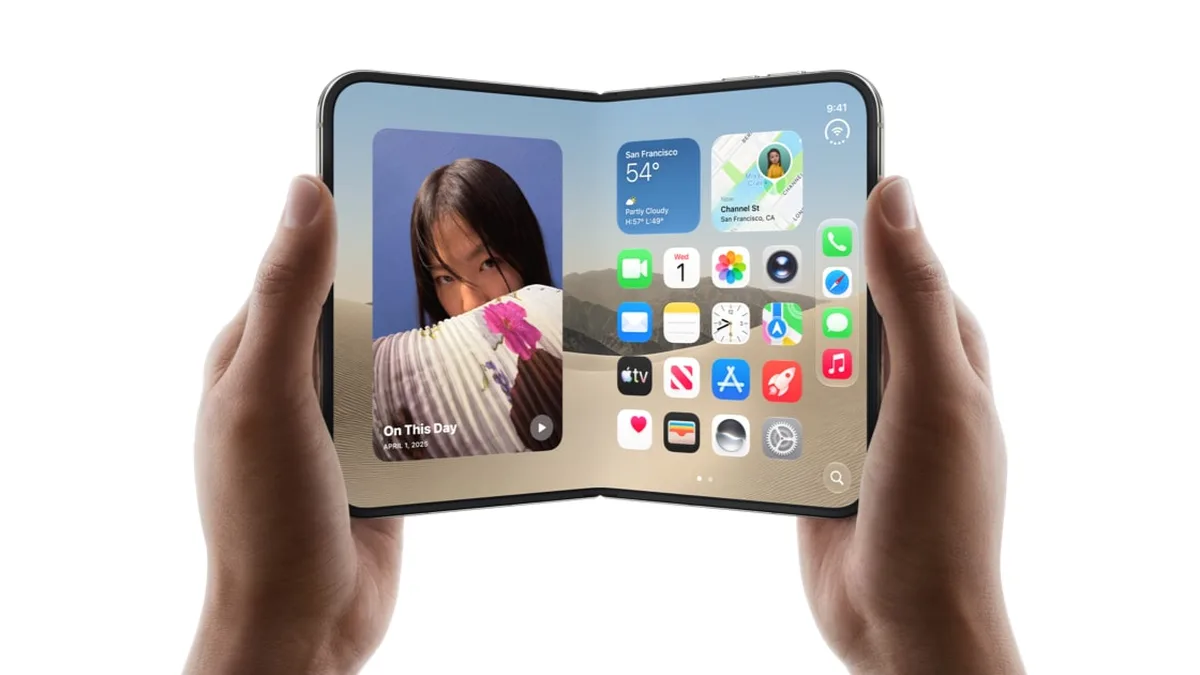
Launching on October 23 at a starting price of $1,999 for the 256GB model (and climbing all the way to $3,499 for the 2TB configuration), the iPhone Duo marks Apple’s long-awaited debut in the book-style foldable smartphone market. Under its grade-5 titanium shell, the device packs the exact same flagship silicon found in Apple’s traditional candy-bar flagships: the 2nm A20 Pro chip paired with 12GB of unified memory. Yet as soon as demanding AAA video games push the hardware over prolonged sessions, the foldable form factor runs straight into a physical thermal wall.
Identical Geekbench 7 Burst Speeds, But a 5.2mm Chassis Split by Its Hinge
In short bursts and cold synthetic runs, Apple did not artificially downclock the A20 Pro inside the iPhone Duo (which features a 6-core CPU clocked up to 4.93 GHz and a 7-core GPU). Early Geekbench 7 results for the foldable (model identifier iPhone19,4 running iOS 27.1) score between 3,959 and 3,986 points in single-core and up to 11,067 points in multi-core. Those numbers sit in dead-even parity with our iPhone 18 Pro A20 Pro gaming benchmarks recorded last month.
The gap opens up once the 7-core GPU is placed under continuous load. When unfolded to reveal its expansive 7.6-inch Super Retina XDR OLED inner display (1878 x 2670 resolution with 120Hz ProMotion), the iPhone Duo measures just 5.2mm thick. Fitting both the folding mechanism and the 5.4-inch outer screen into such a razor-thin footprint forced Apple to shrink the internal vapor chamber. More importantly, the central hinge acts as a thermal bottleneck: heat generated by the logic board stays trapped on one side of the chassis rather than spreading evenly across the entire body.

Reaching 46.5°C and Losing Up to 20% Frame Rate in Death Stranding
In the 3DMark Steel Nomad Light graphics stress test, the iPhone Duo posts a strong initial loop score of around 2,569 points, but its stability drops to 75.9% across twenty consecutive loops, already trailing the iPhone 18 Pro Max by roughly 10%. In real-world gaming across native console ports running on Apple’s Metal API, that thermal penalty becomes much harder to ignore.
After a continuous 30-minute gaming session in Death Stranding Director’s Cut or Resident Evil Village, surface temperatures on the iPhone Duo climb to 46.5°C (115.7°F) on the logic board half, compared to 43°C to 44°C on the iPhone 18 Pro and 18 Pro Max. To protect internal components and the dual-cell battery architecture, iOS throttles GPU clock speeds more aggressively and dims the 3,000-nit peak display earlier. As a result, sustained frame rates in heavy 3D titles drop by roughly 20% compared to the non-folding Pro models.
| Metric | iPhone Duo (Foldable) | iPhone 18 Pro / Pro Max |
|---|---|---|
| Chipset & Memory | Apple A20 Pro (2nm) + 12GB RAM | Apple A20 Pro (2nm) + 12GB RAM |
| Unfolded Gaming Thickness | 5.2mm (hinge isolates heat dissipation) | Unibody chassis with full-span vapor chamber |
| Geekbench 7 (Single / Multi) | ~3,986 / ~11,067 points | ~3,985 / ~11,050 points |
| Peak Surface Temp (30-Min AAA) | Up to 46.5°C | 43°C to 44°C |
| Sustained Gaming Frame Rate | Up to 20% drop (thermal throttling + screen dimming) | Baseline sustained reference performance |
For mobile players who want to enjoy the 7.6-inch canvas without resting their palms directly against a 46.5°C titanium frame, snapping on a telescopic USB-C controller remains the most practical way to keep hands away from the hotspot.
My Test Bench: Why Physics Still Beats a $1,999 Foldable Screen in AAA Games
On paper, unfolding a 7.6-inch 120Hz OLED screen powered by 2nm Apple silicon sounds like the ultimate pocket gaming handheld. But having tested plenty of ultra-thin mobile hardware over the years, I am not surprised to see basic thermodynamics win this round. You simply cannot dissipate sustained flagship GPU heat inside a 5.2mm half-shell split down the middle by a mechanical hinge without active cooling.
At $1,999 and up, buying the iPhone Duo primarily to grind through native AAA console ports is a tough sell. If your main goal is pairing a larger OLED display with the full sustained horsepower of Apple’s 2nm architecture without hitting a thermal wall twenty minutes in, you are much better off saving over a thousand dollars and waiting for the A20 Pro-powered iPad mini 8 OLED expected on October 28, where a single unibody aluminum enclosure gives the chip room to breathe.

PC hardware enthusiast and competitive gamer, Arthur 'Heimdall' splits his time between France and the UK working in enterprise B2B software solutions. A business school graduate passionate about component benchmarking, he has been building, modding, and tuning PCs since childhood, optimizing every thermal degree and millisecond of display latency. An avid gamer across Assassin's Creed and sandbox titles, he forged his alliance with Grimtag and Chaya during late-night World of Warcraft raids before joining Pro-Gamer.