$100 Billion to $150 Billion After $80B in Acquisitions: Why Private Equity Firms Explored a Buyout of Microsoft's Xbox Division

As Microsoft continues to enforce aggressive cost-cutting across its gaming operations, Wall Street's biggest players have been quietly running the numbers on the house of Master Chief. According to dual reports from The Information and an investigative profile by journalist Kali Hays in Fortune, several private equity firms recently explored a potential buyout of Microsoft's Xbox division, valuing the gaming giant between $100 billion and $150 billion.
A $150 Billion Behemoth Built on Nearly $80 Billion in Studio Acquisitions
While those preliminary discussions among private equity investors remained strictly exploratory and never advanced to formal negotiations with Microsoft CEO Satya Nadella, the valuation range alone highlights the sheer scale of the business. At $100 billion to $150 billion, no single investment firm could swallow Xbox on its own; any realistic buyout would require a massive consortium of private equity heavyweights pooling capital together.
That price tag reflects a decade of historic spending by Redmond. Microsoft has invested nearly $80 billion in major gaming acquisitions alone: $68.7 billion to close its blockbuster buyout of Activision Blizzard King in late 2023, $7.5 billion to acquire ZeniMax Media and Bethesda in 2021, and $2.5 billion to purchase Mojang and Minecraft back in 2014.
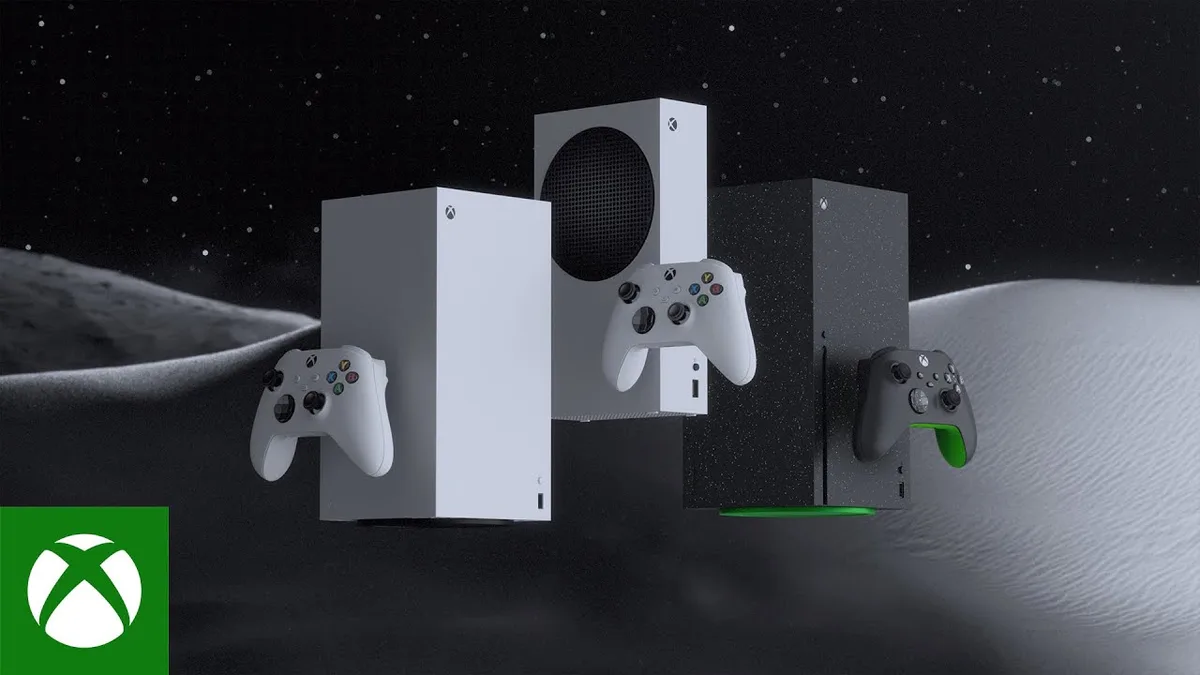
Combined with Xbox hardware and Xbox Game Pass subscriptions, the division now generates roughly $21 billion to $25 billion in annual revenue across powerhouse franchises like Call of Duty, Diablo, Halo, and The Elder Scrolls. Yet sluggish profit margins have kept the division under intense financial scrutiny from Microsoft's board.
Xbox.com Emails and Internal Presentations Fuel Spin-Off Speculation
Inside Redmond, several current and former employees told Fortune they believe the sweeping operational overhaul led by Xbox CEO Asha Sharma, who succeeded Phil Spencer in February 2026, is designed to prepare the division for a structural separation. According to insiders, a high-level internal presentation specifically evaluated scenarios including a corporate spin-off, outside minority investment, or converting Xbox into a standalone subsidiary.
Subtle administrative shifts have only amplified those internal suspicions. Microsoft recently retired the "Microsoft Gaming" corporate banner in favor of returning simply to "Xbox," while transitioning employee email addresses from @microsoft.com to @xbox.com. That structural housecleaning comes right as Xbox prepares three more layoff waves starting in October to hit its target of 3,200 job cuts and lift a profit margin currently stuck near 3%.
Microsoft Leadership Pushes Back: "Xbox Is Not for Sale"
Despite the boardroom chatter, Microsoft leadership has issued a firm denial, publicly stating that "Xbox is not for sale." Speaking with Fortune, Microsoft Chief Commercial Officer Judson Althoff dismissed the spin-off rumors outright, arguing that the company would never have tapped a top artificial intelligence executive like Asha Sharma to lead Xbox if the end goal were to offload the business.
Althoff also emphasized that Xbox provides vital strategic value to Microsoft's broader enterprise ecosystem, serving as a massive real-world stress test for Azure cloud infrastructure and AI workloads while maintaining consumer retail partnerships. Still, balancing those corporate synergies with hardware realities remains a daunting task as soaring component costs push Microsoft's next-gen Xbox Project Helix toward a projected $1,200 to $1,800 price tag.
My Take
When private equity firms start modeling a $100 billion to $150 billion valuation for Xbox, it tells you everything about how Wall Street views Microsoft's post-Activision reality. The moment Redmond spent $68.7 billion on Activision Blizzard, Xbox stopped being a passion project shielded by Windows and Office profits; it became a massive capital allocation that has to justify its existence alongside booming AI data centers.
Do I see an outright private equity buyout happening anytime soon? Almost certainly not, because assembling $150 billion in leveraged financing would be a monumental hurdle even for a multi-firm consortium. However, moving staff onto @xbox.com domains, dropping the "Microsoft Gaming" label, and tasking Asha Sharma with ruthless margin discipline all point in the same direction: Microsoft is ring-fencing Xbox so it can stand on its own financial feet, leaving the door wide open for a future subsidiary structure or outside investment if margins do not rebound.

SEO consultant for over 20 years and digital entrepreneur, Charles 'Grimtag' Ronchain is the founder of Pro-Gamer.gg, Retrocharting.com, and Gamescharting.com. A competitive gamer, streamer, and retro game collector, he has worked in the video game industry for over 15 years, notably as a consultant for leading game price comparison platforms. Passionate about real-time performance data and gaming technology, he analyzes competitive esports, gaming hardware benchmarks, and creator workflows on Pro-Gamer.gg with an authentic player perspective.