Swarovski Crystals on GALAX's October 22 HOF and 800W Flashless vBIOS Mods: Inside a Wild Week for GeForce RTX 50 GPUs
NVIDIA’s GeForce RTX 50 lineup is experiencing a week where ultra-luxury collector hardware and grassroots firmware hacking have collided head-on. Just as GALAX started an official countdown to launch its crystal-studded GeForce RTX 50 Hall of Fame (HOF) Swarovski Edition on October 22, 2026, independent developer Panchovix released NVIDIA VBIOS Vix Editor. The open-source toolkit allows PC builders and overclockers to unlock a 500W power limit on a GeForce RTX 5080 or push an RTX 5090 up to 800W directly in memory, without ever physically flashing the card’s onboard EEPROM chip.
From Computex Concept to October 22 Rollout: Inside GALAX’s Swarovski Crystal RTX 50 HOF
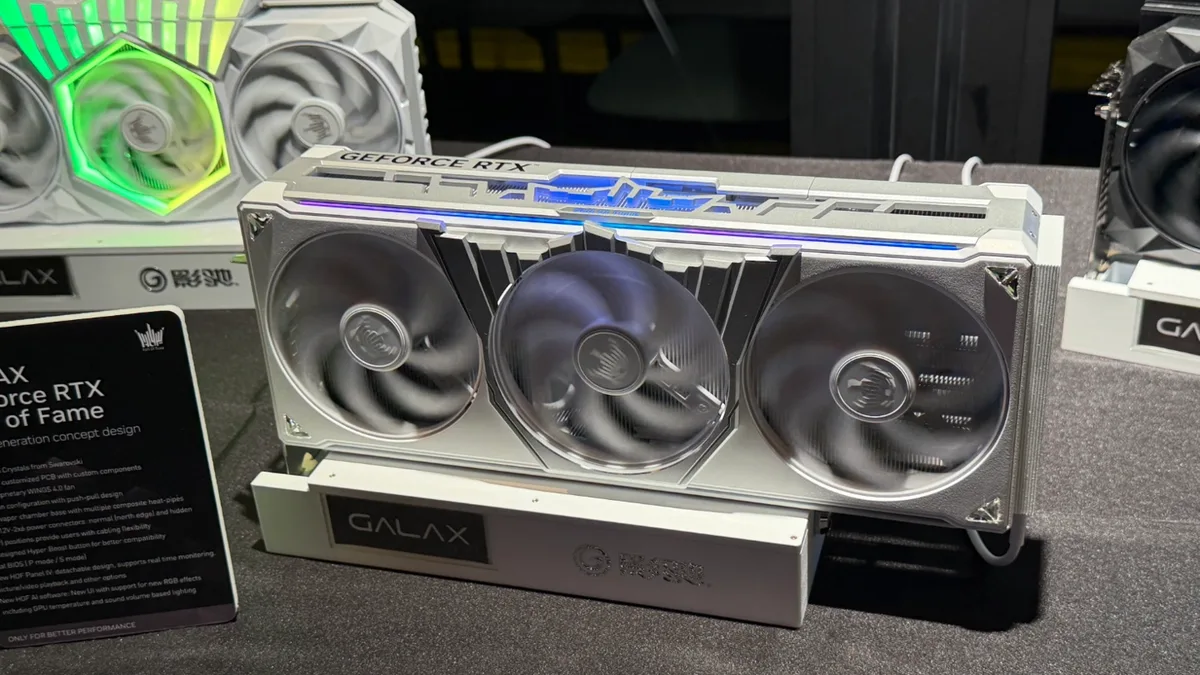
When GALAX first displayed a crystal-accented white graphics card behind glass at Computex in Taipei under a next-generation concept label, many hardware watchers assumed it was an early design study for future architectures arriving well ahead of NVIDIA’s delayed GeForce RTX 60 lineup projected for 2029. Instead, GALAX’s new three-day countdown teaser confirms that the luxury showpiece is becoming a commercial GeForce RTX 50 Hall of Fame release on October 22, 2026.
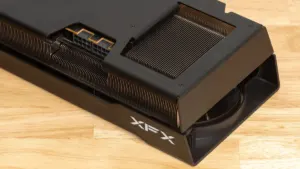
Billed in GALAX’s teaser with the tagline that “it does not conduct electricity and does not emit light, yet its presence dims every other shade of white,” the card retains the signature all-white HOF aesthetic while embedding genuine cut Swarovski crystals into the cooler. On the front shroud, smooth white panels meet rough, jewel-faceted textures with triangular crystal inserts positioned at all four corners to catch and refract ARGB lighting across custom showcase PCs.
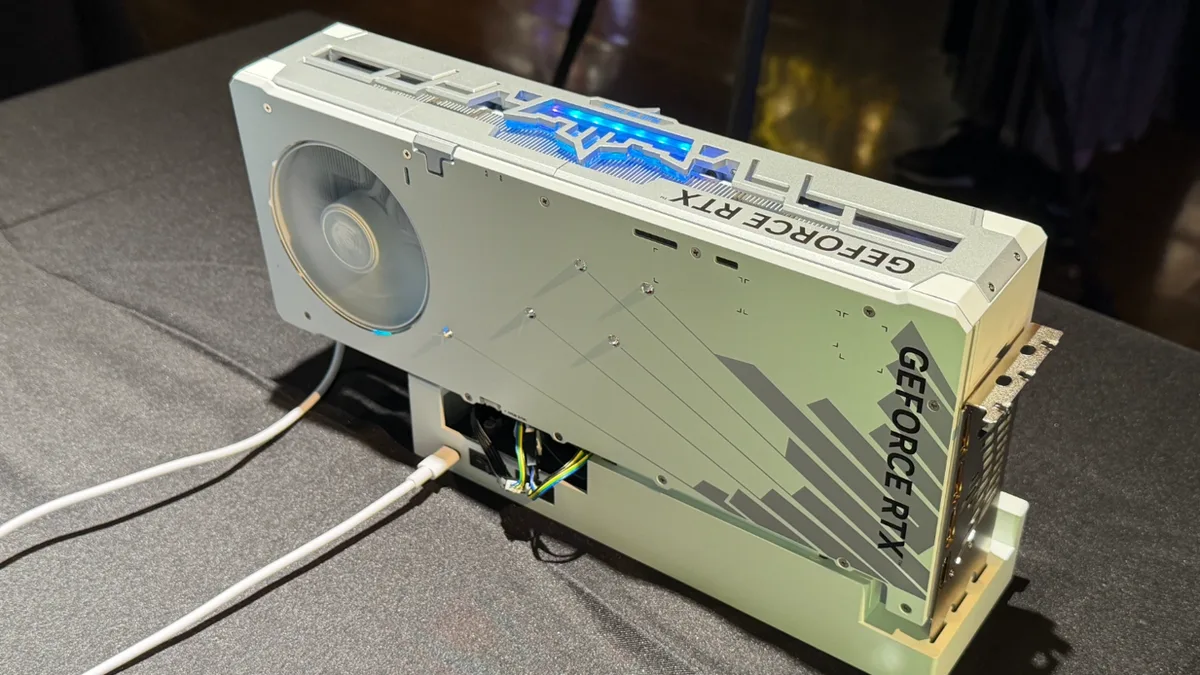
While the crystal treatment guarantees an eye-watering collector premium in a US and global market where GeForce RTX 5090 supply remains tightly constrained well above its $1,999 baseline MSRP, GALAX’s official specification placard reveals serious extreme-overclocking engineering underneath the jewelry:
- Quad-Fan WINGS 4.0 Push-Pull Cooling: Three front intake fans paired with a fourth exhaust fan recessed into the backplate, drawing heat from a full-coverage vapor chamber base and composite heat-pipes.
- Dual-Position 12V-2x6 Power Delivery: Built for flagship Blackwell silicon (spanning RTX 5090, RTX 5090D, and RTX 5080 HOF configurations), with both standard top-edge and hidden connector layouts to simplify high-wattage cable routing.
- Full Hall of Fame Feature Set: A custom white PCB with heavy-duty VRM stages, hardware Dual BIOS switch (Performance and Silent modes), a redesigned rear Hyper Boost button, the detachable HOF Panel IV display for live telemetry and video playback, and updated HOF AI software that syncs RGB lighting to GPU temperatures or audio volume.
NVIDIA VBIOS Vix Editor: Unlocking 800W on RTX 5090 and 500W on RTX 5080 Without Flashing
Historically, extreme power limits were locked behind boutique flagship cards like GALAX’s HOF series or risky cross-flashing with leaked XOC firmware. That barrier just cracked wide open on GitHub, where developer Panchovix released the open-source NVIDIA VBIOS Vix Editor alongside companion memory loaders for Windows and Linux.
On modern GeForce GPUs, altering even a single byte in a VBIOS image invalidates NVIDIA’s cryptographic signature, causing standard flashing utilities like NVFlash to reject the ROM, or risking a bricked card if written with a hardware programmer. Building upon initial registry override research by Overclock.net contributor pantsoftime, Panchovix’s toolset bypasses physical SPI flash writes altogether.

Instead of touching the onboard EEPROM chip, enthusiasts dump their stock ROM via GPU-Z, edit the parameters inside the GTK 4 desktop utility, and inject the modified image at driver initialization:
- Windows Driver Registry Override (R616 and R617 Drivers): The loader writes the edited VBIOS binary chain directly into the GPU’s Windows Registry driver key, sets the EnableGpuFirmware DWORD value to 0x11 (enabling GPU System Processor firmware with fallback support), and restarts the display adapter via PnPUtil.
- Linux Open Kernel Module Injection (R615 Drivers): On Linux systems, the companion loader patches NVIDIA’s open kernel modules at boot so the GSP firmware initializes directly from the customized in-memory ROM image.
- Tested Power and Voltage Ceilings on Blackwell and Ada: Early runs on a GeForce RTX 5090 (GB202) pushed board power limits from the stock 600W ceiling up to 700W and 800W while raising NVVDD and MSVDD voltage caps from 1,110 mV to 1,150 mV. On a $999-tier GeForce RTX 5080 (GB203), power limits scaled cleanly from 360W to 500W. The editor also unlocks minimum voltage (VMIN), 12V input and output overcurrent protection (OCP) thresholds, clock offset ranges (up to +2,000 MHz on RTX 4090), and custom PWM fan curves across Blackwell, Ada Lovelace, Ampere, and Turing cards.
My Take: On the Test Bench
Looking at both announcements side by side from a builder’s test bench, the contrast could not be sharper. On one end, GALAX is turning the RTX 50 Hall of Fame into a literal piece of Swarovski-encrusted luxury hardware on October 22, pairing a quad-fan push-pull cooler and dual 12V-2x6 power inputs with a price tag aimed squarely at deep-pocketed collectors. On the other end, Panchovix just handed everyday RTX 5080 and RTX 5090 owners a free, reversible software key to bypass stock power walls without ever risking a corrupted BIOS flash.
That said, I want to stress a critical electrical reality before anyone cranks a retail GPU to 500W or 800W: eliminating the risk of a bad EEPROM flash does not eliminate the risk of melting hardware. A standard single-connector RTX 5080 or RTX 5090 running a raised OCP ceiling and 1,150 mV core voltage will push 12V-2x6 terminals and VRM phases far beyond their factory thermal margins. Until NVIDIA Inevitably patches the registry override vector in a future driver branch beyond 617.x, VBIOS Vix Editor is a remarkable breakthrough for custom water-loop overclockers, provided you respect what your power delivery can physically survive.

PC hardware enthusiast and competitive gamer, Arthur 'Heimdall' splits his time between France and the UK working in enterprise B2B software solutions. A business school graduate passionate about component benchmarking, he has been building, modding, and tuning PCs since childhood, optimizing every thermal degree and millisecond of display latency. An avid gamer across Assassin's Creed and sandbox titles, he forged his alliance with Grimtag and Chaya during late-night World of Warcraft raids before joining Pro-Gamer.