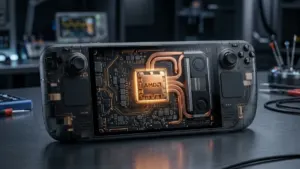
Steam Deck 2, PS6 Handheld, and Xbox Portable: 3 Custom AMD Chips Reshape Gaming for 2028
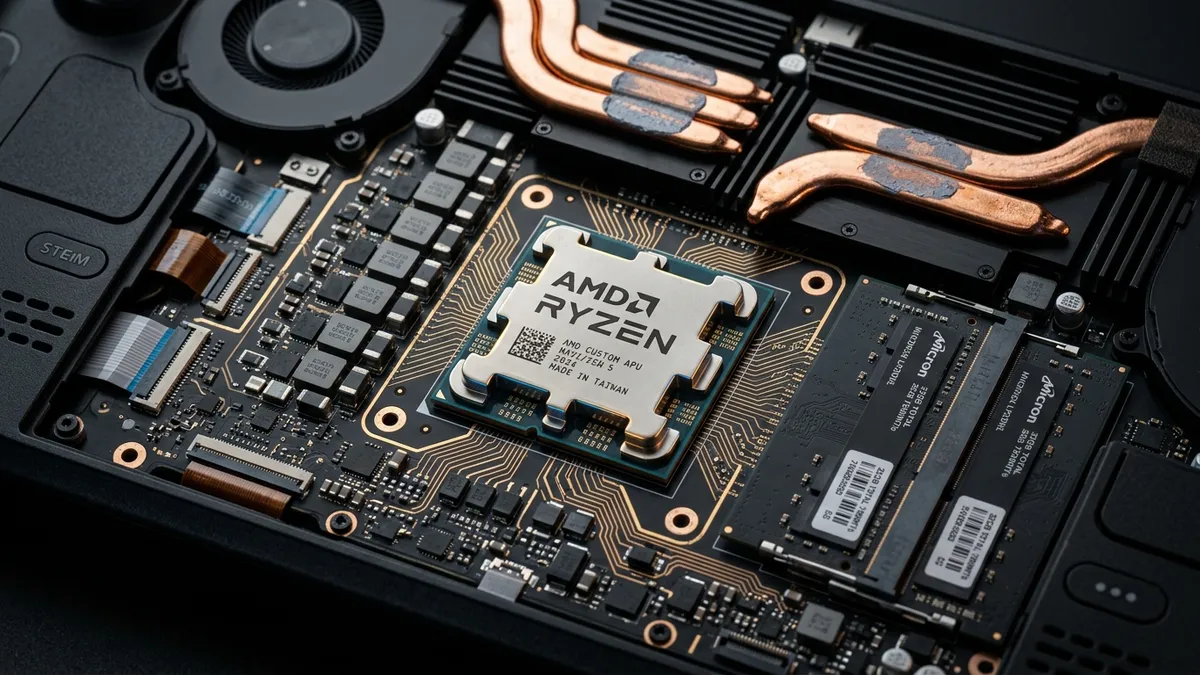
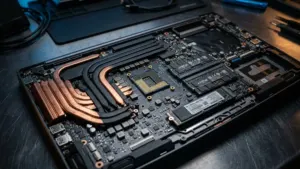
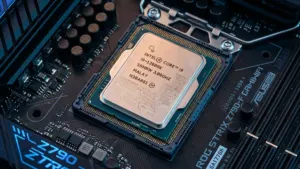
Community dataminers and hardware enthusiasts tracking AMD GPU driver commits just uncovered what may be the definitive technical roadmap for portable gaming. Leaked manifests reveal that Valve, Sony, and Microsoft are all actively designing bespoke semi-custom silicon with AMD, targeting a synchronized 2028 generation to finally replace repurposed laptop chips with dedicated handheld architecture.
Gainsborough: Valve Rejects the Mid-Gen Upgrade Trap
Valve is not rushing out an incremental Steam Deck 1.5. The newly spotted Gainsborough APU codename continues the direct lineage of Aerith, the custom processor powering the original Steam Deck, named after Final Fantasy VII's iconic heroine.
Patience remains Valve's defining strategy. Instead of cranking up wattage to artificially win benchmark charts, the company refuses to exceed a strict 15W thermal envelope. The Gainsborough design incorporates dedicated on-die hardware acceleration for FSR upscaling while waiting for LPDDR5X and LPDDR6 memory prices to mature, aiming to double effective memory bandwidth without inflating retail costs.
Canis: Sony Builds a Native PS6 Handheld, Not Another Streaming Device
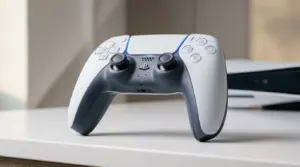
Over in Sony's pipeline, the discovery of the Canis processor confirms genuine standalone hardware. This is not a low-cost network decoder designed for Remote Play or cloud streaming like the PlayStation Portal.
The Canis APU is a custom processor built to run PS4 and PS5 games natively on local hardware. Engineered as an integrated companion to the future PlayStation 6 ecosystem, Sony aims to bring its flagship home library to a portable form factor without resorting to clunky software emulation layers.
Microsoft Commits to Dedicated Silicon Free of Windows Bloat
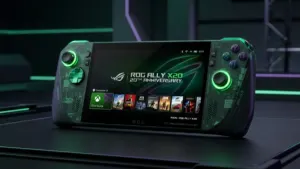
Microsoft's discussions with AMD have also solidified into concrete hardware plans. While third-party hardware partners pushed brute specs to their limits, as detailed in our ROG Xbox Ally X20 review, running desktop Windows on a handheld device remains an ergonomic nightmare that kills battery life.
Xbox's upcoming first-party portable device will rely on tailored AMD silicon designed to boot straight into a lightweight, instant-on Xbox and PC Game Pass shell, stripping away background desktop overhead entirely.
The Death of 25W Rebadged Laptop Silicon
These three designs signal the end of a transitional era. For the past three years, portable gaming devices have been burdened by repurposed laptop processors like the Z1 and Z2 Extreme. Forcing these chips into handheld enclosures required 25W to 30W draws, turning premium devices into loud, hot handhelds that rarely survived two hours on battery.
By locking down custom 15W architectures for 2028, Valve, Sony, and Microsoft are bringing proper console engineering back to the handheld market. Bespoke hardware optimization is once again replacing brute force.

SEO consultant for over 20 years and digital entrepreneur, Charles 'Grimtag' Ronchain is the founder of Pro-Gamer.gg, Retrocharting.com, and Gamescharting.com. A competitive gamer, streamer, and retro game collector, he has worked in the video game industry for over 15 years, notably as a consultant for leading game price comparison platforms. Passionate about real-time performance data and gaming technology, he analyzes competitive esports, gaming hardware benchmarks, and creator workflows on Pro-Gamer.gg with an authentic player perspective.