144MB Cache and a New Socket: AIDA64 Confirms Intel Core Ultra 4000 Desktop CPUs
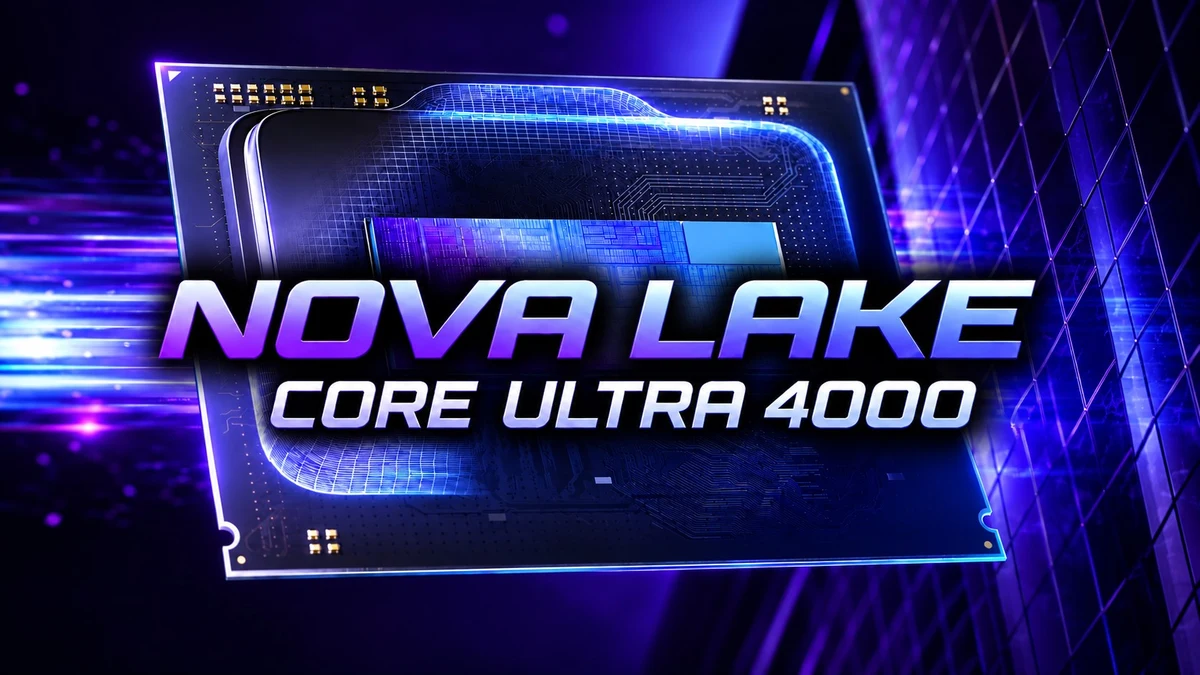
Generational jumps in PC hardware usually kick off with obscure forum rumors, but this time the leak comes straight from the most trusted diagnostic tool on the test bench. FinalWire's AIDA64, the go-to monitoring utility for system builders and overclockers, has officially updated its database. Intel's upcoming desktop architecture, code-named Nova Lake-S, is skipping the three-digit naming scheme to launch under the Core Ultra 4000 brand.
While Arrow Lake established the Core Ultra 200 series on desktop and Panther Lake (Core Ultra 300) gears up for a mobile-first push, Intel is engineering a massive architectural reset for desktop gamers set to land in early 2027.
AIDA64 Makes It Official: Inside the Core Ultra 4000 Leap
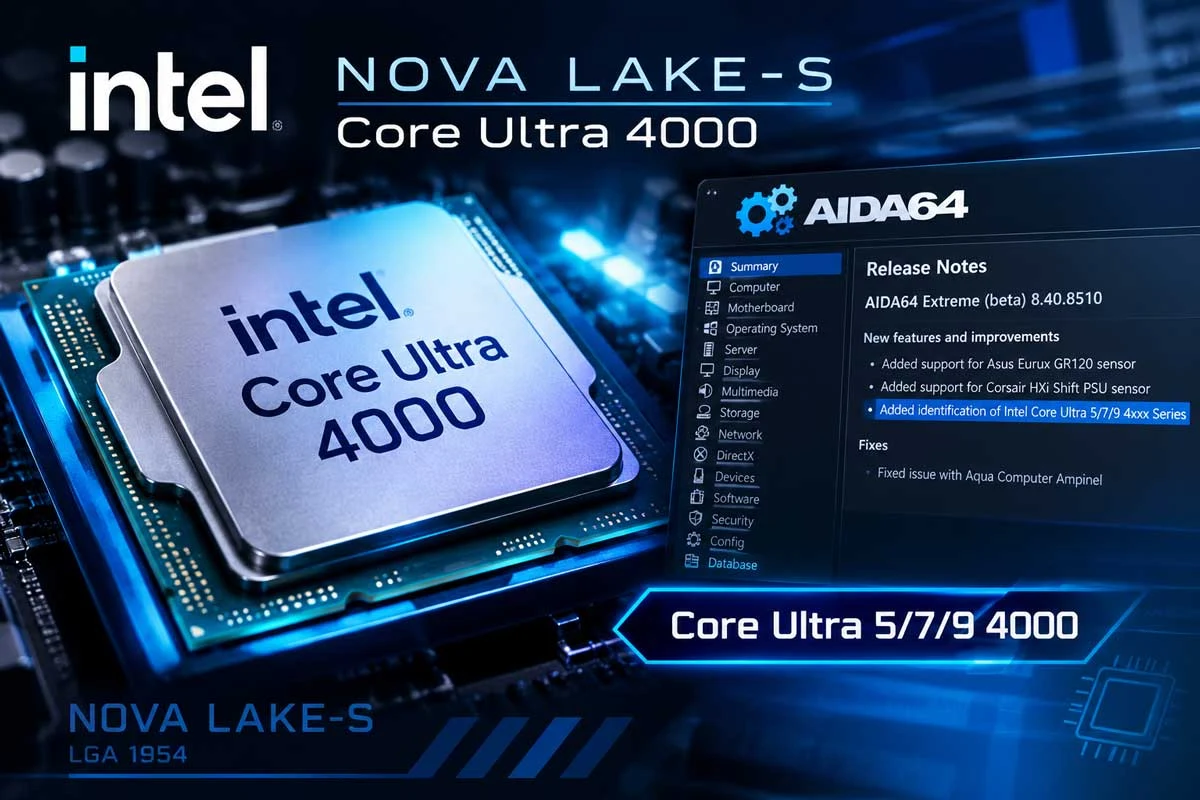
In its latest release notes for version 8.40.8510 beta, AIDA64 explicitly lists hardware detection support for "Intel Core Ultra 5/7/9 4xxx Series" processors. That single line in the changelog puts an end to weeks of speculative forum chatter, matching engineering references like the Core Ultra 5 4650KF, Core Ultra 7 4850K, and Core Ultra 9 4970K.
Intel's naming strategy is a clear hybrid approach. The company keeps the "Core Ultra" identity it established with Meteor Lake to leave the ancient Core i era behind. At the same time, it revives the familiar four-digit numbering scheme. For PC builders looking to assemble their next gaming rig, this clears up confusing bracket numbers and establishes a clean generational hierarchy.
144MB of bLLC Cache: Intel’s Direct Answer to AMD’s 3D V-Cache
Beyond the badge, Nova Lake-S represents an aggressive silicon overhaul designed specifically to win back competitive PC gamers. At the sharp end of the lineup, leaked technical manifests reveal the Core Ultra 9 4970K BFC (Big Frequency Core). The chip packs 28 cores (8 high-performance Coyote Cove P-cores, 16 high-efficiency Arctic Wolf E-cores, and 4 low-power island cores) operating within a 125W TDP envelope.
The real headline for esports and heavy simulation titles is the addition of a massive "big Last Level Cache" (bLLC) totaling up to 144MB. AMD's Ryzen X3D chips have dominated frame-time consistency and 1% lows for several generations thanks to stacked cache. Intel’s bLLC is an in-package response built to eliminate memory latency penalties in CPU-bound titles. For builders currently budgeting their components using modern gaming PC build guides, this architecture promises massive frame pacing gains without demanding exotic cooling setups.
New LGA1954 Socket: A Necessary Platform Shift Built for Longevity
There is one trade-off every builder must plan for: the LGA1851 socket introduced with Arrow Lake will not carry Nova Lake. The Core Ultra 4000 desktop family will require motherboards built around the new LGA1954 socket. While mandatory motherboard upgrades are never fun, supply chain reports indicate LGA1954 is planned as a multi-generation platform, set to host future architectures like Razor Lake.
Enthusiast models packing dual Compute Tiles and scaling up to 52 cores are also slated for display at Computex 2027. In a hardware market where builders must closely monitor gaming PC power consumption and thermal load, a cleaner architectural jump is welcome news. Desktop Nova Lake-S processors are slated to debut in the first quarter of 2027. Between now and then, Intel will rely on Arrow Lake updates to hold the line against AMD, but Santa Clara's next major gaming counteroffensive is now officially taking shape.

SEO consultant for over 20 years and digital entrepreneur, Charles 'Grimtag' Ronchain is the founder of Pro-Gamer.gg, Retrocharting.com, and Gamescharting.com. A competitive gamer, streamer, and retro game collector, he has worked in the video game industry for over 15 years, notably as a consultant for leading game price comparison platforms. Passionate about real-time performance data and gaming technology, he analyzes competitive esports, gaming hardware benchmarks, and creator workflows on Pro-Gamer.gg with an authentic player perspective.