Parallax Reflections, Smooth Xen, and Steam Deck Verified: How the Anomalous Improvements Update Transforms Black Mesa
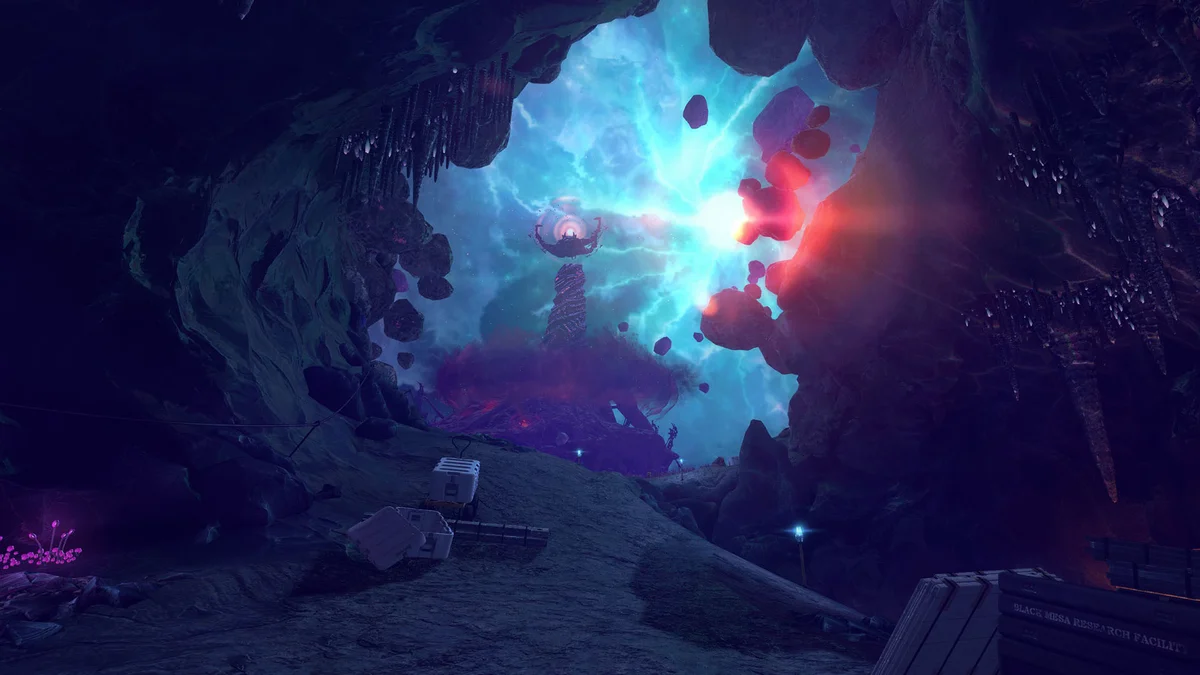
More than six years after its full 1.0 launch, Crowbar Collective has delivered a sweeping technical overhaul for its acclaimed reimagining of the original Half-Life. Titled "Anomalous Improvements" and live now on the official Black Mesa Steam store page, the update pushes the heavily modified Source engine to new visual heights while securing official Steam Deck Verified certification from Valve. Coming right as longtime fans pore over the recently uncovered Half-Life 2: Episode Three and Portal 2 beta archives, Gordon Freeman's original journey has never looked or played better on modern hardware.
Steam Deck Verified at Last: Rebuilt Controller UI, Native Steam Input, and Stabilized Xen
Until now, playing through the Black Mesa research facility on Valve's handheld required noticeable compromises. While the opening laboratory chapters ran decently, reaching the alien borderworld of Xen frequently overwhelmed the Steam Deck APU with dense extraterrestrial foliage and overlapping dynamic lights, resulting in steep framerate drops. Navigating legacy PC menus also forced players to rely on awkward trackpad cursor controls.
With the Anomalous Improvements update, Crowbar Collective resolves both bottlenecks simultaneously. The user interface has been rebuilt from the ground up for gamepad navigation, featuring native Steam Input API integration that automatically displays matching controller glyphs on screen. Under the hood, deep engine-level resource management optimizations keep framerates consistent from the opening tram ride all the way through the most demanding encounters in Xen.
Pushing the Source Engine Further: Parallax-Corrected Cubemaps and Indirect Lighting
Beyond handheld portability, the patch transforms the visual atmosphere of the underground complex by introducing Parallax-Corrected Cubemaps (PCCs). Standard Source engine cubemaps project static reflections at an infinite distance, which breaks immersion when walking through tight corridors. PCCs project environment maps onto virtual bounding boxes that match the actual geometry of each room and hallway, allowing reflections on tiled laboratory floors, brushed metal walls, and puddles to shift naturally with Gordon Freeman's perspective.
The rendering pipeline also receives several physically grounded lighting upgrades:
- Enhanced Bounce Lighting: richer indirect illumination across claustrophobic maintenance shafts and concrete bunkers.
- Image-Based Lighting (IBL): reworked ambient sky lighting for outdoor New Mexico desert chapters, especially across Surface Tension and Forget About Freeman.
- Translucent Light Transmission: light now passes realistically through reinforced laboratory glass, windows, and fluids, paired with higher-precision lightmaps and improved vertex lighting on static props.
Check Availability Steam Deck OLED Availability on Amazon→

Campaign Fixes from Inbound to Forget About Freeman and Upgraded Hammer & VRAD Tools
The development team also conducted a comprehensive pass across the campaign from Inbound through Forget About Freeman, refining map lighting, fixing long-standing elevator glitches, and smoothing out physics puzzles. For the community modding scene, which continues to thrive alongside standalone projects like the free Half-Life 2 horror mod DISREPAIR on Steam, players can now launch Steam Workshop campaigns directly from the updated main menu with full chapter selection and custom UI theme support.
Mod authors also gain a modernized version of the Hammer level editor and an updated VRAD lighting compiler, making it faster to bake the new indirect lighting features into custom maps.
My Perspective
I find it genuinely impressive how much care Crowbar Collective still pours into Black Mesa years after crossing the finish line. Many studios chasing a Steam Deck Verified badge settle for enlarging font sizes and bundling a basic controller layout, yet this team went back into the guts of the Source engine to implement geometry-aware reflections and tame Xen's heavy performance spikes. Experiencing the stark contrast between sterile laboratory fluorescent lights and Xen's bioluminescent caverns at a locked framerate on a handheld screen makes this 1998 classic feel remarkably modern.

Based on the outskirts of New York City, Chaya 'Chayane' spent five years studying software engineering in Montreal before returning to her home state. A Full-Stack developer and Deep Learning AI architecture researcher, she explores neural networks and algorithmic optimization while engineering data pipelines for Retrocharting and Gamescharting alongside Grimtag. A gamer for over 20 years and an avid collector of Nintendo history and The Legend of Zelda, she explored World of Warcraft's Azeroth before bringing her deep technical background to video game analysis.