20 Years After Sonic 2006: How a Split Team and Rushed Holiday Launch Led to a Fan-Made Unity Rebirth
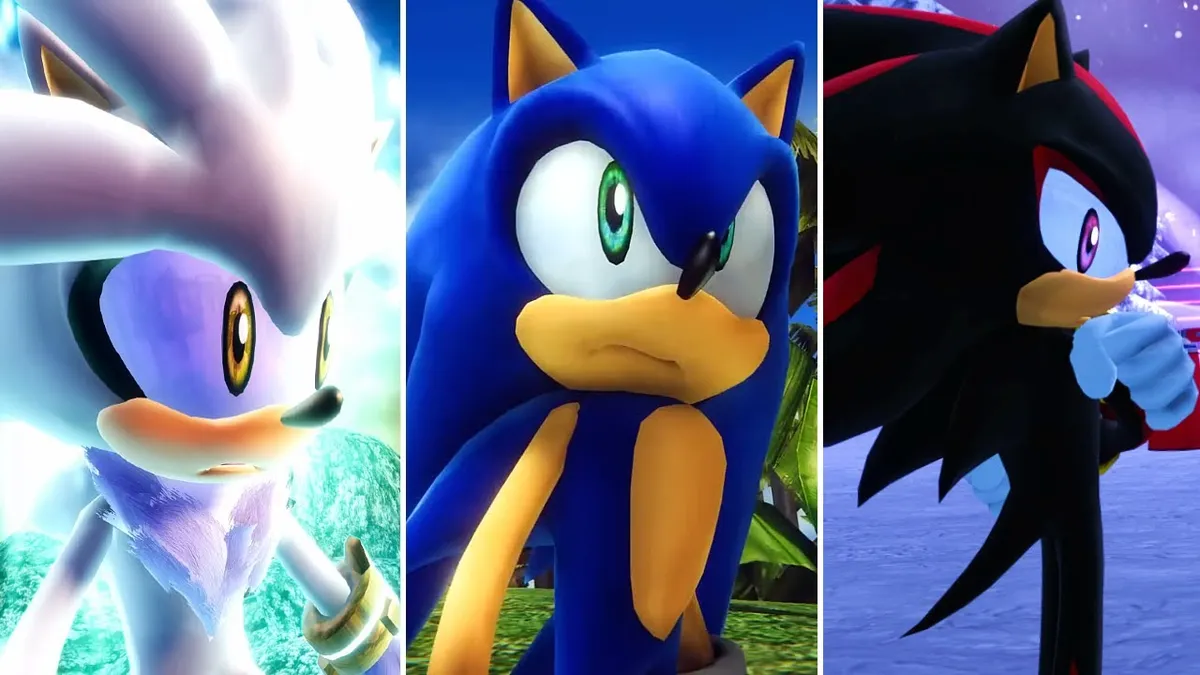
First released in North America on Xbox 360 on November 14, 2006 before arriving in Europe ten days later and on PlayStation 3 shortly after, Sonic the Hedgehog - universally known to players as Sonic 2006 or Sonic '06 - has officially reached its twentieth anniversary. Originally envisioned by Sega and Sonic Team as a blockbuster seventh-generation reboot for the mascot's fifteenth birthday, the project became a textbook case of a rushed holiday release before earning a remarkable second life two decades later.
Yuji Naka's Departure and the Wii Split: How Sonic Team Was Cut in Half
When full production began in 2005, the creative blueprint was massive. Sonic co-creator and Sonic Team head Yuji Naka wanted to usher the franchise into the high-definition era using the Havok physics engine, introducing the realistic kingdom of Soleanna, telekinetic newcomer Silver the Hedgehog, and the sinister villain Mephiles the Dark across three interwoven campaigns.
However, two major structural shocks derailed the schedule during its most fragile phase. In March 2006, just eight months before launch, Yuji Naka resigned from Sega to establish his independent studio Prope, leaving director Shun Nakamura to steer the production through a brutal crunch. Around the same time, after receiving final development hardware for the Nintendo Wii, Sega realized that the Xbox 360 and PlayStation 3 engine could not be ported to Nintendo's new console without months of heavy re-engineering.
Unwilling to miss the Wii's launch window, Sega executives split Sonic Team down the middle. Half of the staff was reassigned under director Yojiro Ogawa to build the Wii-exclusive Sonic and the Secret Rings, stripping Shun Nakamura's core team of roughly half its experienced developers while the Xbox 360 and PS3 builds were still far from finished.
Unheeded QA Reports and Sega's 2010 Retail Delisting
Despite mounting warnings from quality assurance testers, Sega leadership refused to delay the game past the 2006 holiday season, insisting it anchor the franchise's fifteenth anniversary lineup. Time ran so short that the playable demo showcased at the Tokyo Game Show and on Xbox Live was compiled from a separate development branch whose bug fixes could not even be merged back into the master retail disc in time for manufacturing.
When copies hit store shelves in November 2006, the technical fallout was immediate: erratic collision detection, unstable camera angles at high speed, and notorious loading screens that frequently paused the action twice just to display a single line of town mission dialogue. The reputational damage was so severe that in October 2010, as part of a brand recovery strategy explained by Sega Europe executive Jurgen Post alongside producer Takashi Iizuka's quality overhaul, Sega physically delisted and pulled low-scoring entries like Sonic 2006 from retail shelves ahead of Sonic Colours.

From ChaosX's Project P-06 to Sonic X Shadow Generations: A Gameplay Redemption
Twenty years after that troubled launch, the legacy of Sonic 2006 looks drastically different. On PC, Argentine programmer Ian Moris, better known as ChaosX, spent years rebuilding the game's action stages from scratch inside the Unity engine for the free fan remake Sonic Project P-06 (Project '06). By overhauling character momentum, fixing collision physics, expanding the movesets across all nine playable characters, and cutting loading times down to seconds, Project P-06 proved that multi-tiered stages like Kingdom Valley, Wave Ocean, and Crisis City had genuinely strong 3D level design underneath the unpolished retail code.
Sega itself has also embraced the best parts of the 2006 era. While the franchise continues to expand across genres with the rollout of Year Two of Sonic Racing CrossWorlds and the eight-player co-op action of Sonic Pico Park on Switch 2 and PC, Sonic Team officially brought back Mephiles the Dark and a modern 60 FPS recreation of Kingdom Valley in Sonic X Shadow Generations, giving those 2006 concepts the technical polish they originally lacked.
My Perspective
For years, Sonic 2006 was treated purely as a punchline for glitch compilations, but its twentieth anniversary is really a cautionary tale about executive scheduling overreach. Splitting a development team in half right after losing its studio founder, while refusing to budge on a holiday deadline, left Shun Nakamura and his staff with an impossible task. What makes looking back in 2026 so rewarding is seeing how both the modding community and Sonic Team itself salvaged the ambition behind the mess: playing ChaosX's Project P-06 on PC or racing through Kingdom Valley in Shadow Generations makes it obvious that the stage architecture and soundtrack were never the problem.
Based on the outskirts of New York City, Chaya 'Chayane' spent five years studying software engineering in Montreal before returning to her home state. A Full-Stack developer and Deep Learning AI architecture researcher, she explores neural networks and algorithmic optimization while engineering data pipelines for Retrocharting and Gamescharting alongside Grimtag. A gamer for over 20 years and an avid collector of Nintendo history and The Legend of Zelda, she explored World of Warcraft's Azeroth before bringing her deep technical background to video game analysis.