Combine Monoliths in the Arctic and a 26,500-Triangle Spaceship: A Leaked Test Map Mixing Half-Life 3 and Stars of Blood Surfaces
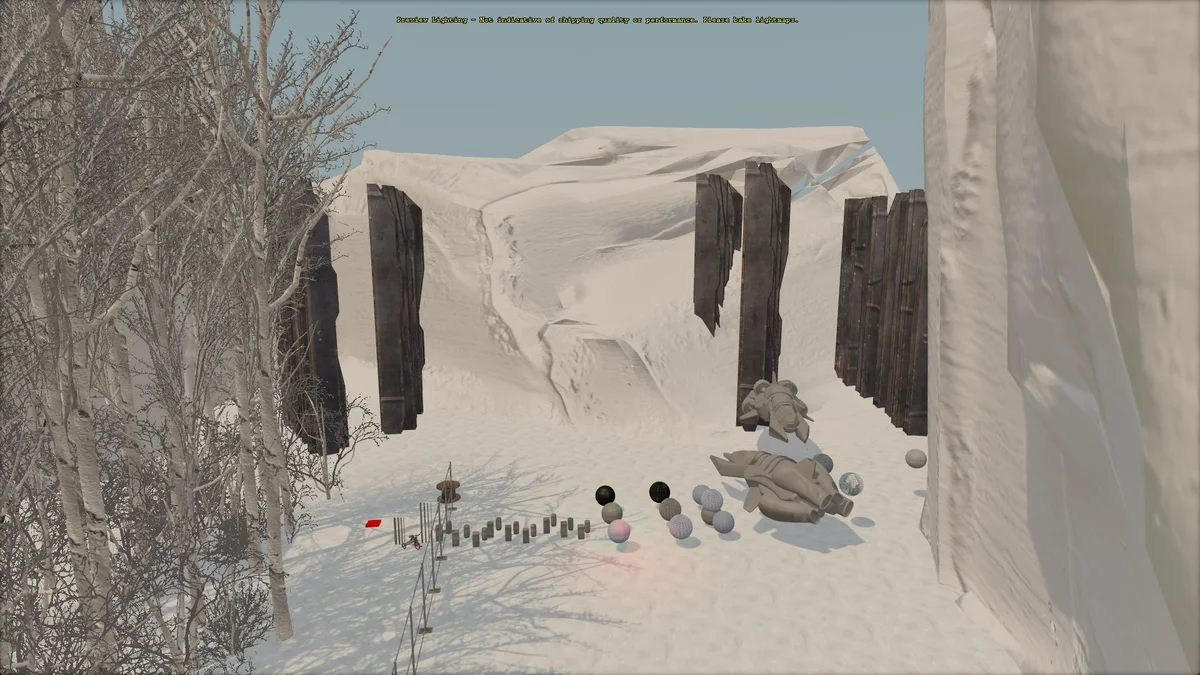
The ongoing excavation of Bellevue's historical development archives has just bridged two of the most mythical canceled projects in PC gaming history. Mere hours after the C++ source code for Half-Life 2: Episode Three's Blobulator and Gordon Freeman's original 3D model surfaced online, fresh screenshots extracted from internal developer repositories were shared on Thursday, November 12 by dataminer Gabe Follower and community researcher Scolcer. The images reveal an expansive Arctic calibration map from the 2011-2013 iterations of Half-Life 3 (and Episode Three), featuring imported 3D spacecraft meshes from Stars of Blood, the ambitious space-pirate RPG that Valve quietly shelved around 2012.
Frozen Cliffs, Bare Birch Trees, and Combine Monoliths: The Borealis Arctic Setting in Full View
Across the top of the 1080p viewport capture sits a system warning immediately recognizable to anyone familiar with the earliest iterations of the Source 2 toolset: "Preview Lighting - Not indicative of shipping quality or performance. Please bake lightmaps." Beneath that engine prompt lies a snow-swept canyon flanked on the left by a dense grove of bare white birch trees and hemmed in by towering walls of sculpted ice.
Driven directly into the frozen cliffside are four massive, dark metallic pillars and segmented walls bearing the unmistakable angled brutality of Combine architecture. The layout and visual tone align directly with official late-2000s Valve concept art depicting Gordon Freeman and Alyx Vance's perilous trek into the Arctic circle to locate Aperture Science's vanished research icebreaker, the Borealis.
In the foreground, the snowfield serves as a material calibration and lookdev bench for environment artists testing physically based surface responses under polar daylight. Twelve shader spheres (ranging from mirror chrome and matte black to UV checkerboards and specular grays) sit clustered on the snow with a faint pinkish light bounce beneath them, accompanied by two rows of small vertical test cylinders, a wooden cable spool, a wire fence, and a tiny red-marked tricycle placed to establish human scale against the towering Combine structures.
A 26,500-Triangle Spacecraft From Valve's Canceled MMO Stars of Blood
Yet the detail that initially sparked debate across the community sits right behind the shader spheres at the base of the Combine walls: two untextured greybox models of a sleek spacecraft featuring a twin-pronged bow, dual lateral thrusters, and a dorsal fin. While some observers initially mistook the craft for an unreleased Combine gunship, repository checks shared by Gabe Follower and Scolcer quickly confirmed its true origin: the 3D mesh comes directly from the source files of Stars of Blood.
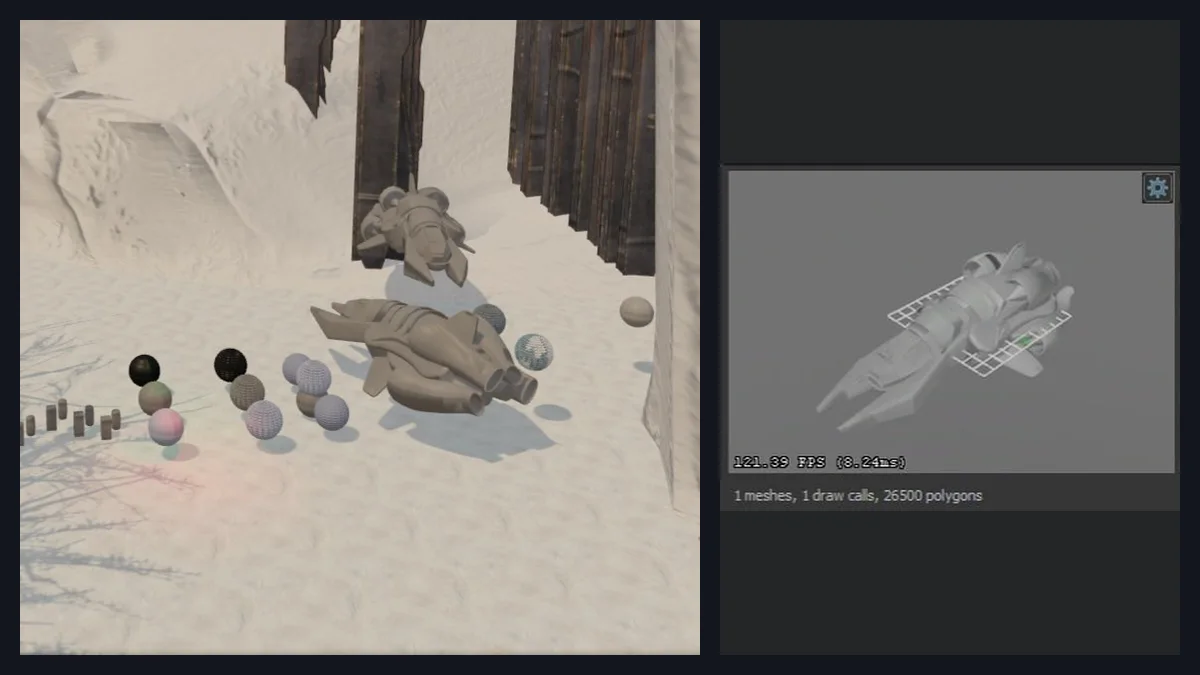
Long rumored under the working title Stars of Barathrum, the space-pirate project was publicly confirmed by Gabe Newell in November 2012 during a fan visit to Valve's headquarters, where he noted that the internal concept "never saw the light of day." A second screenshot captured directly inside Valve's model viewer now reveals the exact technical specifications of this lost spacecraft:
- Geometric Budget: the inspector reports a single unified mesh (
1 meshes) rendered in a single batch (1 draw calls) totaling exactly 26,500 triangles, complete with lateral wireframe collision or docking grids extending from its wings. - Viewport Performance: the model viewer renders the asset at 121.39 FPS with an 8.24 ms frame time, illustrating the high-density asset tests Valve's 3D artists were running during the bridge years between the legacy Source engine and early Source 2 pipelines.
- Cross-Project Testing Grounds: as Scolcer pointed out, the snowy canyon belongs to a 2011-2013 iteration of Half-Life 3 where a developer dropped the Stars of Blood hull into the level to test its volumetric scale and exterior lighting behavior alongside the Combine monoliths.
More than a decade later, these developmental artifacts offer a rare archaeological window into Valve's early-2010s experimentation, standing completely separate from the studio's modern Source 2 production on the project codenamed HLX that two Valve veterans recently let slip on a live microphone.

My Field Notes
By Maëlle "Kaelen" (International News & Investigations)
What makes this viewport capture so compelling to me isn't just seeing Combine monoliths embedded into an Arctic cliffside from Episode Three. It is the visual proof of how fluidly assets and engineers moved across projects inside Bellevue between 2011 and 2012. Under Valve's flat management structure at the time, artists and engine programmers were simultaneously prototyping early Half-Life 3 environments, building spacefaring concepts for Stars of Blood, and laying the groundwork for Source 2's lighting pipeline.
Until now, Stars of Blood existed in public records almost entirely through a handful of Peter Konig concept paintings and a single offhand sentence from Gabe Newell in 2012. Seeing an actual 26,500-triangle spacecraft mesh dropped as a lighting guinea pig next to shader balls in a snowy Half-Life test map tells us more about how those lost projects intersected behind closed doors than any retrospective interview ever could.
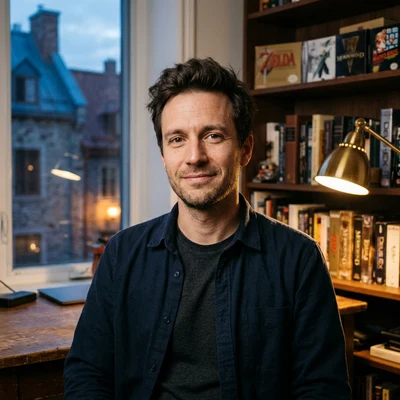
Originally from Lyon, France, gaming journalist Bastien "Orion" relocated nearly a decade ago to Quebec City's Saint-Roch district, right in the heart of eastern Canada's development studio hub. Before crossing the Atlantic, he honed his versatile reporting style across classic French gaming web portals and specialist television outlets in the 2000s and 2010s, notably with JeuxVideo.fr and JeuxNews. Equally passionate about AAA blockbusters, North American studio culture, retro preservation, and community modding projects, he anchors Pro-Gamer's transatlantic desk and real-time coverage of US and Japanese industry announcements.