24 vs 16 RDNA 5 GPU CUs: Why the FP10 Xbox Helix S Pulls Ahead of the PS6 Portable at 35W Docked
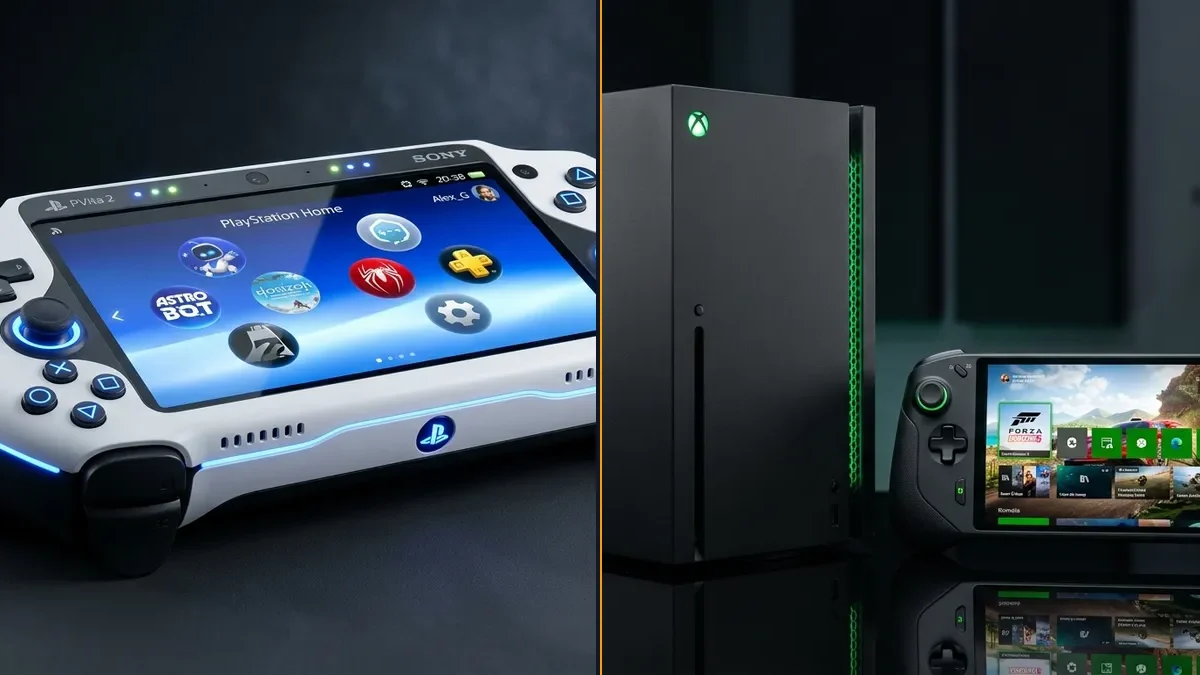
The tenth-generation console race will not be fought exclusively beneath living room televisions. As both Microsoft and Sony tap AMD to build their upcoming portable hardware around the Zen 6 "Medusa" processor family and RDNA 5 graphics architecture, internal specifications detailed by handheld hardware analyst The Fox (Cary Golomb) and corroborated by silicon roadmap leaks from Moore's Law Is Dead reveal a sharp engineering divergence between Microsoft's Xbox Helix S (also referred to internally as the Xbox Helix Series S or Series S 2) and Sony's PlayStation 6 Portable (Project Canis).
While both manufacturers rely on the same underlying generation of AMD technology, Microsoft's decision to adopt the Medusa Premium configuration on the new FP10 mobile socket equips its hybrid handheld with 24 RDNA 5 Compute Units (CUs) compared to 16 RDNA 5 Compute Units on Sony's portable system, giving the Xbox handheld a 50% advantage in physical graphics hardware.
AMD Medusa Premium (FP10 Socket) vs. Project Canis: Two Silicon Philosophies
Understanding this hardware gap requires looking at how AMD has structured its upcoming Zen 6 mobile lineup. While we recently examined the first Geekbench 7 benchmarks of the 10-core AMD Medusa Point mobile processor tailored for thin-and-light laptops, high-end gaming handhelds and compact systems are moving to a larger physical package known as the FP10 socket (measuring 25 × 42.5 mm as the direct successor to FP8).
Microsoft's Xbox Helix S is slated to use this Medusa Premium tier (also tracked on silicon roadmaps as Medusa Halo Mini). Its multi-die layout pairs hybrid Zen 6 and Zen 6c CPU cores with a dedicated graphics chiplet (codenamed AT4) housing 24 RDNA 5 Compute Units. On the memory side, the platform supports high-speed LPDDR5X while engineers are also evaluating LPDDR6 depending on DRAM pricing and controller maturity ahead of mass production.
Sony, by contrast, has prioritized a tighter thermal envelope and die efficiency for the custom 3nm AMD chip powering its portable PlayStation 6 (Project Canis). Fabricated on TSMC's N3P node, Sony's SoC combines 4 high-density Zen 6c cores with 2 low-power Zen 6 LP cores dedicated to background OS tasks, paired with 16 RDNA 5 Compute Units (supporting Dual-Issue FP32) and 24 GB of unified LPDDR5X memory across a 192-bit bus.
Technical Specifications Comparison: Xbox Helix S (Medusa Premium) vs. PS6 Portable (Project Canis)
| Specification | Xbox Helix S (Series S 2) | PS6 Portable (Project Canis) |
|---|---|---|
| AMD Silicon Platform & Socket | AMD Medusa Premium (FP10 Socket) | Semi-Custom AMD Medusa "Canis" SoC (TSMC N3P) |
| CPU Architecture | Hybrid AMD Zen 6 + Zen 6c | 4x Zen 6c + 2x Zen 6 LP (OS/Background) |
| GPU Architecture & Compute Units | 24 AMD RDNA 5 Compute Units (+50% CUs) | 16 AMD RDNA 5 Compute Units |
| Unified System Memory | High-Speed LPDDR5X (LPDDR6 under evaluation) | 24 GB LPDDR5X (192-bit Bus) |
| Battery Power Envelope (Handheld) | 15W to 20W (Frequency-throttled) | ~15W (1.2 GHz GPU / ~4.91 TFLOPS) |
| TV Dock Power Envelope (AC Power) | 30W to 35W (Full 24-CU scaling) | ~25W (1.65 GHz GPU / ~6.75 TFLOPS) |
| Docked Display & Upscaling Target | 1080p/1440p internal reconstructed to 1440p/4K | 540p/720p internal reconstructed via PSSR 3.0 |
| Projected Launch Window | 2027 (Ahead of main Project Helix home console in 2028) | 2027 - 2028 Window |
Why 24 RDNA 5 Compute Units Make the Difference at 35W in Docked Mode
When running purely on internal battery power, the raw gap between 24 and 16 Compute Units will be naturally constrained by portable thermal and battery life limits. To prevent the battery from draining in under ninety minutes, both handhelds are expected to operate inside a narrow 15W to 20W power envelope. At those wattages, a wider 24-CU GPU running at lower clock speeds benefits from voltage-curve efficiency, yet the visual gap on an integrated 7-inch or 8-inch screen remains modest.
The balance shifts dramatically once both machines are connected to an external TV dock and wall power. Freed from battery constraints, the Medusa Premium processor inside the Xbox Helix S can push its sustained power limit up to 30W to 35W. With 50% more physical RDNA 5 Compute Units at its disposal, Microsoft's handheld has the silicon headroom to render modern titles at an internal resolution of 1080p or 1440p before reconstructing a crisp 1440p or 4K output for large living room displays.
That docked scaling explains why the device is internally positioned as the Xbox Helix Series S: when slotted into its cradle, it is engineered to act as a direct home console replacement. According to hardware roadmap details reported by Fortune, Microsoft is targeting a 2027 launch for this dockable handheld, one year ahead of the flagship 56-TFLOPS Project Helix home console slated for 2028. By contrast, Sony's 16-CU portable system capping around 25W when docked will have to lean far more heavily on PSSR 3.0 neural upscaling from lower internal resolutions when connected to a television.

My Field Notes
Cross-checking these silicon breakdowns tonight with the hardware notes from my colleague Arthur "Heimdall," Microsoft's entry-level next-gen strategy makes far more sense than another static budget box. Instead of repeating a standalone $300 living-room unit like the 2020 Xbox Series S, Redmond is merging its entry console tier and its portable ambitions into a single FP10-based hybrid. At 15W on a flight, 24 RDNA 5 Compute Units can cruise along the sweet spot of their voltage curve. Once dropped into a 35W TV dock, that extra 50% of physical shader hardware gives it the native pixel budget needed to hold up on a 65-inch OLED screen without heavy upscaling artifacts.
The real hurdle will be bill-of-materials pricing: pairing a 24-CU RDNA 5 GPU chiplet with fast LPDDR5X or LPDDR6 memory during a global DRAM supply crunch leaves very little margin for an aggressive retail price in 2027. We have not yet had a physical unit on our desk, so if the manufacturer's team would like to send over a review sample so we can put it through our full real-world testing protocol, our lab doors are wide open.

Originally from Lyon, France, gaming journalist Bastien "Orion" relocated nearly a decade ago to Quebec City's Saint-Roch district, right in the heart of eastern Canada's development studio hub. Before crossing the Atlantic, he honed his versatile reporting style across classic French gaming web portals and specialist television outlets in the 2000s and 2010s, notably with JeuxVideo.fr and JeuxNews. Equally passionate about AAA blockbusters, North American studio culture, retro preservation, and community modding projects, he anchors Pro-Gamer's transatlantic desk and real-time coverage of US and Japanese industry announcements.