CPU-Z Records First-Ever PC RAM Capacity Decline as 32GB and 64GB Shares Shrink Behind a 16GB Rebound
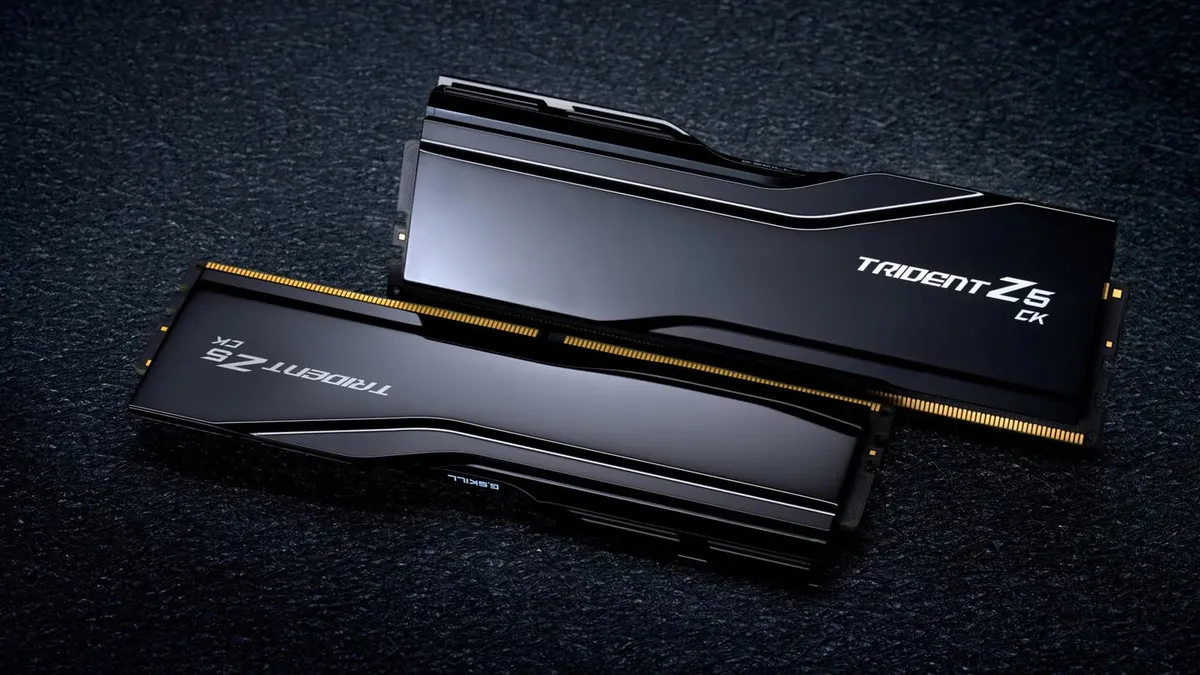
PC hardware is experiencing an unprecedented reversal in memory capacity trends. According to the latest quarterly data compiled by the official CPU-Z Validator database (CPUID), average system RAM capacity across validated PCs has declined year-over-year for the first time in more than two decades.
Pushed back by steep DDR5 retail price hikes in late 2026, PC gamers and custom builders are scaling back from 32GB, 64GB, and 128GB kits, turning instead toward budget-friendly 16GB configurations and tried-and-tested DDR4 platforms.
A First in Over 20 Years: 64GB and 128GB Setups Take a Steep Hit
The milestone was highlighted by Samuel Demeulemeester (better known as Doc TB), one of the core developers behind the CPU-Z system utility. Since CPUID launched its validation database in the early 2000s, system memory capacity had moved exclusively upward year after year.
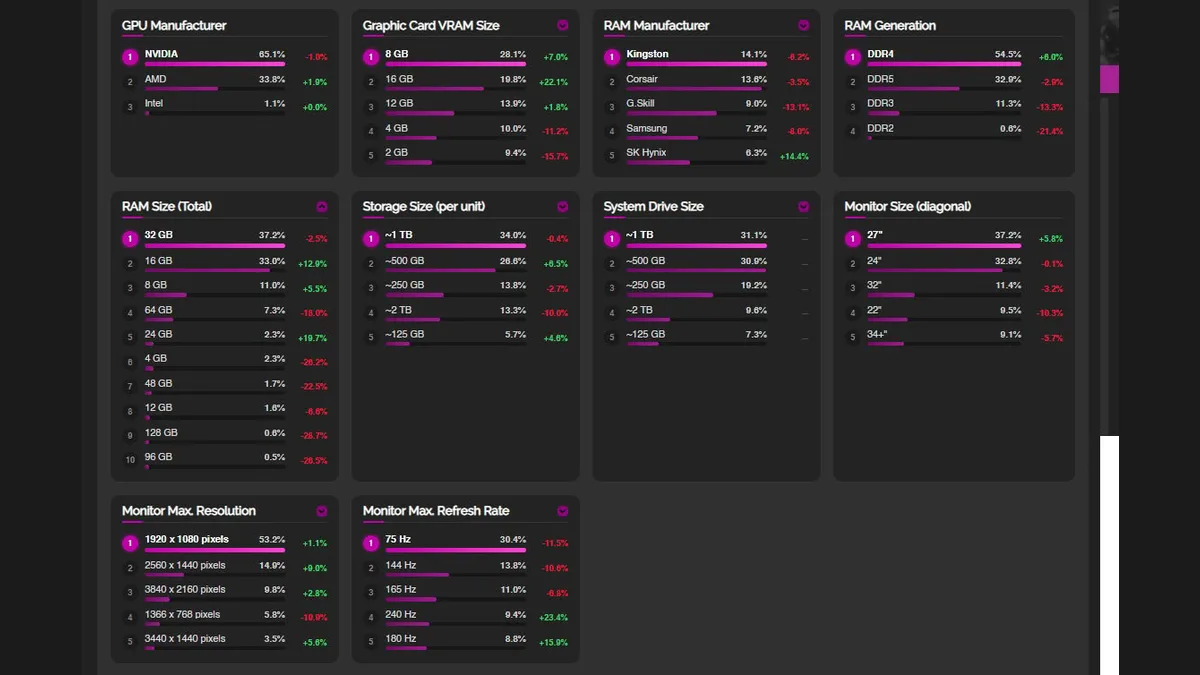
Submissions recorded over the past three months have broken that two-decade streak. While 32GB of RAM remains the single most common configuration at 37.2% of total validations, its share has slipped by 2.5% compared to a year ago.
Higher memory tiers suffered a far more dramatic contraction. Systems equipped with 64GB of RAM dropped by 18.0% down to 7.3% of validations, while enthusiast and workstation setups running 48GB (-22.5%), 96GB (-26.5%), and 128GB (-28.7%) each plunged by more than a quarter year-over-year.
16GB Surges 12.9% as DDR4 Platforms Enjoy a Second Wind
At the other end of the chart, modest and mid-range memory capacities are gaining significant ground. PCs equipped with 16GB of RAM jumped by 12.9% year-over-year to reach 33.0% of all validations, closing to within four percentage points of the 32GB leader.
Even entry-level 8GB configurations rebounded by 5.5% to claim an 11.0% share of validated machines, while intermediate 24GB setups (typically built around non-binary 2x12GB kits or mixed modules) rose by 19.7% to 2.3%.
| RAM Capacity / Generation | CPU-Z Share (Nov. 2026) | Year-over-Year Change | Market Trend |
|---|---|---|---|
| 32GB RAM | 37.2% (#1) | -2.5% | Growth stalls under DDR5 pricing pressure |
| 16GB RAM | 33.0% (#2) | +12.9% | Primary fallback for cost-conscious PC builders |
| 8GB RAM | 11.0% (#3) | +5.5% | Resurgence in budget desktops and laptops |
| 64GB RAM | 7.3% (#4) | -18.0% | Sharp pullback on high-capacity 2x32GB kits |
| 24GB RAM | 2.3% (#5) | +19.7% | Rising adoption of intermediate 2x12GB kits |
| 96GB and 128GB RAM | 0.5% (#10) and 0.6% (#9) | -26.5% and -28.7% | Severe high-density DRAM die shortage |
| DDR4-SDRAM | 54.5% (#1) | +6.0% | Extended lifespan led by Socket AM4 (+17.5%) |
| DDR5-SDRAM | 32.9% (#2) | -2.9% | Adoption slows amid global memory inflation |
Memory generation figures tell the exact same story. Rather than fading out, DDR4-SDRAM climbed by 6.0% year-over-year to account for 54.5% of all CPU-Z validations, whereas DDR5-SDRAM slipped by 2.9% to 32.9%.
Motherboard socket data reinforces this shift toward proven hardware: AMD's long-running Socket AM4 surged by 17.5% (ranking first at 23.5%), fueled by strong growth in budget AMD B550 (+35.2% to 13.9%) and A520 (+55.5% to 4.5%) motherboards, while DDR5-exclusive Socket AM5 dipped by 1.2% (to 17.1%) alongside a 23.3% drop for the B650 chipset.
DRAM Wafer Shortages, AI Data Centers, and Steam Survey Alignment
Although CPU-Z statistics only reflect systems actively submitted to the validator over the past three months, the trend aligns closely with Valve's Steam Hardware & Software Survey. After 32GB briefly overtook 16GB among PC gamers in September 2026, the rankings immediately flipped back in October as 16GB reclaimed the top spot.
The underlying catalyst is runaway memory pricing. As Samsung, SK Hynix, and Micron redirect wafer capacity toward enterprise HBM3e/HBM4 stacks and high-margin server RDIMMs for AI data centers, retail consumer memory has suffered price spikes reaching up to 761% on high-density DDR5 kits over the past twelve months.
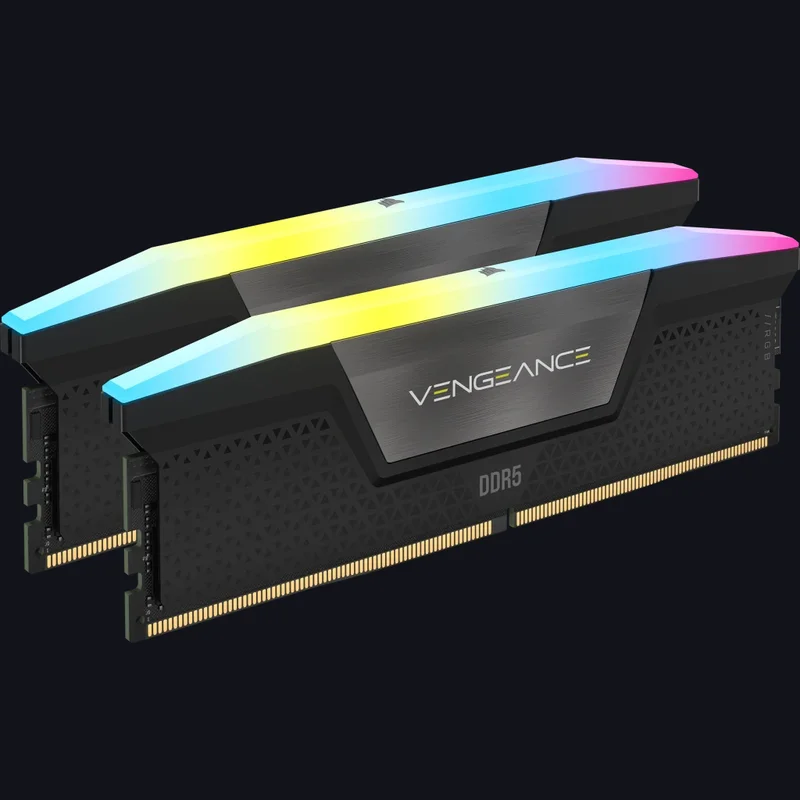
Corsair Vengeance RGB DDR5 32GB (2 x 16GB) 6000 MT/s CL30
- Dual-Channel 32GB (2 x 16GB) DDR5-6000 MT/s low-latency CL30 kit
- Certified AMD EXPO and Intel XMP 3.0 profiles with onboard PMIC voltage regulation
- Solid aluminum heatspreader with 10-zone dynamic RGB lighting
Supply constraints are expected to tighten further before they improve. Memory manufacturer Team Group recently projected that the worst phase of the global DRAM shortage will hit between Q4 2026 and Q2 2027.
Hardware and software vendors are already adapting to this reality: motherboard partners are preparing fresh DDR4 boards for upcoming LGA1700 processors in early 2027, while Microsoft recently overhauled Windows 11 memory compression to speed up multitasking by 40% on 8GB PCs.
My Take on the Spec Sheet
When CPU-Z's validation database, which skews heavily toward hardware enthusiasts and overclockers, shows an 18% drop in 64GB builds and a nearly 13% jump in 16GB setups, the message is unmistakable: PC builders are refusing to pay the AI tax on system memory. On a $1,000 to $1,200 gaming build, sinking over $350 into a high-capacity DDR5 kit at the expense of your graphics card tier makes zero sense for actual frame rates.
At 1080p and 1440p, sticking with a tuned Socket AM4 B550 platform or pairing a low-latency 16GB (2x8GB) or 24GB (2x12GB) dual-channel kit with a stronger GPU delivers far better 1% low frametimes across almost every modern game, provided you close thirty background browser tabs before launching an Unreal Engine 5 title. We have not yet tested the upcoming wave of next-generation CUDIMM and non-binary DDR5 kits on our test bench: if the teams at Corsair, G.Skill, or Team Group are reading this, our lab has a spot ready to put review samples through our full latency and gaming protocol.
Check Availability 16GB DDR4 and DDR5 RAM Kit Availability on Amazon→

PC hardware enthusiast and competitive gamer, Arthur 'Heimdall' splits his time between France and the UK working in enterprise B2B software solutions. A business school graduate passionate about component benchmarking, he has been building, modding, and tuning PCs since childhood, optimizing every thermal degree and millisecond of display latency. An avid gamer across Assassin's Creed and sandbox titles, he forged his alliance with Grimtag and Chaya during late-night World of Warcraft raids before joining Pro-Gamer.