Gaming Revenue Down 40% to Under 6% of Sales: Why Lisa Su Puts AMD Data Centers Ahead of Radeon GPUs
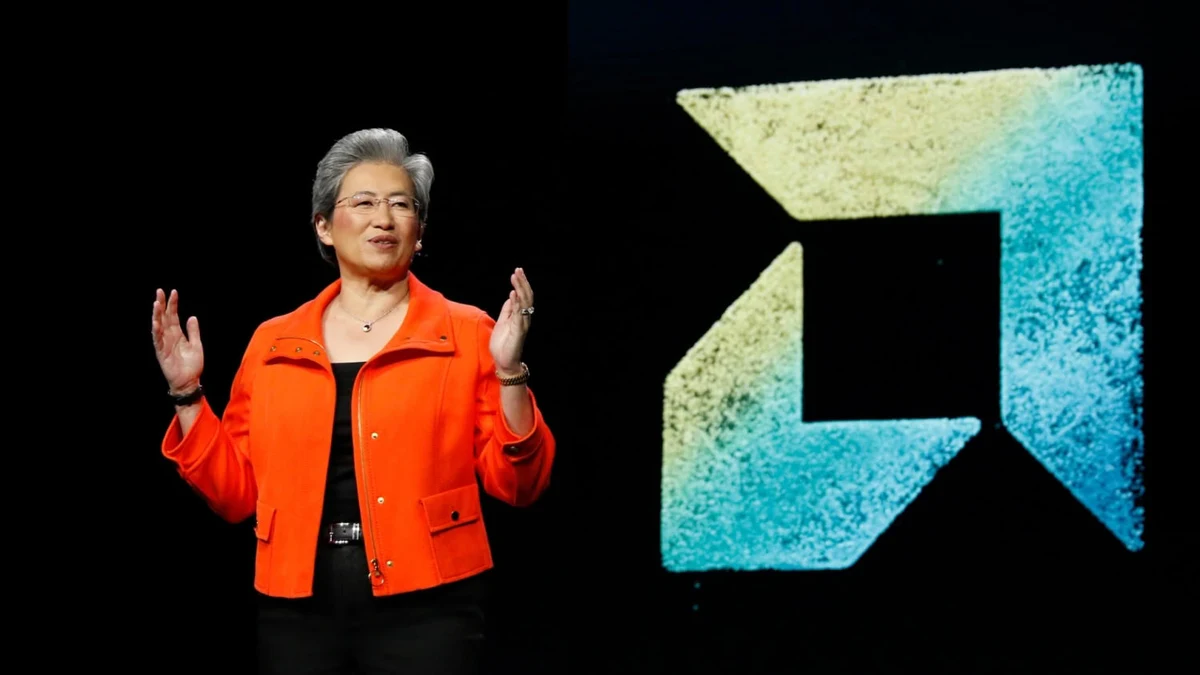
Two days after posting a historic quarterly earnings report, AMD Chair and CEO Lisa Su did not mince words about where the Santa Clara chipmaker's priorities now stand. Speaking with Executive Editor Brian Sozzi on Yahoo Finance on November 5, 2026, Su defined the company's modern identity in a single, unmistakable sentence: "We are a data center first company, that is our profile, and you know, people need more computing to power all these applications." The candid remark lands right as AMD's gaming division shrinks to less than 6% of total corporate revenue.
64% Data Center Revenue vs. Under 6% for Gaming: Inside AMD's Financial Shift
A closer look at the third-quarter 2026 financial tables published on the official AMD Investor Relations portal illustrates just how drastically the company's center of gravity has moved. While AMD's $17 billion fourth-quarter guidance puts the chipmaker on track to surpass Intel in total quarterly revenue for the first time in history, that surge is overwhelmingly powered by enterprise cloud infrastructure and artificial intelligence accelerators.
Out of the record $13.4 billion AMD generated in Q3 2026 (up 45% year-over-year), the Data Center segment alone brought in a record $8.55 billion, skyrocketing 97% year-over-year. Enterprise server hardware now represents 64% of AMD's total revenue, jumping from 47% a year ago. Although Su first used the "data center first" phrase back in 2024 when server sales had just crossed half of total revenue, the gap between enterprise silicon and consumer gaming has now widened into a chasm.
| AMD Business Segment | Q3 2026 Revenue | Year-over-Year Change | Share of Total Revenue |
|---|---|---|---|
| Data Center (EPYC & Instinct AI) | $8.55 Billion | +97% | 63.8% |
| Client (Ryzen PC Processors) | $2.90 Billion | +7% | 21.6% |
| Embedded Systems | $1.10 Billion | +29% | 8.2% |
| Gaming (Radeon GPUs & Console SoCs) | $773 Million | -40% | 5.8% |
In stark contrast, AMD's Gaming segment fell 40% year-over-year to $773 million (remaining flat sequentially compared to Q2 2026), accounting for just 5.8% of total revenue. AMD attributed the contraction primarily to lower semi-custom chip shipments for Sony's PlayStation 5 and Microsoft's Xbox Series X|S consoles (which had previously driven a 181% surge to $1.3 billion in Q3 2025), alongside softer consumer demand for discrete Radeon graphics cards.

TSMC Wafer Allocations, GDDR6 Memory, and What It Means for Radeon GPUs
Far from expecting the enterprise boom to cool off, Su told Sozzi that AMD's data center business is projected to grow 50% sequentially from Q3 to Q4 2026, adding that the company aims to "more than double the business as we go into next year" in 2027. Pushing back against short-term Wall Street skepticism, Su emphasized that hyperscalers are revising AI infrastructure budgets upward faster than anticipated and that AMD is locking in supply and capacity on a three-to-five-year horizon.
For PC builders and everyday gamers, this explicit prioritization of high-margin AMD Instinct AI accelerators and EPYC server processors carries direct hardware consequences. Cutting-edge foundry wafers at TSMC, advanced packaging capacity, and memory supply contracts are naturally funneled toward enterprise products where a single server accelerator commands tens of thousands of dollars.
That supply-chain tug-of-war compounds AMD's latest November factory price increases across Radeon RX 9000 GPUs and GDDR6 memory. Budget graphics cards remain increasingly scarce on retail shelves, while mid-to-high-end models face persistent memory cost pressure. Currently, the RDNA 4-based Radeon RX 9070 XT (16GB GDDR6) around $920 stands as AMD's primary value anchor against $1,700 GeForce RTX 5070 Ti listings, with next-generation RDNA 5 desktop graphics cards not expected before Computex 2027.
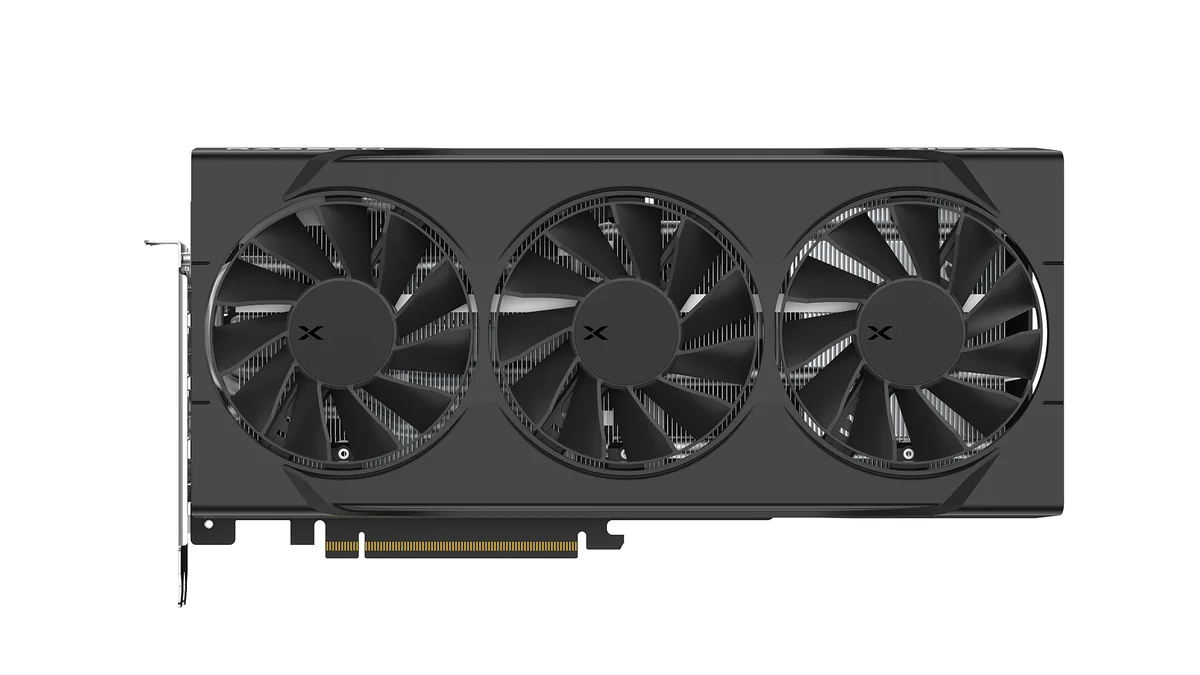
AMD Radeon RX 9070 XT (16GB GDDR6)
- AMD RDNA 4 Architecture (Navi 48)
- 16GB GDDR6 Memory on 256-bit Bus
- Native AMD FSR 4 and AFMF 3 Support
- Around $920 at US Retailers
My Field Notes
Comparing notes every week with Arthur "Heimdall" on our GPU test bench numbers, I at least respect Lisa Su's candor. Instead of feeding the PC gaming community hollow marketing platitudes, AMD's CEO is stating the cold financial reality of late 2026: when your Data Center division generates $8.55 billion in a single quarter and is on pace to more than double in 2027, no fiduciary board on Earth is going to divert TSMC wafers away from Instinct AI racks just to flood retail shelves with low-margin $250 Radeon graphics cards.
Still, the takeaway for everyday PC builders is sobering. With Nvidia already pulling the vast majority of its revenue from enterprise AI clusters, watching AMD's gaming segment dip below 6% of total sales confirms that discrete gaming GPUs have become a side business for both major chipmakers. While Ryzen desktop processors ($2.9 billion in Q3) continue to thrive because consumer X3D chips share core CCD chiplets with high-margin EPYC server CPUs, standalone Radeon graphics silicon enjoys no such synergy. Until hyperscaler demand stops absorbing foundry capacity and GDDR6 supply, finding an affordable graphics card will remain an uphill battle.

Originally from Lyon, France, gaming journalist Bastien "Orion" relocated nearly a decade ago to Quebec City's Saint-Roch district, right in the heart of eastern Canada's development studio hub. Before crossing the Atlantic, he honed his versatile reporting style across classic French gaming web portals and specialist television outlets in the 2000s and 2010s, notably with JeuxVideo.fr and JeuxNews. Equally passionate about AAA blockbusters, North American studio culture, retro preservation, and community modding projects, he anchors Pro-Gamer's transatlantic desk and real-time coverage of US and Japanese industry announcements.