22.39 Seconds at the Temple of Time and 4 Seconds Saved to Hyrule Castle: Why Rolling Still Beats Nintendo's Dash in Zelda: Ocarina of Time on Switch 2
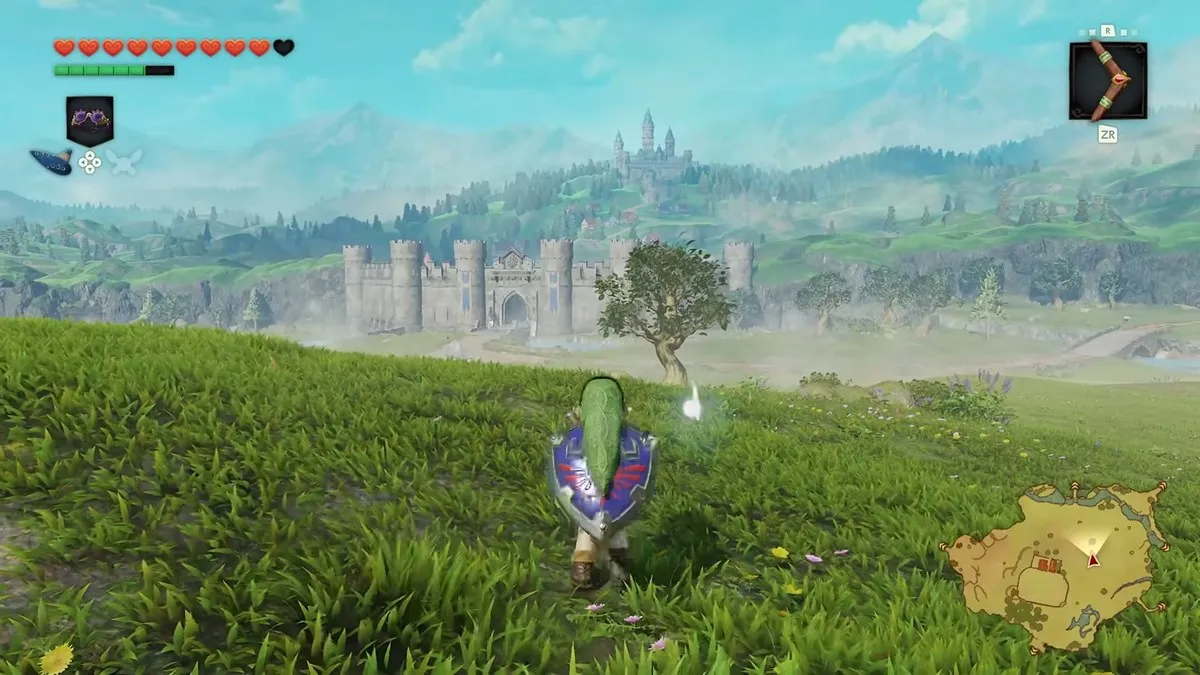
When longtime series producer Eiji Aonuma showcased the Nintendo Switch 2 remake of The Legend of Zelda: Ocarina of Time, he specifically addressed a habit every Nintendo 64 veteran knows by heart: endlessly spamming Link's dodge-roll across Hyrule Field just to move a little faster. To modernize on-foot exploration, the development team introduced a dedicated, stamina-free dash mechanic triggered by holding down the A button right out of a roll.
Just as the remake celebrates a massive 537,041 physical copy debut in Japan's latest Famitsu charts, community testers and speedrunners have put Aonuma's recommendation to the stopwatch test. Their frame-by-frame measurements prove that not only does classic rolling still match or edge out the official sprint, but a newly discovered hop-cancel technique lets Young Link beat Nintendo's dash by several full seconds.
Six-Way Temple of Time Race: 22.39 Seconds Rolling vs. 22.54 Seconds Sprinting
To measure how every on-foot movement option stacks up in the Switch 2 remake, content creator André Segers set up a synchronized six-way race down the long stone nave of the Temple of Time, running from the entrance all the way to the back wall behind the Master Sword pedestal. Using standard analog-stick running as the 100% baseline (27.06 seconds), the timings highlight major physics adjustments under the hood.
Inside the Temple of Time, chained rolling takes first place at 22.39 seconds (19.6% faster than normal running), narrowly beating the new sprint mechanic at 22.54 seconds (18.3% faster). Because steering slightly around the Master Sword altar could account for that 0.15-second gap, a second head-to-head race was run with Adult Link along the completely flat horseback archery track at Gerudo Fortress, where rolling and sprinting crossed the finish fence in a dead-heat tie at 28.30 seconds.
While the new dash successfully matches standard rolling for casual travel, Nintendo's 2026 physics engine severely nerfed classic backward walking (backwalking). Once tied with rolling as the go-to speedrunning method for crossing Hyrule Field on the Nintendo 64, walking backward with target lock now finishes dead last at 33.42 seconds, making it 19.6% slower than normal running.
| Rank | On-Foot Movement Method | Temple of Time Time | Speed vs. Normal Run | Switch 2 Remake Status |
|---|---|---|---|---|
| 1st (Child Speedrun) | Forward-Hop Roll-Cancel (target hop + roll) | ~20.8s (est.) | ~ +26% faster | Fastest Young Link tech (saves ~4s to Hyrule Castle) |
| 1st (Standard) | Chained Rolling (Rolling) | 22.39s | +19.6% faster | Ties sprinting at 28.30s on Gerudo flat track |
| 2nd | Official Sprint / Dash (hold A) | 22.54s | +18.3% faster | New stamina-free dash introduced in 2026 |
| 3rd | Chained Backflipping | 23.22s | +16.0% faster | Still highly effective over medium stretches |
| 4th | Side Jumping (Side-Hopping) | 25.00s | +8.4% faster | Heavily nerfed compared to the 1998 N64 original |
| 5th | Normal Running (Baseline) | 27.06s | Baseline (100%) | Default analog-stick running speed |
| 6th | Backward Walking (Backwalking) | 33.42s | -19.6% slower | nerfed into the ground (matched rolling in 1998) |
Kethaldo's Forward-Hop Roll-Cancel: Saving 4 Seconds From Kokiri Forest to Hyrule Castle
Digging deeper into the remake's revamped jump animations, Zelda speedrunner Kethaldo discovered an even faster movement technique for Young Link known as Forward-Hop Roll-Canceling. When holding target lock (ZL), tilting the left stick forward, and pressing the jump button, Young Link lunges forward with a burst of air momentum that noticeably outpaces both sprinting and standard rolling.
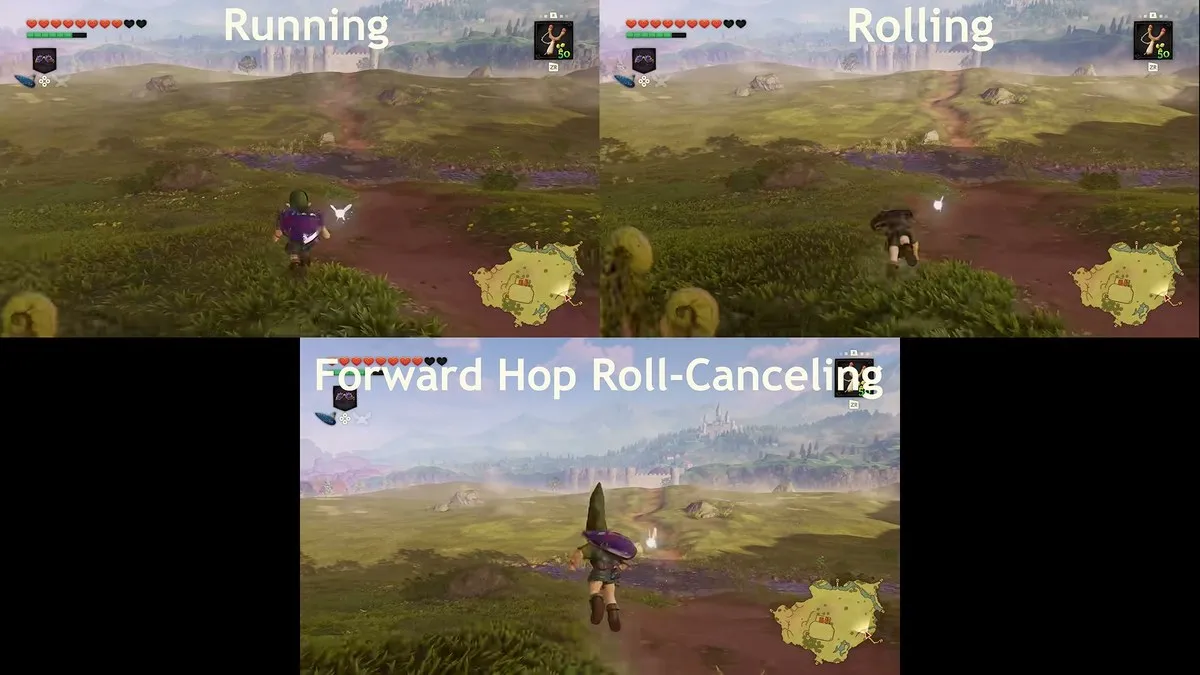
Normally, that speed burst is negated by heavy landing recovery (end-lag) at the end of each hop. However, pressing A on the exact landing frame immediately triggers a forward roll that cancels the recovery frames, allowing the player to chain another targeted front hop right away.

Timed across the classic opening stretch from Kokiri Forest to the gates of Hyrule Castle, chaining Forward-Hop Roll-Cancels gets Young Link to the castle roughly 4 seconds faster than holding Nintendo's new sprint button, even with minor input mistakes along the way. Kethaldo notes that this momentum advantage applies specifically to Young Link: once players transition to Adult Link, forward hops carry far less relative speed (with rolling only edging out sprinting by a couple of frames before Epona takes over), leaving runners to pair this early-game movement tech with the Switch 2 remake's newly discovered Actor Jump and Jumpslash Cancel glitches.
Fixing the Camera Grip Issue: Mapping Dash to GL or GR on Switch 2
Even for players who stick to Nintendo's official sprint, the control scheme introduces an immediate ergonomic hurdle. Because dashing requires holding down the A face button with your right thumb, you cannot simultaneously rotate the new free-moving camera with the right analog stick unless you resort to an awkward claw grip.
The cleanest workaround is opening the Nintendo Switch 2 quick settings menu (by holding the HOME button) and mapping the A button to the rear GR or GL grip buttons on the Switch 2 Pro Controller or Joy-Con 2 Charging Grip. Holding the rear paddle with your middle finger lets Link sprint continuously across Hyrule Field while keeping your right thumb free to steer the camera.
The Strategist's Take
When Chaya and I broke down Young Link's landing recovery frames over coffee this morning, we couldn't help laughing at the irony. Eiji Aonuma specifically built a dedicated sprint button so players would finally stop somersaulting across Hyrule after twenty-eight years, yet by giving targeted forward hops such a massive initial velocity burst without locking out roll-cancels on landing, his team accidentally created an even faster movement loop than 1998's roll spam. Shaving four full seconds between Kokiri Forest and Hyrule Castle purely through end-lag cancellation is a dream scenario for early-game Any% routing.
And as Chaya immediately pointed out with her Pro Controller in hand: "Even if you are just playing casually on the couch without chasing speedrun records, forcing players to hold down A with their right thumb while trying to turn a modern 3D camera is classic stubborn Nintendo control design, which makes mapping dash to the Switch 2's rear GR button mandatory the second you leave Kokiri Forest!"
Zelda Ocarina of Time
Explore official trailers, technical specs and all latest coverage for Zelda Ocarina of Time.

Born and based in Montreal's Mile End district, Maëlle "Kaelen" became close friends with Chaya during their university software engineering years, bonding over late-night coding labs, campus LANs, and World of Warcraft raids alongside Grimtag and Heimdall. A game systems balancing consultant and lifelong theorycrafter, she cut her teeth in the early 2010s writing boss walkthroughs, frame-data breakdowns, and competitive meta guides for specialized French-language MMORPG and esports portals, including Mondes Persistants, as well as North American strategy collections. On Pro-Gamer, she leads in-depth walkthroughs, build optimization, and tactical esports coverage.