Inside Take-Two's 29-Page Redacted Xbox Contract: Code-in-a-Box Fees, Cloud Gaming Ads, and Hidden Next-Gen Clauses Ahead of GTA 6
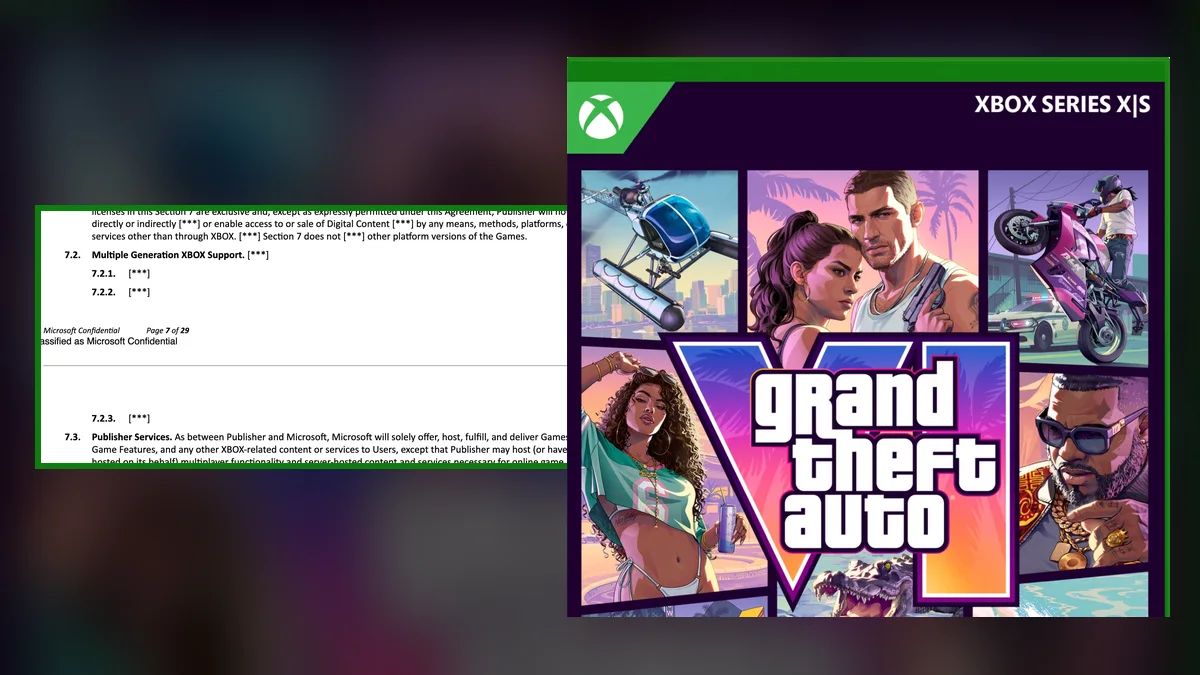
Just days after Microsoft and Take-Two Interactive unveiled their 10-year strategic Xbox partnership ahead of GTA 6, the parent company of Rockstar Games and 2K has handed the industry a rare behind-the-scenes legal document. Fulfilling its public regulatory obligations, the publisher filed a 29-page redacted version of its new Xbox Publisher License Agreement (Exhibit 10.1) with the U.S. Securities and Exchange Commission (SEC), effective September 17, 2026.
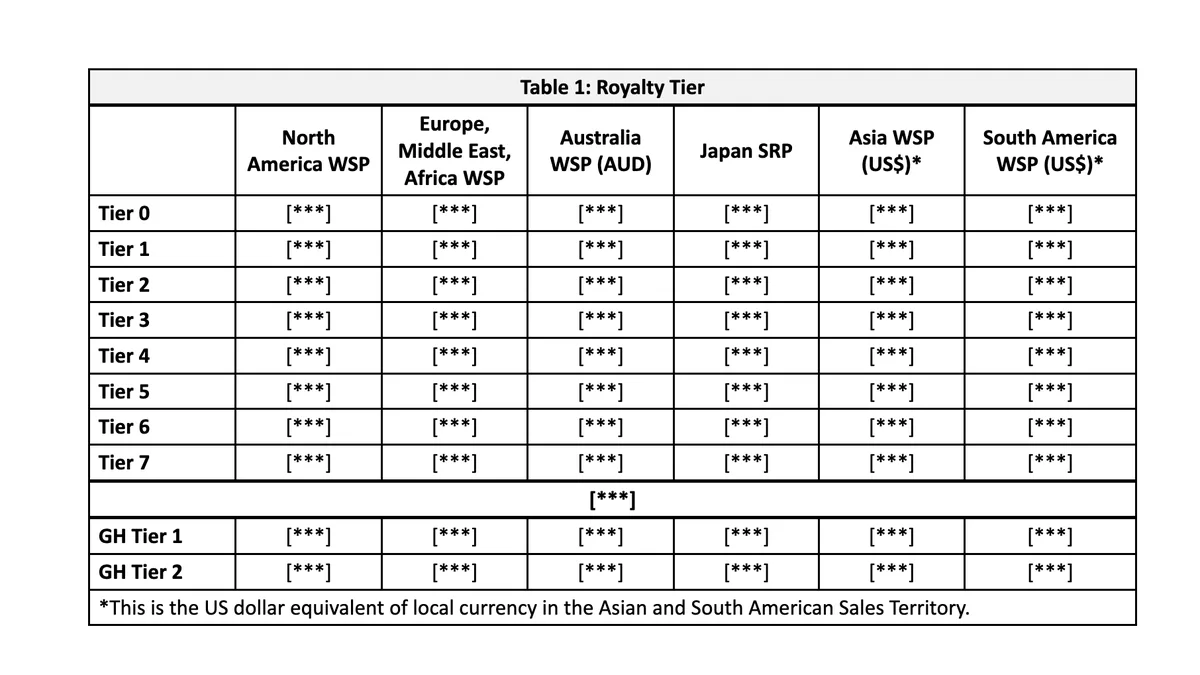
While exact revenue splits remain hidden behind [***]∗] confidentiality markers, comparing this 2026 contract directly against Take-Two's prior 2020 Xbox publishing agreement reveals how Microsoft's commercial, technical, and hardware priorities have shifted just days before Grand Theft Auto VI launches on November 19.
Xbox 360 Avatars Are Gone, Replaced by a Dedicated "Code-in-a-Box Program"
A close look at the contract's opening definitions shows what has aged out of Microsoft's ecosystem: the "Avatar" and "Avatar Items" clauses carried over from the Xbox 360 era into the 2020 deal have been completely scrubbed from the 2026 agreement. In their place, Page 17 of Exhibit A introduces a brand-new Section 5 titled "Code-in-a-Box Program."
The clause governs retail packages sold in stores that contain a digital download token rather than a physical disc, stipulating that Take-Two must pay Microsoft a specific fee for every Code-in-a-Box unit sold. That addition arrives right as 230 GB retail boxes for GTA 6 ship to stores with download codes instead of optical media.
Section 2.1 also highlights a telling distinction: while the main body of the agreement and Exhibit A (Digital Content) apply broadly to "all XBOX Devices," Exhibit B (Physical Disc Terms) is explicitly restricted to games for "XBOX 360, XBOX One, and XBOX Series," omitting any reference to future console generations.
Cloud Gaming Ad Clauses, Two-Year Source Code Archiving, and a Remote Kill Switch
The filing also details Microsoft's control over store operations and live updates. Under Section 6.2 (Platform Advertising), Microsoft reserves the sole right to run marketing, promotions, and ads across the Microsoft Store, subscription tiers, and streaming services, explicitly noting parenthetically: "(e.g., running advertisements before or after Cloud Gaming sessions)."
On the technical compliance and preservation front, three operational clauses stand out:
- Mandatory Patch Approval and Rollbacks (Section 3.5): All free patches required for gameplay must pass Microsoft approval. Microsoft can compel Take-Two to build a patch if a game negatively affects the Xbox platform, and can unilaterally remove or roll back an update if it causes widespread game crashes.
- Two-Year Source Code Archive Requirement (Section 3.6): Take-Two must archive all published versions of its digital content,in object code, source code, and symbol format,throughout its store availability and for at least two full years after delisting. Even if a distribution license is revoked, Microsoft retains the right to let existing buyers redownload the final version at no extra charge, even on a different device or in another country.
- Remote Device Disablement (Section 3.7): In cases of material contract breach, security risks, piracy, or reputational harm, Microsoft can immediately disable or remove digital content globally, "including by disabling previously downloaded copies on Users' devices."

Two Alphabetical Mystery Redactions and Locked Multi-Generation Clauses
Comparing the 2020 and 2026 texts also exposes where Microsoft tightened its confidentiality redactions. In Section 1's alphabetical list of definitions, Clause 1.36 defines "XBOX Devices" across five categories: Xbox Consoles in (1) and Microsoft or third-party Cloud Gaming Devices in (5), while categories (2), (3), and (4) are completely redacted. Even more intriguing, two defined terms have both their names and definitions blacked out as [[***]: Clause 1.18, positioned alphabetically between "GDK License" and "IPR" (spanning letters G, H, and I,where terms like Grand Theft Auto or next-gen codename Helix would sit), and Clause 1.41, placed right after "XBOX Series."
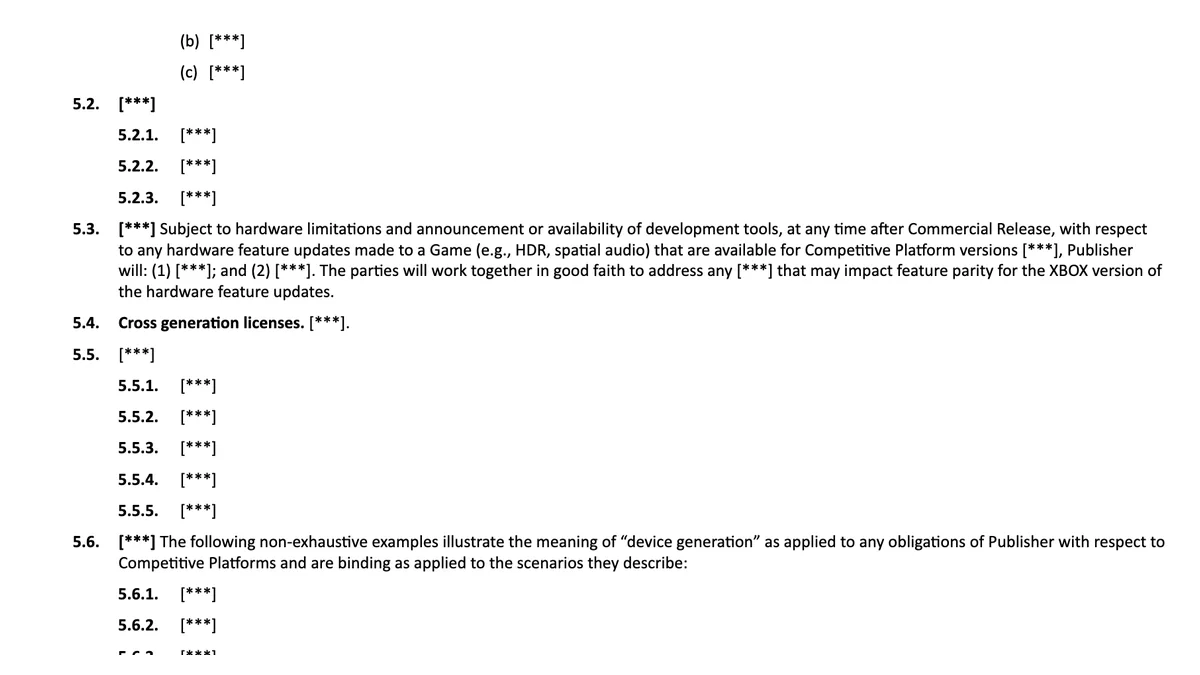
Similarly, while the 2020 agreement openly spelled out requirements for simultaneous hardware feature updates (such as HDR and spatial audio) in parity with competing consoles alongside Xbox One-to-Xbox Series cross-generation rules, the 2026 contract masks nearly all of Section 5.3, Section 5.4 (Cross generation licenses), and Section 7.2 (Multiple Generation XBOX Support).
My Field Notes
With Activision Blizzard absorbed into Microsoft and Electronic Arts exiting the public stock market, Take-Two is one of the last publicly traded publishing giants still required to file its platform contracts with the SEC. Even with heavy redactions, these 29 pages cut straight through the PR spin: adding a dedicated Code-in-a-Box fee structure, explicitly writing pre- and post-session Cloud Gaming ads into the contract, and blacking out every multi-generation hardware clause shows exactly how Microsoft is laying the legal groundwork for its post-console ecosystem.
Over in Montreal, my colleague Maëlle "Kaelen" immediately zoomed in on what Sections 3.5 and 3.6 mean for live-service stability: "Forcing Take-Two to archive every build in full source code and symbol format for two years after store removal, while giving Microsoft unilateral authority to roll back a patch that crashes consoles, is a massive technical safeguard right before a live-service behemoth like GTA 6 goes live."

Grand Theft Auto 6 (GTA 6)
Explore official trailers, technical specs and all latest coverage for Grand Theft Auto 6 (GTA 6).

Originally from Lyon, France, gaming journalist Bastien "Orion" relocated nearly a decade ago to Quebec City's Saint-Roch district, right in the heart of eastern Canada's development studio hub. Before crossing the Atlantic, he honed his versatile reporting style across classic French gaming web portals and specialist television outlets in the 2000s and 2010s, notably with JeuxVideo.fr and JeuxNews. Equally passionate about AAA blockbusters, North American studio culture, retro preservation, and community modding projects, he anchors Pro-Gamer's transatlantic desk and real-time coverage of US and Japanese industry announcements.