How to Make Money Gaming (Part 4): Tax Guide and Legal Structures for Streamers and Pros
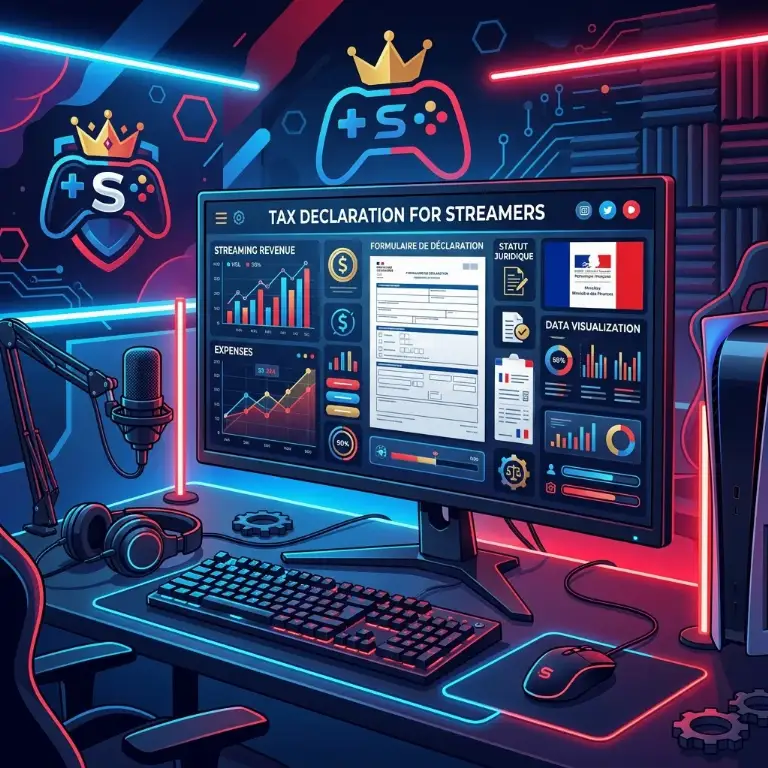
Making money playing video games and cashing your first payouts from streaming, affiliate deals, and tournament cash prizes is an exhilarating milestone. However, the moment your gaming passion generates regular revenue, legal reporting obligations kick in. Operating an ongoing commercial business under the table without proper legal registration carries severe financial penalties and back-tax liabilities.
Over the years, I have seen far too many up-and-coming creators panic when tax season arrives, terrified of filing their Twitch payouts or blindsided by automatic 30% tax withholding from US platforms. Yet navigating gaming taxation and business registration does not have to be an administrative nightmare once you understand the basic legal structures and filing workflows.
This fourth and final chapter in our monetization guide walks you through choosing the right business entity, declaring cross-border digital income, and avoiding the dreaded US double taxation trap with the essential W-8BEN tax form.
Choosing the Right Legal Business Structure
To operate legally, every serious content creator must register their business activity. For streamers and competitive gamers operating in France and broader Europe, two primary corporate frameworks dominate: sole proprietorship (such as the French micro-enterprise) and incorporated business entities (like single-member limited companies, SASU or EURL).
Sole Proprietorship / Micro-Enterprise: The Ideal Starting Point
A sole proprietorship or simplified micro-enterprise is the fastest, lowest-friction structure for launching your creator career. Setup takes just minutes through government business portals. Its key advantages are clear: ultra-streamlined bookkeeping and social contribution charges calculated exclusively on cash actually received (earn $0 / €0, pay $0 / €0 in social contributions).
Across platforms like Twitch and YouTube, your revenue streams split into two distinct tax classifications:
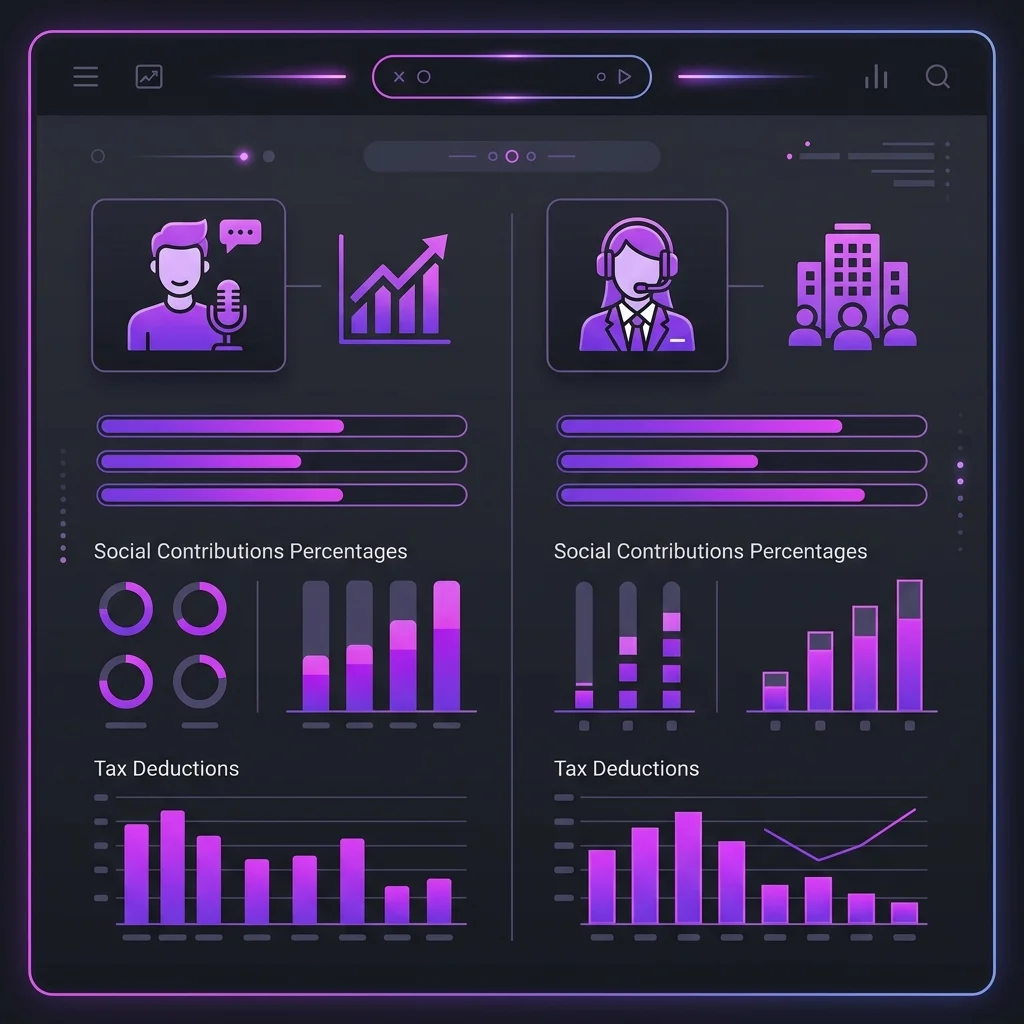
- Service Provision (Non-Commercial Services): Covers paid channel subscriptions (Subs), platform native ad revenue, direct viewer donations (via Streamlabs or StreamElements), and brand sponsorship deals. Social contribution rates under this category stand at roughly 21.2% of gross revenue.
- Commercial Sales (Retail & E-commerce): Applies to direct sales of physical goods (creator merchandise, apparel, esports jerseys) and affiliate sales of game keys. Contribution charges here are lower, typically around 12.3%.
Incorporation (Single-Member Company): For Scaling Revenue and Hardware Depreciation
A simplified micro-business has one major drawback: taxes and social charges apply to top-line gross revenue, barring you from deducting actual business expenses. While tax authorities offer flat standard deductions (34% for services, 50% to 71% for retail sales) to account for operating costs, that rarely reflects the heavy capital expenditure of competitive gamers and tech-heavy broadcasters.
If you invest heavily in high-end computing hardware: such as a dedicated dual-PC streaming rig with an RTX 4090 or RTX 5090 graphics card, professional mirrorless cameras, studio lighting, audio interfaces, and ergonomic furniture totaling $5,000 to $10,000: incorporating as a single-member limited company becomes much more advantageous.
Under an incorporated structure, you file under real-expense accounting: you can deduct 100% of legitimate business expenses from taxable income and depreciate hardware investments over three years. That means purchasing top-tier PC gear directly reduces your company's corporate tax bill and contribution liabilities. Crucially, incorporation creates a legal firewall separating your personal assets from corporate debt, shielding your personal finances in the event of contractual disputes.
Reporting Income and Avoiding the 30% US Double Taxation Trap
Almost all major streaming and monetization platforms (Twitch, YouTube, Facebook Gaming, Stripe) are US corporations. By default, the US Internal Revenue Service (IRS) enforces a mandatory 30% backup withholding tax on all payouts made to foreign content creators.
The Critical Importance of the W-8BEN Tax Form
To avoid forfeiting nearly a third of your hard-earned payouts before the money ever hits your bank account, you must complete the W-8BEN form (Certificate of Foreign Status of Beneficial Owner for United States Tax Withholding and Reporting).
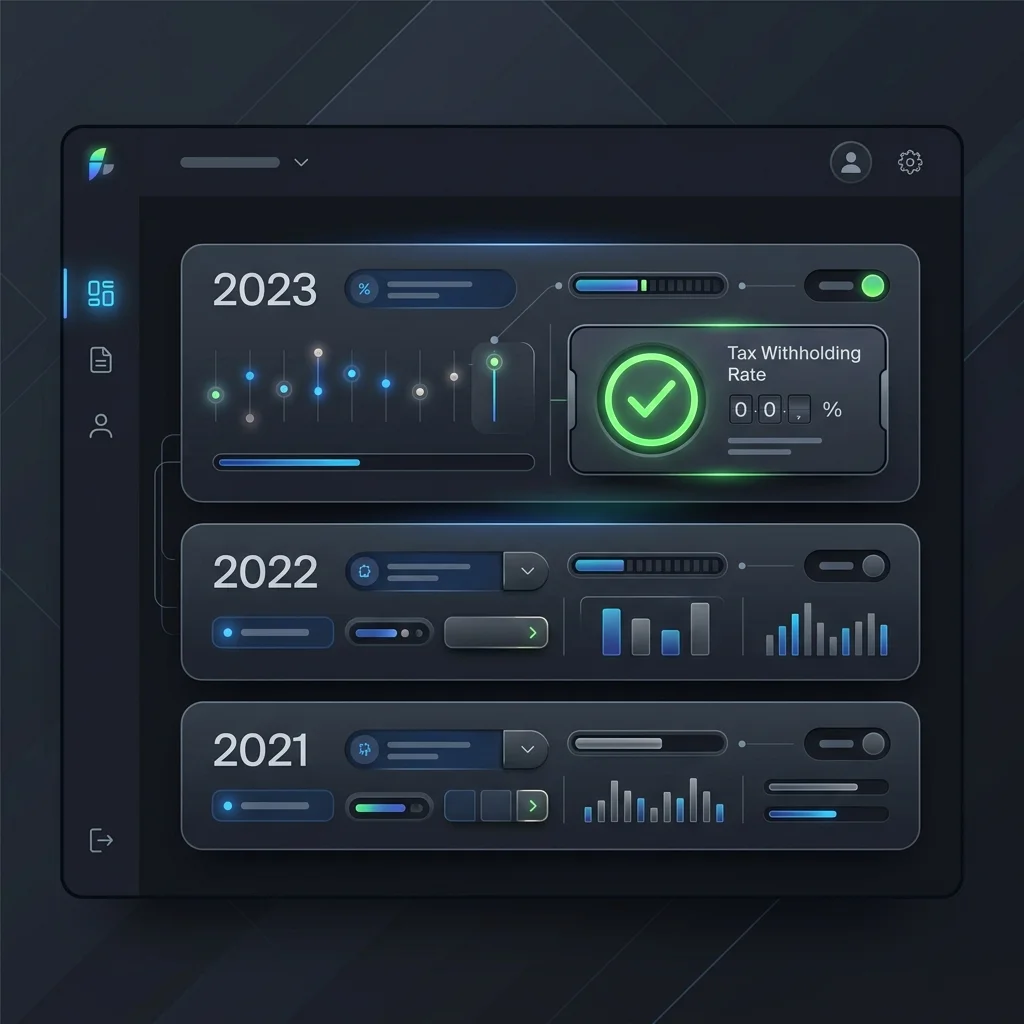
Most countries, including France, Canada, the UK, Germany, and Australia, maintain bilateral tax treaties with the United States to prevent double taxation. By accurately completing the W-8BEN during platform onboarding (when qualifying for Twitch Affiliate/Partner or the YouTube Partner Program), you certify your non-US tax residency and claim tax treaty benefits. This immediately slashes US withholding from 30% down to 0% on the vast majority of your gaming income.
Inside Twitch and YouTube onboarding, this step is integrated directly into the "Tax Interview." You simply provide your legal name, residential address, and foreign tax identification number (such as your domestic national tax ID). Never rush or overlook this step: a simple clerical error or missing tax interview can cost you thousands of dollars in lost payouts that are excruciatingly difficult to recover from the IRS.
Essential Financial Best Practices and Legal Compliance
To build a sustainable long-term career as a professional gamer or broadcaster, you need solid business habits right from day one:
- Dedicated Business Bank Account: Keep your business revenue completely insulated from personal funds. Opening a dedicated checking account exclusively for gaming income and gear purchases radically simplifies tax prep, quarterly filings, and expense tracking.
- Professional Liability Insurance: Routinely overlooked by digital creators, commercial liability insurance shields you if a third party sues for accidental copyright infringement, trademark disputes, or contested breach of sponsorship terms. It costs only a few dollars a month and prevents legal battles from threatening your personal savings.
- Professional Invoicing Standards: For every direct sponsorship deal, freelance gig, or merchandise run, always issue a formal invoice with full corporate details, tax registration IDs, itemized delivery dates, and clear payment terms (such as Net 30).
By mastering these core legal and financial fundamentals, you turn your gaming passion into a structured, fully compliant enterprise. That peace of mind lets you focus on what truly matters: creating outstanding content and dominating your favorite games.

SEO consultant for over 20 years and digital entrepreneur, Charles 'Grimtag' Ronchain is the founder of Pro-Gamer.gg, Retrocharting.com, and Gamescharting.com. A competitive gamer, streamer, and retro game collector, he has worked in the video game industry for over 15 years, notably as a consultant for leading game price comparison platforms. Passionate about real-time performance data and gaming technology, he analyzes competitive esports, gaming hardware benchmarks, and creator workflows on Pro-Gamer.gg with an authentic player perspective.