Stranger Than Heaven Act 1: Kokura Trailer Traces Makoto Daito's 1915 Stowaway Journey
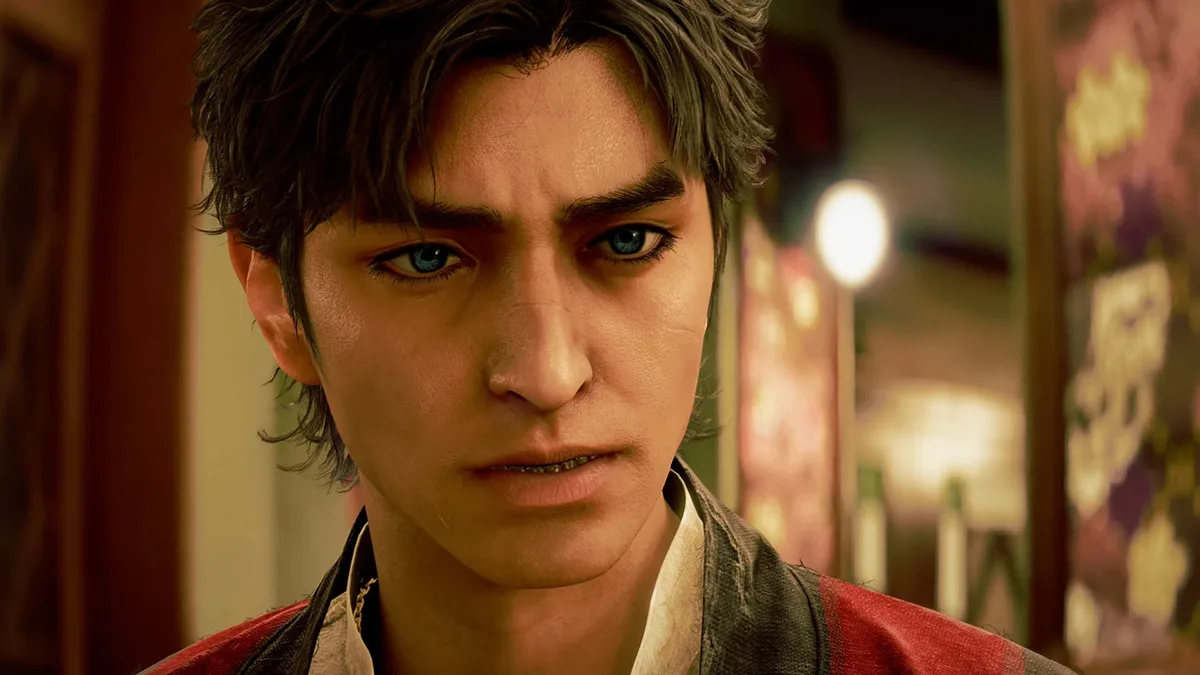
Following the landmark reveal of Stranger Than Heaven as a 50-year historical prequel to Like a Dragon, SEGA and Ryu Ga Gotoku Studio have kicked off a multi-part video series spotlighting each of the five eras featured in the game. The opening chapter, titled Act 1: Kokura, takes players back to the year 1915 to witness the desperate voyage that brings protagonist Makoto Daito from San Francisco to the industrial heartland of Kyushu.
From 1915 San Francisco to Kokura: A Stowaway Aboard Orpheus's Ship
The fifty-year saga begins in the dead of night in 1915 San Francisco. Born to an American father and a Japanese mother, Makoto Daito (portrayed by Yu Shirota) grows up as an outcast enduring relentless persecution because of his mixed heritage. Left completely alone after losing both of his parents and with nothing but the shirt on his back, the young orphan risks everything by sneaking aboard a merchant vessel bound for Japan, hoping his mother's homeland will finally give him a place to belong.
Yet the voyage across the Pacific quickly proves to be anything but a free ride. The ship is commanded by Orpheus (portrayed by Snoop Dogg), a cutthroat trading merchant and smuggler. Rather than throwing the young stowaway overboard, Orpheus spares Makoto, recognizes his raw musical gift, and introduces him to the unforgiving realities awaiting him across the sea. When the vessel drops anchor in Japan, Makoto steps ashore in Kokura, Fukuoka Prefecture.
Smoke-Scorched Foundries, Ruthless Brawls, and Mentors in Taisho-Era Kyushu
In 1915, Kokura is a gritty industrial hub defined by one of the largest steel foundries in the world. Its smoke-scorched streets pulse with hard-driven foundry workers, gambling dens, heavy drinking, and sudden outbursts of street violence. Instead of a warm welcome, Makoto is met with deep-seated prejudice and must rely on his fists and instincts to survive the city's brutal underworld.
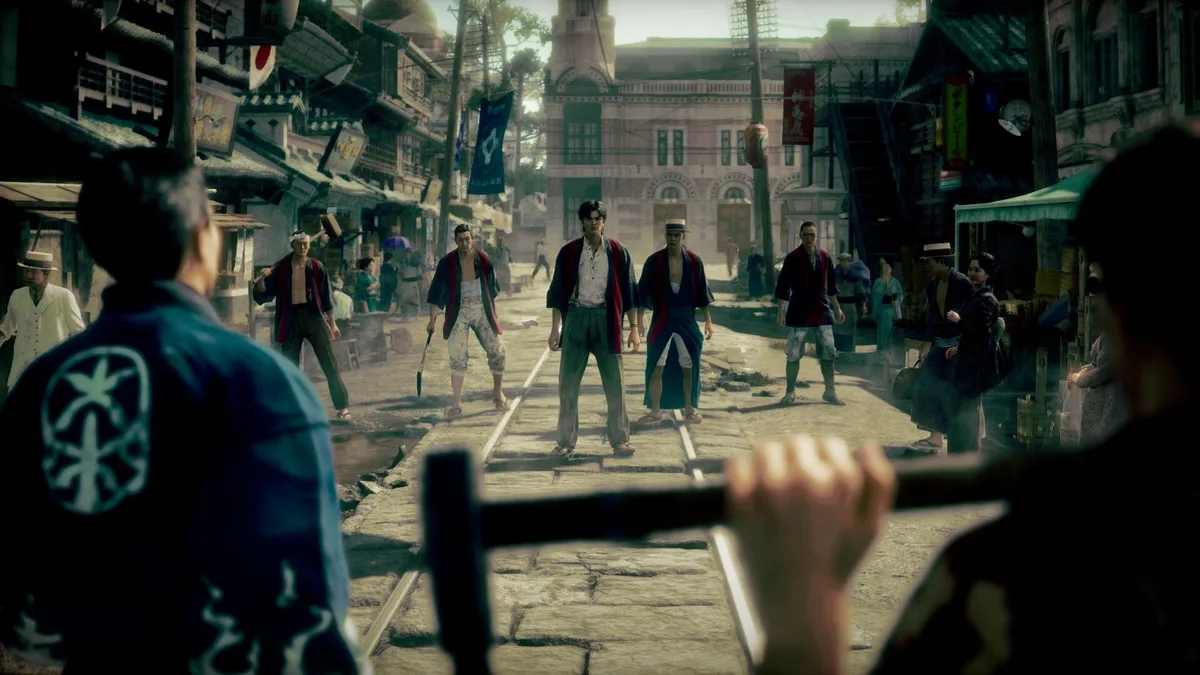
Directed under the vision of Masayoshi Yokoyama and the veteran team at RGG Studio, the Kokura chapter introduces pivotal figures who shape Makoto's early years. Chief among them is Heigo Yashima (voiced by legendary actor Akio Otsuka), an influential Kokura merchant boss who amassed a fortune through trade and becomes a vital mentor to Makoto, alongside early traveling companion Yu Shinjo. On the combat front, the trailer highlights raw, improvised street brawling where heavy foundry hammers, environmental hazards, and short blades such as the Dosu: Kagekiri (included as a pre-order bonus weapon) turn every alley into a fight for survival.
Five Cities Across Fifty Years Leading to the January 15, 2027 Launch
While Act 1 grounds the narrative in 1915 Kokura, SEGA confirmed that upcoming story trailers will sequentially explore the remaining four eras and cities of Makoto's half-century journey: the naval arsenal port of Kure, Hiroshima in 1929, the wartime entertainment district of Minami, Osaka in 1943, the bustling postwar resort town of Atami, Shizuoka in 1951, and the chaotic neon labyrinth of Shinjuku, Tokyo in 1965.
Stranger Than Heaven is set to headline the opening month of the 2027 video game release calendar when it launches on January 15, 2027 for PlayStation 5, Xbox Series X|S, and PC (via Steam and Microsoft Store), as well as day one on Xbox Game Pass with full Xbox Play Anywhere and Cloud Gaming support.
My Perspective
Seeing 1915 Kokura in motion convinces me that Ryu Ga Gotoku Studio is crafting its most atmospheric period piece to date. Trading the familiar neon glow of modern Tokyo for the soot, coal smoke, and foundry fires of Taisho-era Kyushu gives Makoto Daito's struggle as an outsider an immediate, visceral weight. The dynamic between Snoop Dogg's sharp-edged smuggler Orpheus, Akio Otsuka's commanding presence as Heigo Yashima, and the bone-crunching street brawls along the tram tracks already feels unforgettable. If the remaining four eras capture even half of this historical grit, January 15, 2027 cannot arrive soon enough.

Based on the outskirts of New York City, Chaya 'Chayane' spent five years studying software engineering in Montreal before returning to her home state. A Full-Stack developer and Deep Learning AI architecture researcher, she explores neural networks and algorithmic optimization while engineering data pipelines for Retrocharting and Gamescharting alongside Grimtag. A gamer for over 20 years and an avid collector of Nintendo history and The Legend of Zelda, she explored World of Warcraft's Azeroth before bringing her deep technical background to video game analysis.