PlayStation 6 Release Date and Price Still Undecided: Why Sony CEO Hiroki Totoki Is Holding Back Amid the RAM Crisis
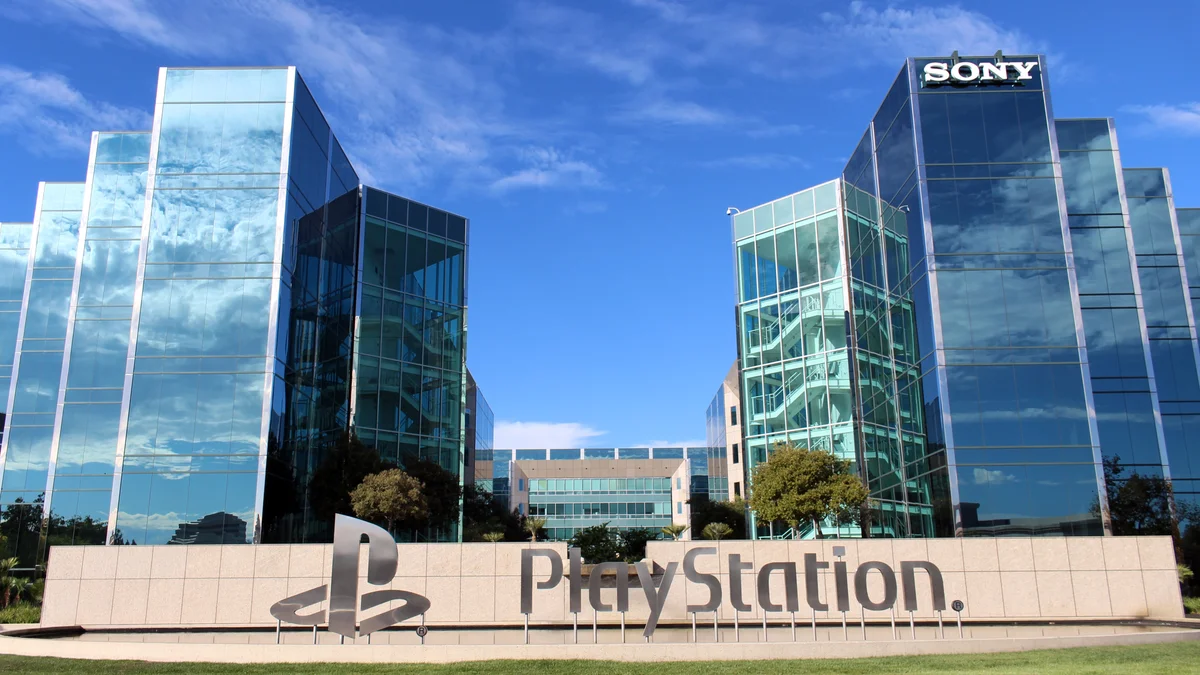
While supply chain leaks out of Asia have long pointed toward a late 2027 launch window for the tenth generation of home consoles, top leadership at Sony Group Corporation is pumping the brakes. Speaking in an interview with The Wall Street Journal and during strategic investor briefings, Sony Group President and CEO Hiroki Totoki officially confirmed that neither the release date nor the retail pricing structure for the upcoming PlayStation 6 has been locked in.
"We Have Not Yet Decided on Timing or Prices": The Memory Crisis Roadblock
Faced with severe volatility across the global semiconductor market, Sony's leadership is refusing to commit to a rigid hardware schedule that could undermine the profitability of its gaming division. Addressing the next-generation console roadmap, Hiroki Totoki laid out Sony's official stance in plain terms: "We have not yet decided on at what timing we will launch the new console, or at what prices. So we would like to really observe and follow the situation."
At the center of Sony's caution is an unprecedented global memory shortage. Fueled by massive investments in artificial intelligence data centers, hyperscale buyers are soaking up global wafer capacity for high-bandwidth memory (HBM), squeezing production lines for consumer-grade DRAM, GDDR7, and NAND flash storage. According to Totoki, Sony expects these supply constraints and elevated memory prices to persist throughout fiscal year 2027, which runs through March 31, 2028.
Locking down a sustainable bill of materials (BoM) under these conditions has become a major financial hurdle, especially after recent supply chain estimates revealed that RAM and SSD components alone could exceed $680 on the PlayStation 6. Unwilling to heavily subsidize next-generation hardware at a massive loss as it did during the PS3 era, Sony is actively running business model simulations to weigh its manufacturing options before committing to a launch window or retail price tag.
Why Sony Calls the Memory Crunch Timing "Lucky" for the 95 Million PS5 Lifecycle
Rather than viewing the component crunch as an immediate emergency, Sony's chief executive believes the timing of the memory shortage has paradoxically worked in favor of Sony Interactive Entertainment's current hardware generation. In his conversation with The Wall Street Journal, Totoki described the situation as "lucky" for the PlayStation 5 lifecycle: "It is lucky, you know, we are in the latter half of the lifetime cycle of a PS console. That means that we do not need to aggressively sell the console today. Rather than that, we're focusing on recurring revenue from the current, you know, the user base. And how to monetize from the users is quite important for us."
Backed by an installed base of more than 95 million PlayStation 5 consoles sold worldwide and secured near-term component inventories for current models, the Tokyo-based giant has no need to force unprofitable hardware sales. Instead, Sony can lean heavily on recurring PlayStation Network revenue, PlayStation Plus subscriptions, and major software releases. Currently, the standard PS5 Slim retails for $499.99 / £479.99 ($449.99 for the Digital Edition), while the flagship PS5 Pro sits at $699.99 / £699.99 across major US and UK retailers including Amazon, Best Buy, Target, Walmart, GameStop, and Smyths Toys.
Hardware Trade-Offs to Avoid a $1,000 Next-Gen Console
If DRAM and NAND pricing pressure refuses to cool before spring 2028, Sony has two primary paths forward. The first is extending the current generation by pushing the PlayStation 6 launch into late 2028, giving memory foundries time to bring additional wafer capacity online and stabilize component costs while the PS5 and PS5 Pro carry the software slate.
The second lever involves modular hardware design choices that keep the entry price accessible for consumers. That cost-control philosophy aligns directly with recent reports pointing to backward compatibility with PCIe 4.0 M.2 NVMe SSDs on the PlayStation 6 so players are not forced to buy expensive PCIe 5.0 drives on day one, alongside selling the detachable optical disc drive separately.
My Take
Tracking the semiconductor supply chain over the past few months, I find Hiroki Totoki's candor refreshing. As long as AI hyperscalers are buying up global memory capacity at premium rates, forcing a PlayStation 6 launch in late 2027 would trap Sony between two terrible options: absorbing massive financial losses on every unit shipped or charging close to $1,000 at retail, which would immediately stall mass-market adoption. Leaning on a mature 95-million-unit PS5 ecosystem while waiting for the DRAM pricing bubble to cool after fiscal 2027 is by far the smartest move for both Sony's balance sheet and our wallets. We have not yet had a physical unit on our desk,if the manufacturer's team would like to send over a review sample so we can put it through our full real-world testing protocol, our lab doors are wide open.

PC hardware enthusiast and competitive gamer, Arthur 'Heimdall' splits his time between France and the UK working in enterprise B2B software solutions. A business school graduate passionate about component benchmarking, he has been building, modding, and tuning PCs since childhood, optimizing every thermal degree and millisecond of display latency. An avid gamer across Assassin's Creed and sandbox titles, he forged his alliance with Grimtag and Chaya during late-night World of Warcraft raids before joining Pro-Gamer.