128GB Unified Memory and 140W N1X Superchip: NVIDIA Launches RTX Spark Windows 11 Mini-PCs With ASUS, Dell, and MSI
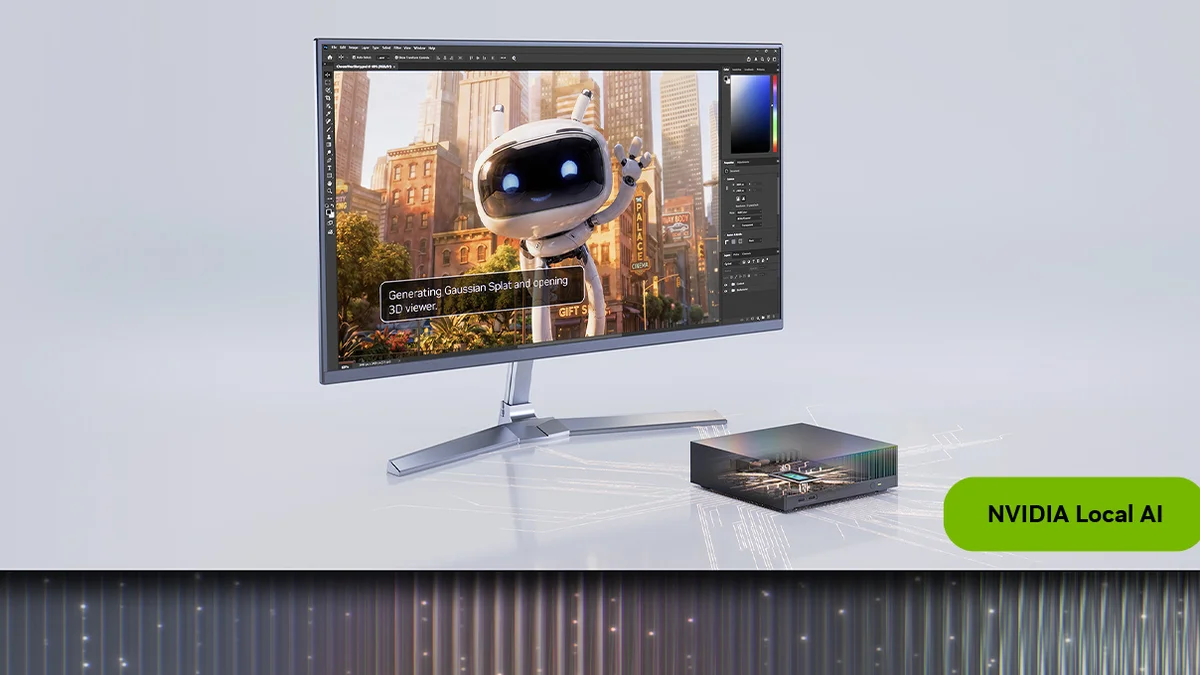
Exactly one month after the first Arm-powered laptops hit retail shelves, NVIDIA is expanding its desktop footprint today with the official launch of RTX Spark Compact Desktops (Mini-PCs) running Windows 11 ARM64. Three hardware partners are leading the initial wave starting November 18: ASUS with the ProArt GR1X, Dell with the Creator Edition Desktop, and MSI with the EdgeMesa N AI+ series, while compact systems from Acer, GIGABYTE, HP, and the Microsoft Surface RTX Spark Dev Box are slated to follow soon.
140W N1X Superchip, 128GB LPDDR5X, and a Disabled NPU: How Desktop RTX Spark Differs From Laptops
Unlike portable machines such as the Lenovo Yoga 9n 2-in-1 powered by the NVIDIA N1X, which also offer trimmed-down 18-core CPU / 5,120 CUDA core / 32GB configurations capped at 80W to preserve battery life, every desktop RTX Spark Mini-PC ships with the full-fat N1X (GB10 Superchip) silicon.
Built on a 3nm process and linked via NVLink-C2C, the single-package processor pairs a 20-core NVIDIA Grace CPU (co-developed with MediaTek, combining 10 high-performance Arm Cortex-X925 cores with 10 efficient Arm Cortex-A725 cores) and an NVIDIA Blackwell RTX GPU packing 6,144 CUDA cores (48 SMs, matching desktop GeForce RTX 5070 core counts) capable of delivering up to 1 petaflop of FP4 AI compute.
- 140W TDP Power Envelope: Freed from laptop thermal and battery limits, the desktop N1X scales from 80W up to a sustained 140W TDP inside compact desktop enclosures.
- Up to 128GB Unified LPDDR5X Memory: Delivering roughly 300 GB/s of shared memory bandwidth, users can dynamically customize the GPU-to-CPU memory split inside the NVIDIA App (set to 80% GPU / 20% CPU by default). This shared pool allows the tiny desktop to run massive 120-billion-parameter large language models (LLMs) locally or render 90GB+ 3D scenes in real time without paying recurring cloud API token fees.
- Firmware-Disabled NPU: In an intriguing architectural twist confirmed by NVIDIA, the integrated NPU block on the N1X silicon is disabled at the firmware level on desktop Mini-PCs. According to NVIDIA, the low-power NPU exists primarily to save battery during lightweight Copilot+ tasks on laptops, whereas wall-powered Mini-PCs rely directly on the 6,144 Blackwell CUDA cores for heavy 24/7 local LLM inference and agent workloads.
ASUS ProArt GR1X Benchmarks: From 88 FPS at 4K in Cyberpunk 2077 to 41 Tokens/s in Ollama
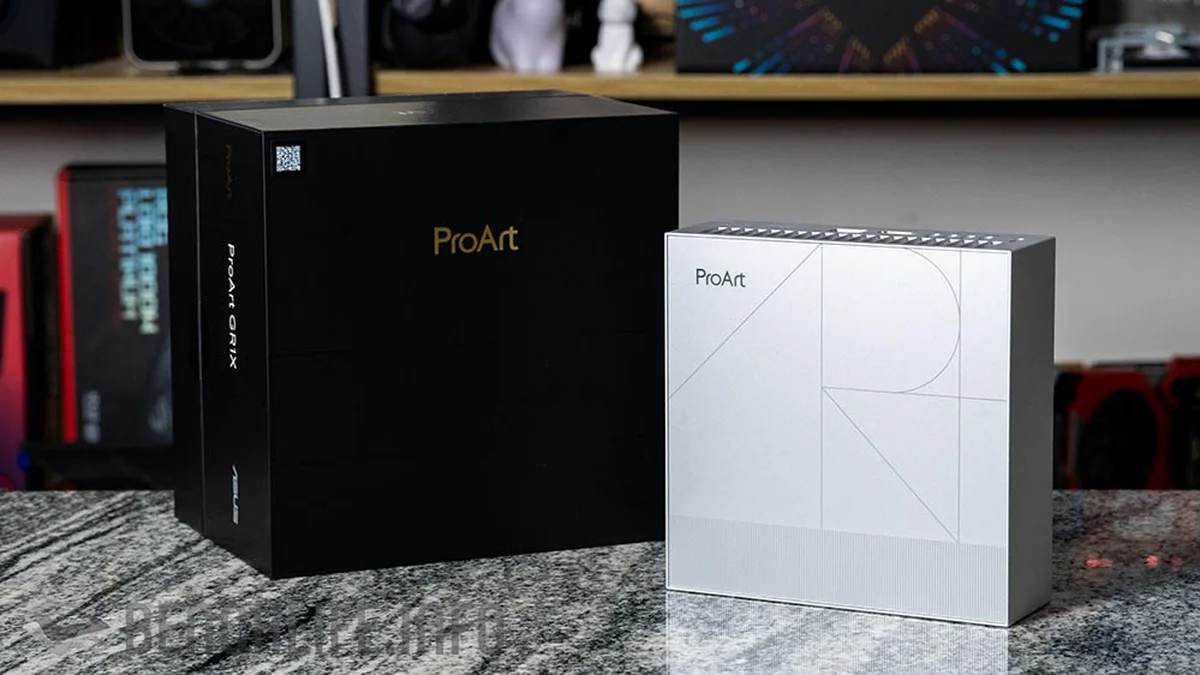
Leading the launch lineup, the ASUS ProArt GR1X houses the N1X platform inside a 1.1-liter sandblasted and anodized aluminum chassis (150 × 150 × 51 mm, 1.48 kg) powered by an external 240W adapter. Its rear panel features a 10GbE RJ45 port designed for rapid dataset transfers over local network storage, Wi-Fi 7 (2x2), Bluetooth 5.4, one HDMI 2.1 port, and four USB-C 3.2 Gen 2x2 ports (one supporting PD 3.1 power input and three offering DisplayPort Alt Mode for driving up to four displays simultaneously). Alongside its pre-installed 2TB NVMe SSD, a second M.2 slot supports PCIe 5.0 storage expansion.
Check Availability for ASUS ProArt & RTX Mini-PCs on Amazon→
On the creative and local AI front, the Windows on Arm stack now includes native TensorRT-RTX acceleration in Adobe Premiere Pro, DLSS 4.5 Ray Reconstruction in Blender 5.3, and direct Hugging Face GGUF model execution via the llama.cpp v1.0.0 backend in Windows ML. In local inference testing on the 128GB configuration, Qwen 3.8-27B hits 37.37 tokens/s under llama.cpp, while Qwen 3.8-Flash-Next reaches 41.46 tokens/s in Ollama.
How does the 140W chip handle PC gaming on Windows 11 ARM64 following the rollout of kernel anti-cheat and DLSS 5 support on RTX Spark? During a 3DMark Time Spy Extreme stress test, the ProArt GR1X kept its GPU temperature at an average of 73.95°C (70.63°C median), scoring 3,160 points in Speed Way and 9,867 points in Port Royal. Here is how it performs across major AAA titles at maximum graphics presets:
| Game Title (Preset) | 1080p (FHD) | 1440p (QHD) | 4K (UHD) |
|---|---|---|---|
| Cyberpunk 2077 (Native Ultra) | 79.12 FPS | 62.24 FPS | 28.01 FPS |
| Cyberpunk 2077 (RT Ultra + DLSS Perf. MFG 4x) | 223.07 FPS | 149.45 FPS | 88.36 FPS |
| Borderlands 4 (Ultra / DirectX 12) | 112.73 FPS | 84.05 FPS | 48.48 FPS |
| Shadow of the Tomb Raider (Highest) | 103.00 FPS | 92.00 FPS | 65.00 FPS |
| Metro Exodus (Ultra) | 91.03 FPS | 79.00 FPS | 50.80 FPS |

The Windows 11 ARM64 Screen-Off Quirk: Why N1X GPU Power Drops From 65W to 5W
While NVIDIA pitches these compact desktops as always-on "agent computers" built to run background tasks 24/7 via Hermes Agent, NVIDIA NemoClaw blueprints, and the hybrid NVIDIA Switchyard router while your laptop is on the road, early adopters have uncovered a critical power-management quirk on Windows 11 ARM64.
As documented by RTX Spark N1X owners on Reddit (r/nvidia and r/ASUS), the current NVIDIA display driver aggressively throttles GPU power whenever Windows turns off the monitor. While an active ComfyUI render, LoRA fine-tuning job, or local LLM inference workload draws around 65W with the screen on, letting the display time out causes GPU power draw to plummet to roughly 5W within seconds. Crucially, nvidia-smi continues reporting 96% GPU utilization, meaning unattended jobs do not crash, they simply slow to a crawl until the screen wakes back up. Until NVIDIA addresses this idle power state in a future driver update, users running overnight AI agents or renders should set their Windows 11 screen timeout to "Never."
My Test Bench
Unleashing the N1X Superchip at 140W inside a 1.1-liter aluminum cube finally shows what NVIDIA's Grace Blackwell client silicon can really do. Being able to allocate over 100GB of unified LPDDR5X memory to the GPU for running 70B to 120B parameter LLMs during work hours, then firing up Borderlands 4 at 84 FPS in 1440p Ultra on the exact same palm-sized machine at night, is a feat of hardware integration that traditional x86 Mini-PCs simply cannot match right now. Still, steep workstation pricing on the 128GB models and that baffling 5W screen-off throttling bug prove that NVIDIA's Windows 11 ARM64 software stack still has growing pains to iron out.

PC hardware enthusiast and competitive gamer, Arthur 'Heimdall' splits his time between France and the UK working in enterprise B2B software solutions. A business school graduate passionate about component benchmarking, he has been building, modding, and tuning PCs since childhood, optimizing every thermal degree and millisecond of display latency. An avid gamer across Assassin's Creed and sandbox titles, he forged his alliance with Grimtag and Chaya during late-night World of Warcraft raids before joining Pro-Gamer.