Nintendo Switch 2 Game-Key Cards: Why Nintendo Policy Blocks Publishers From Reprinting Full Cartridges
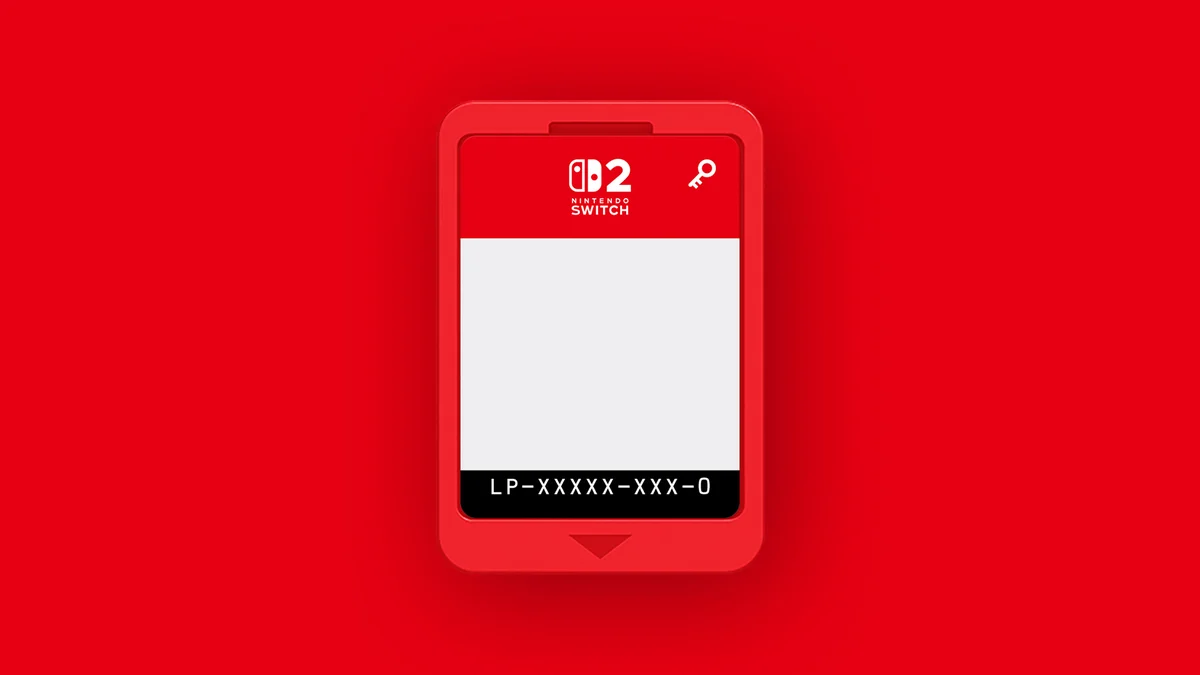
Physical game collectors hoping to wait a few months for proper complete-on-cartridge revisions of their favorite Nintendo Switch 2 releases are facing a major roadblock. According to statements from prominent Canadian specialty retailer Video Games Plus (VGP), an internal policy enforced by Nintendo strictly prevents third-party publishers from reprinting a game on a full-data cartridge once it has initially launched as a Game-Key Card.
Video Games Plus Reveals Nintendo's Restriction on Cartridge Reprints
Known across the collecting community for funding and distributing standalone physical reprints on Switch and PlayStation, Video Games Plus frequently works directly with third-party publishers to keep physical editions in circulation. Following the widespread adoption of mandatory-download key cards at the launch of Nintendo Switch 2, the retailer explored funding proper full-cartridge print runs for existing titles, only to hit a platform-level restriction from Kyoto.
Addressing collector questions about whether existing Game-Key Card releases could eventually transition to complete cartridges in future print runs, Video Games Plus shared a candid update:
"We annoy them all the time. When it comes to Game-Key Cards, all the publishers know exactly where VGP stands. Unfortunately, we don't see much changing with most of the bigger publishers. As we've stated many times, we'd actively try to get existing Game-Key Card titles reprinted as full-on-cart versions, but at the moment, there's a Nintendo policy preventing that. That said, we'll keep pushing, keep asking questions, and keep annoying them."
In practice, once a publisher commits a Nintendo Switch 2 title to the Game-Key Card format at launch, the release remains locked to that delivery method. Even if a boutique distributor or retail partner offers to cover the manufacturing cost of a higher-capacity flash cartridge later on, Nintendo's SKU and platform rules forbid replacing a Game-Key Card release with a standalone, full-data cartridge version.

Why Publishers Favor Game-Key Cards While Shifting Storage Costs to Players
Introduced alongside the Nintendo Switch 2, a Game-Key Card ships inside a standard retail box bearing a white warning banner across the front cover. Unlike a traditional game card that stores the full title on internal flash ROM, a Game-Key Card acts purely as a physical authentication token. Inserting it prompts an internet download of the entire game to the console's 256 GB internal storage or a compatible microSD Express card, while still requiring the physical card to remain inserted in the slot during play.
For third-party publishers, the format is a straightforward cost-cutting measure: manufacturing high-speed 64 GB Nintendo Switch 2 cartridges is significantly more expensive than pressing low-capacity authentication cards. That margin gap has pushed major publishers to rely heavily on key cards even for older ports, as seen with LEGO Harry Potter Collection launching at $49.99 on a Switch 2 Game-Key Card.
Check Availability for Nintendo Switch 2 and microSD Express on Amazon→
What This Policy Means for Physical Game Preservation
During the original Switch generation, boutique labels and specialty retailers frequently stepped in after launch to produce updated cartridge revisions containing base games and post-launch patches on a single card. Under the policy disclosed by Video Games Plus, that preservation safety net is effectively blocked on Nintendo Switch 2:
- No complete-on-cart reprints: Titles that debut on a Game-Key Card cannot be transitioned into self-contained physical cartridges in subsequent print runs.
- Widening platform disparity: Multiplatform releases increasingly ship complete on Blu-ray disc for PlayStation while relegating Nintendo buyers to download tokens, a contrast recently highlighted by Kitaria Fables 2 opting for a Switch 2 Game-Key Card while shipping complete on disc for PS5.
- Permanent server dependency: Without full-cartridge reprints, every Game-Key Card release remains permanently tied to online download servers to install on a new console.
My Perspective
Lining up red plastic cases on a shelf when the cartridge inside is nothing more than a blank authorization token was frustrating enough at launch, but this contractual roadblock kills off the last real hope for physical collectors. On the original Switch, we at least had the comfort of knowing specialist retailers like Video Games Plus could step in a year or two later to fund a proper complete-on-cartridge print run with all patches baked onto the ROM.
What makes this policy even more absurd is what I run into every single week while browsing Vinted and second-hand marketplaces. Resale apps are flooded with counterfeit Game Boy, Game Boy Color, and Game Boy Advance (GBA) cartridges,often sold "complete in box",that mimic Nintendo's original shells, labels, and packaging almost trait for trait, fooling anyone who doesn't check the stamped factory numbers on the label or inspect the PCB against real collector values on the Retrocharting Game Boy Advance price guide. Think about the irony for a second: bootleggers can press replica cartridges that actually hold the full game data on the chip for a few dollars, while Nintendo contractually forbids legitimate Switch 2 publishers from upgrading their empty Game-Key Cards into real, self-contained cartridges.

Based on the outskirts of New York City, Chaya 'Chayane' spent five years studying software engineering in Montreal before returning to her home state. A Full-Stack developer and Deep Learning AI architecture researcher, she explores neural networks and algorithmic optimization while engineering data pipelines for Retrocharting and Gamescharting alongside Grimtag. A gamer for over 20 years and an avid collector of Nintendo history and The Legend of Zelda, she explored World of Warcraft's Azeroth before bringing her deep technical background to video game analysis.