Mic Humming, Boss Rematches, and Manual Jumping: How Zelda: Ocarina of Time Reinvents a Classic on Switch 2 for the Series' 40th Anniversary
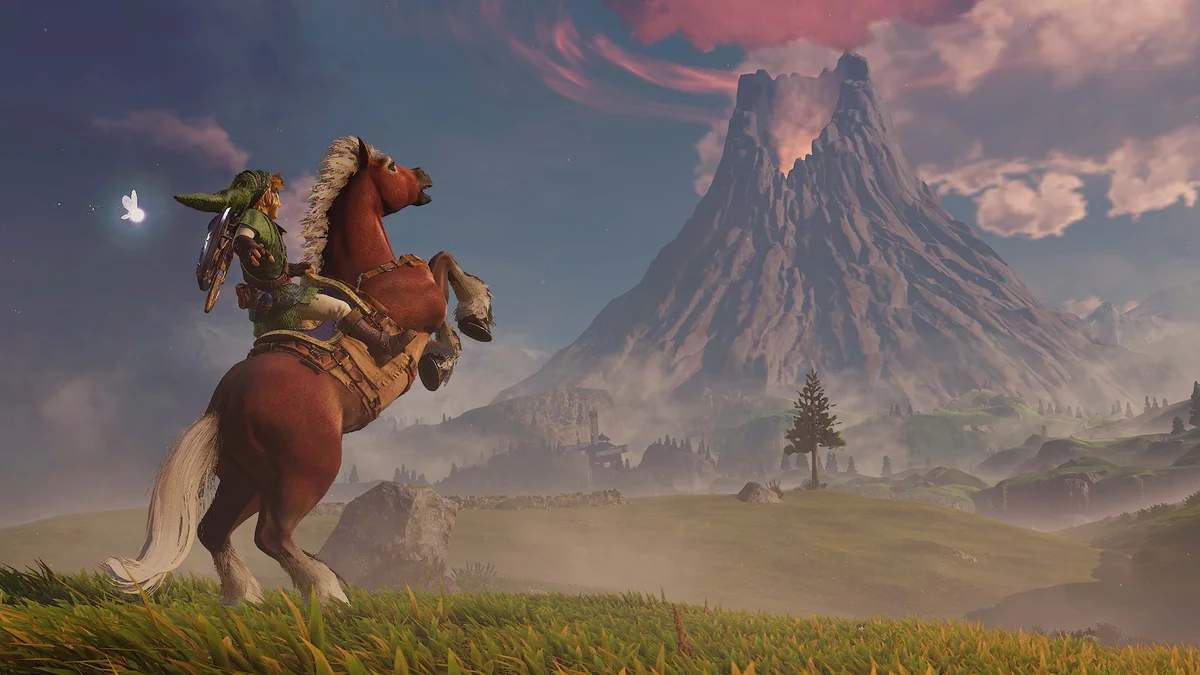
Forty years after the original game debuted on the Famicom Disk System in Japan on February 21, 1986, the legendary series created by Shigeru Miyamoto and Takashi Tezuka is reaching the centerpiece of its anniversary celebrations. As The Legend of Zelda: Ocarina of Time prepares to launch exclusively on Nintendo Switch 2 on November 5, 2026, Nintendo has detailed a slate of mechanical upgrades, quality-of-life additions, and brand-new content that push the 1998 Nintendo 64 landmark far beyond a simple visual coat of paint.
Manual Jumping, Dedicated Dashing, and Free Camera Control on Switch 2
Following a portable 3DS remaster back in 2011, this ground-up Nintendo Switch 2 rebuild modernizes core movement while preserving the classic progression of the 1998 adventure. Players no longer need to somersault endlessly across Hyrule Field just to pick up speed: Link now features a dedicated dash ability alongside a manual jump button.
Having direct control over leaps immediately transforms traversal inside iconic dungeons such as Inside the Great Deku Tree, the Forest Temple, Inside Jabu-Jabu's Belly, and the Water Temple, though N64 purists can still opt for the classic auto-jump behavior. Camera movement is now fully controllable on the right analog stick, weapons and tools can be swapped on the fly via a quick-select shortcut, and ranged gear like the Fairy Slingshot, Fairy Bow, and Hookshot support third-person motion-assisted aiming.
Several key hubs have also been reworked to take advantage of the Switch 2 hardware. Hyrule Castle Town ditches its fixed pre-rendered camera angles from 1998 in favor of free 3D exploration, and the day-and-night cycle now flows continuously even inside towns, bringing out different citizens and nocturnal monsters after sunset. To help players keep track of their quest across both eras, a new Threads of Time menu chronicles Link's journey on a grand illustrated tapestry while highlighting current story objectives.
Humming Into the Switch 2 Microphone and Time-Attack Boss Rematches
One of the remake's most inventive additions centers on Link's signature instrument. Alongside traditional button inputs, players can hum learned melodies directly into the built-in microphone of the Nintendo Switch 2 to trigger ocarina songs in-game, whether opening hidden pathways or turning day into night. The audio recognition even responds to real-world instruments played near the console, a feature accessory maker HORI is supporting later this year with officially licensed playable and electronic ocarinas.
On the content front, Nintendo's overview trailer unveiled a brand-new location hidden within Hyrule: the Hall of Fallen Foes. Designed like an interactive museum gallery, the hall populates its pedestals with detailed statues of every monster and dungeon boss Link defeats throughout the campaign. Inspecting each display reveals lore descriptions, behavioral traits, and combat strategies tailored to that creature.
Even better, the Hall of Fallen Foes lets players re-enter any defeated boss battle at will in a dedicated time-attack rematch mode, tracking personal best completion times. Explorers can also hunt down new hidden collectibles known in Japan as "a fairy's thoughts" scattered across Hyrule, which Link's companion Navi reads aloud when discovered.
Full Voice Acting, ZELDA NOTES, and the 40th Anniversary Roadmap to the 2027 Movie
For the first time in Ocarina of Time history, story cutscenes feature expanded dialogue and full voice acting supported by a newly recorded symphonic orchestral soundtrack, building on the momentum of the three-part orchestral Triforce Medley Nintendo released for Zelda's 40th anniversary. The game also integrates with the free ZELDA NOTES service inside the Nintendo Switch App for smart devices (no Nintendo Switch Online membership required), offering daily activity logs, custom ocarina sheet music sharing, the location-based Gossip Quest challenge, and a trivia quiz packing more than 2,000 questions.
Priced at $59.99 digitally and $69.99 physically in the United States (with a textured foil cover included on the first physical print run), the November 5 release anchors a packed anniversary slate. Just days earlier, on October 29, 2026, Nintendo will launch the limited-edition Nintendo Switch 2 The Legend of Zelda 40th Anniversary hardware bundle and matching gold-and-green Pro Controller.
The celebrations will carry straight into 2027 with new Young Link and Young Zelda amiibo figures that unlock special in-game masks, a global orchestral concert tour kicking off early in the year, and the theatrical premiere of the live-action The Legend of Zelda film in spring 2027. Co-produced by Shigeru Miyamoto and Avi Arad with Sony Pictures and directed by Wes Ball after wrapping principal photography in New Zealand, the movie stars Benjamin Evan Ainsworth as Link and Bo Bragason as Princess Zelda.
My Take
Rebuilding a sacred touchstone like Ocarina of Time is always a tightrope walk, especially when the high-gloss 4K character models initially sparked debate before veteran Nintendo art director Takaya Imamura pointed out how closely Young Link reflects Shigeru Miyamoto's fondness for traditional Japanese puppet theater (ningyōgeki). What stands out here is how smartly Nintendo balances preservation with modern playability: adding manual jumping, a dedicated dash, and full voice acting removes the N64 era's clunky friction, while humming melodies into the Switch 2 mic and chasing boss speedruns in the Hall of Fallen Foes give longtime fans genuine reasons to return before the live-action movie arrives next spring.

Based on the outskirts of New York City, Chaya 'Chayane' spent five years studying software engineering in Montreal before returning to her home state. A Full-Stack developer and Deep Learning AI architecture researcher, she explores neural networks and algorithmic optimization while engineering data pipelines for Retrocharting and Gamescharting alongside Grimtag. A gamer for over 20 years and an avid collector of Nintendo history and The Legend of Zelda, she explored World of Warcraft's Azeroth before bringing her deep technical background to video game analysis.