DDR5 RAM Shortage in 2026: Why Gaming PC Prices Are Skyrocketing and When It Will End
Updated August 17, 2026
On top of system memory, the hardware market is facing severe shortages across entry-level graphics cards. To understand this parallel crisis, read our deep dive: Budget GPU Shortage 2026: Why entry-level graphics cards are vanishing from shelves.
If you have checked memory kit prices over the past few days to upgrade your rig or build a competitive setup, you likely experienced serious sticker shock. This is neither an illusion nor a fleeting price hiccup: the PC component market is navigating an unprecedented hardware squeeze.
Keeping a close eye on hardware trends and the gear needed to sustain top-tier competitive performance, this trajectory was anticipated, but the sudden summer acceleration caught everyone off guard. A severe RAM shortage has entrenched itself across the PC market, slamming DDR5 memory modules and blowing up build budgets for casual gamers and esports organizations alike. But what exactly is happening inside silicon fabrication plants to cause this mess?
The Truth Behind the Crisis: Why Is There a RAM Shortage?
To understand why this RAM shortage hits so hard in 2026, you have to look beyond custom PC cases and turn your attention toward the semiconductor giants. The core culprit is not a shipping container bottleneck or an unexpected natural disaster: it is a massive strategic pivot toward Artificial Intelligence.
According to the latest market data from the TrendForce Semiconductor Memory Report (Q3/Q4 2026), the world's three memory titans, Samsung Electronics, SK Hynix, and Micron Technology, have repurposed nearly 45% of their raw wafer production lines. Their goal? Prioritize high-margin High Bandwidth Memory (specifically HBM3e and HBM4), purchased at astronomical premiums by tech giants like NVIDIA to power enterprise accelerator architectures like Blackwell and Rubin.
The downstream effect was instantaneous: factory capacity dedicated to consumer-grade DRAM memory plummeted in a matter of weeks. During the recent Micron Technology Financial Earnings Call (Q3 2026), executive leadership confirmed that production lines are running at maximum capacity while raw DRAM die contract prices sold to board partners jumped by 25% to 40% across the board.
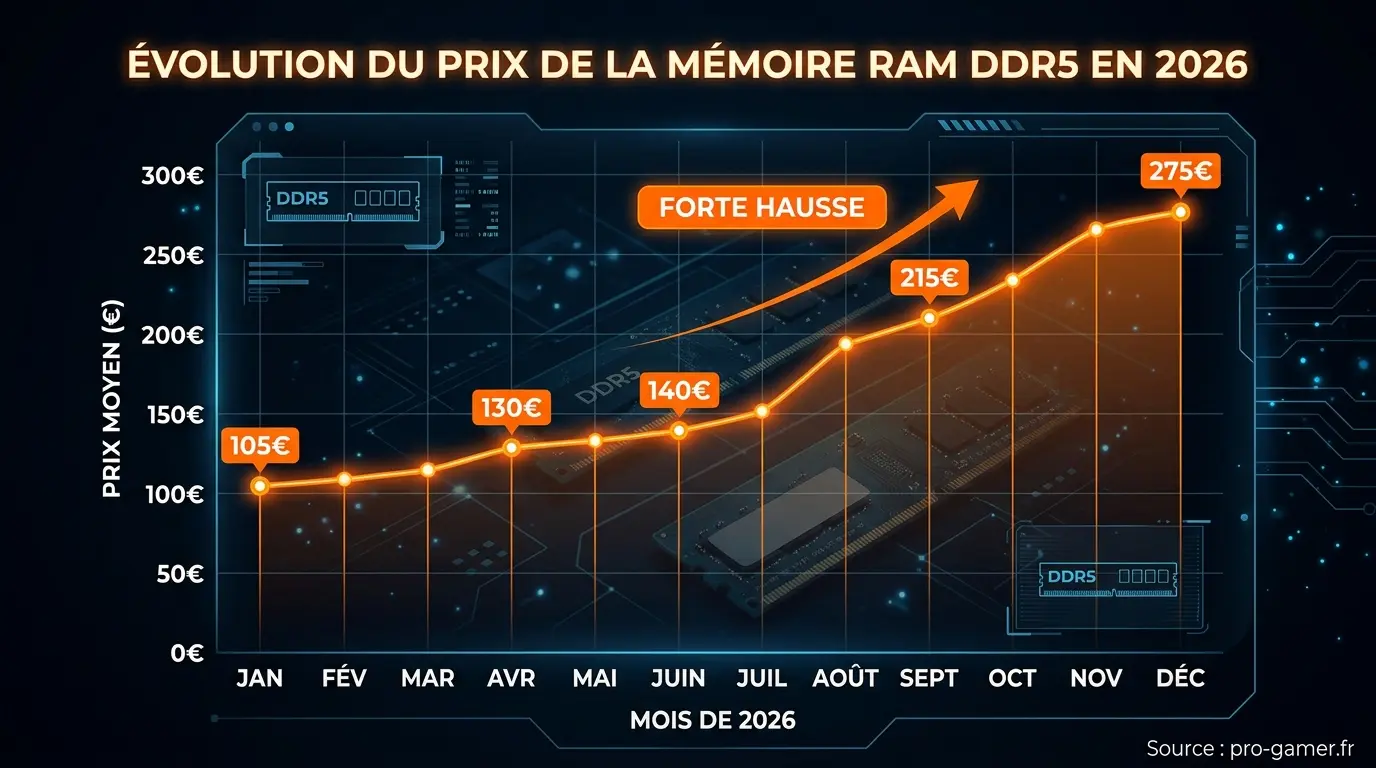
DDR5 Shortage: Skyrocketing Costs for PC Builds
PC gaming and esports setups are taking the brunt of this DDR5 price spike. While the generational transition from DDR4 to DDR5 was supposed to become more affordable as adoption matured, market dynamics did a complete 180. Standard 32 GB kits (2x16 GB) rated at DDR5-6000 CL30, widely recognized as the sweet spot for framerate stability and low frame-time jitter in competitive shooters, surged in price by nearly 60% in a single quarter.
This RAM kit shortage extends far beyond standalone retail components. In an official update from modular PC maker Framework (July 2026), the company warned that raw memory component costs from suppliers had more than doubled, forcing PC manufacturers across the industry to pass those increases directly onto gaming laptops and prebuilt systems.
Whether you are piecing together a dedicated training desktop or browsing our guide to the best gaming laptops, this desktop RAM shortage reshapes the bottom line. Much like calculating the impact of power consumption on your gaming PC over a full year, memory has suddenly re-emerged as a major financial bottleneck when planning an enthusiast build.
When Will the RAM Shortage End? Projections for 2026 and 2027
This is the burning question on every builder's mind: how long will the RAM shortage last before upgrade plans can resume? Projections from industry market analysts and quarterly reports from foundries like Samsung Semiconductor point toward an extended bottleneck.
Constructing and qualifying new semiconductor fabrication facilities (FABs) takes between 18 and 24 months. Because capital expenditures are overwhelmingly directed toward enterprise HBM capacity, supply pressure on RAM in 2026 will not ease before year's end. Analysts forecast that the true end of the consumer RAM shortage will not arrive until the second half of 2027, when overall global wafer production catches up with worldwide demand.
| Market Indicator | Early 2026 Status | Summer 2026 Status | 2027 Projection |
|---|---|---|---|
| 32GB DDR5 Kit Price | ~$110 - $130 | ~$180 - $230 | High plateau stabilization |
| Foundry Allocation HBM vs DDR5 | 20% HBM / 80% DDR5 | 45% HBM / 55% DDR5 | 50% HBM / 50% DDR5 |
| Retail Stock Availability | Excellent | Severe strain on CL30 kits | Gradual normalization |
Survival Strategies for PC Gamers During the RAM Crisis
With this memory shortage here to stay for the foreseeable future, a few smart guidelines will help you avoid overpaying when maintaining your gaming rig:
- Do Not Succumb to Panic Buying: If your system already has 16 GB or 32 GB of working DDR4 or DDR5 RAM, there is zero urgent need to double your capacity out of fear of future price hikes.
- Watch Frequencies and Timings: High-binned, extreme-frequency DDR5 kits carry the heaviest retail markups. A properly tuned DDR5-5600 or DDR5-6000 kit delivers 98% of real-world gaming performance for substantially less cash.
- Consider Verified Secondhand Memory: RAM modules have exceptionally low failure rates. Buying gently used kits from reputable marketplaces remains an effective way to sidestep the RAM shortage.
This crunch is a stark reminder of how tightly the consumer gaming hardware market is tied to global technological shifts. Until wafer pricing cools down, keep a watchful eye on inventory levels and prioritize efficiency in your build choices.
Are you planning to upgrade your RAM soon, or are you holding out until component prices normalize? Let us know your build plans in the comments below!
Grimtag

SEO consultant for over 20 years and digital entrepreneur, Charles 'Grimtag' Ronchain is the founder of Pro-Gamer.gg, Retrocharting.com, and Gamescharting.com. A competitive gamer, streamer, and retro game collector, he has worked in the video game industry for over 15 years, notably as a consultant for leading game price comparison platforms. Passionate about real-time performance data and gaming technology, he analyzes competitive esports, gaming hardware benchmarks, and creator workflows on Pro-Gamer.gg with an authentic player perspective.