Down From 26% to 5% of Revenue: Why Nintendo Switch 2 Cartridge Supplier Macronix Is Exiting the ROM Business
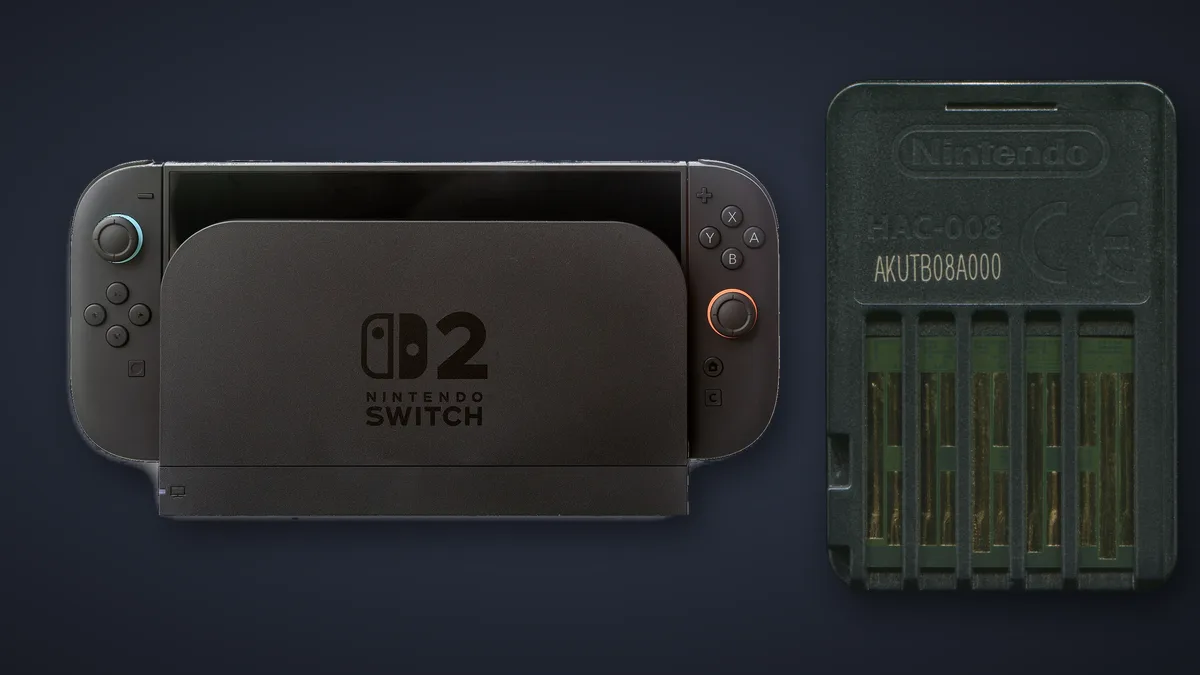
A foundational pillar of Nintendo's physical media supply chain since the Nintendo 64, 3DS, and original Switch eras is stepping away from traditional game card manufacturing. During its third-quarter 2026 earnings conference, Taiwanese semiconductor maker Macronix International and its chairman Miin Wu confirmed that the company is gradually exiting the ROM (Read-Only Memory) business after the segment shrank to just 5% of total revenue, down sharply from 26% during the same period a year earlier.
A 39% Year-Over-Year Revenue Drop Ends Standalone ROM Reporting
The financial breakdown shared by Macronix executives highlights how rapidly the economics of legacy physical game media have shifted. Over the past twelve months, revenue from ROM chips used in console cartridges fell 39% year over year, despite posting a modest 9% sequential bump compared to the second quarter. As a result, the third quarter of 2026 marks the final period in which the Taiwanese chipmaker will report ROM sales as a standalone business segment.
As noted by MST Financial senior analyst David Gibson following the investor briefing, Macronix will no longer develop new generations of ROM chips. Importantly, this departure is not the result of financial distress at the Hsinchu-based manufacturer. Fueled by a global memory capacity crunch and surging chip prices, Macronix posted an all-time record net profit of NT$10.95 billion (roughly $337.8 million USD) in the third quarter, up 42% quarter over quarter, while its gross margin climbed to a record 70.5% compared to 13.5% a year ago.
NT$37.8 Billion in CapEx Redirected to eMMC, 3D NAND, and AI Data Centers
Rather than investing in specialized ROM fabrication for video game cartridges, Macronix is reallocating its limited cleanroom capacity toward high-margin memory segments driven by artificial intelligence infrastructure, automotive electronics, medical hardware, and space communications.
"Demand for NOR used in data centers is very robust. Customers are chasing us for more capacity, demanding that we deliver more NOR flash solutions for data centers. The shift is not due to slowing demand for NOR flash. Rather, we are allocating capacity to NAND, a high-growth segment that will drive Macronix's long-term expansion."
Following the exit of major memory makers such as Samsung Electronics from certain legacy embedded flash segments, Macronix has multiplied its eMMC NAND business severalfold over the past year. To capture that momentum, Miin Wu outlined a combined NT$37.8 billion capital expenditure roadmap: a first phase of NT$22 billion set to boost output in the second half of 2027, followed by a second NT$15.8 billion investment expected to yield volume production in 2028 due to semiconductor equipment delivery lead times. None of that NT$37.8 billion budget will go toward ROM production, leaving players even more reliant on high-speed microSD Express storage cards required to expand the Nintendo Switch 2 as digital downloads grow heavier.
What Macronix's Exit Means for Nintendo Switch 2 Cartridges and Game-Key Cards
For owners of the Nintendo Switch 2, which has already reached 23.68 million units sold worldwide and surpassed the lifetime sales of the GameCube (21.74 million units), Macronix winding down its ROM division does not mean physical cartridges will vanish from retail shelves overnight. The phase-out is gradual, and Nintendo works with multiple flash memory suppliers to source the components inside its game cards.
Still, losing new ROM chip development from a longtime partner tightens the manufacturing economics for full-capacity physical releases. Because high-capacity 64GB Nintendo Switch 2 cartridges already carry a steep production cost for third-party studios, this supply shift is expected to nudge even more publishers toward Game-Key Cards. Rather than storing the full game on the chip, Game-Key Cards act as physical authentication tokens that trigger a full digital download onto the console, a trend compounded by Nintendo's strict policy blocking publishers from reprinting Game-Key Card releases onto full cartridges later in a game's lifecycle.
Across Nintendo's broader ecosystem, digital adoption continues to climb steadily: during the April-to-June quarter, digital purchases accounted for 61.5% of total software sales (up 2.2 percentage points year over year), fluctuating between 46.1% and 67.2% over the past four quarters depending on major physical tentpole launches.
Check Availability Nintendo Switch 2 Availability on Amazon→
My Perspective
Watching Macronix walk away from ROM chip development after powering Nintendo cartridges all the way back to the Nintendo 64 feels like the end of a hardware era for anyone who still loves owning complete games on physical media. From a pure semiconductor business standpoint, the math is undeniable: when AI data centers and industrial clients are handing you a 70.5% gross margin on NOR and NAND flash, dedicating wafer capacity to legacy game ROMs makes very little financial sense. Yet for those of us collecting on Nintendo Switch 2, the knock-on effect is hard to ignore: every time high-capacity cartridge manufacturing gets tighter or pricier, third-party publishers have one more excuse to skip full game cards and hand us another download-dependent Game-Key Card in a plastic box.

Based on the outskirts of New York City, Chaya 'Chayane' spent five years studying software engineering in Montreal before returning to her home state. A Full-Stack developer and Deep Learning AI architecture researcher, she explores neural networks and algorithmic optimization while engineering data pipelines for Retrocharting and Gamescharting alongside Grimtag. A gamer for over 20 years and an avid collector of Nintendo history and The Legend of Zelda, she explored World of Warcraft's Azeroth before bringing her deep technical background to video game analysis.