Up to $55 an Hour to Save Nintendo's History: Why the Company Is Hiring a Digital Archivist Before Its Veterans Retire
Long criticized by video game historians for its secretive approach to software preservation, Kyoto's gaming giant is stepping up its internal conservation efforts in North America. On its official careers portal, Nintendo of America has opened a brand-new position titled "Digital Archivist, Historical Systems" based at its U.S. headquarters in Redmond, Washington.
Structured as an approximate 12-month hybrid contract paying between $35 and $55 per hour depending on experience, this strategic role aims to build a comprehensive internal digital repository. Rather than merely stacking old cardboard boxes in a warehouse, the archivist is tasked with structuring, indexing, and preserving decades of legacy source code and hardware schematics while recording the firsthand knowledge of long-serving pioneers before they retire.
An Internal Database for Source Code, Prototypes, and Engineering Records
In the official job description published in Redmond, the mandate assigned to the incoming archivist clearly outlines the scope of the project:
"We are seeking a Digital Archivist, Historical Systems to support the preservation, organization, and accessibility of historical hardware and software information. Working closely with subject matter experts across engineering, product development, legal, and business teams, this role will establish standards and processes that ensure historical information remains discoverable, usable, and preserved for future generations."
In practice, the selected candidate will design the foundational architecture of a centralized digital repository, including metadata schemas, taxonomies, and indexing standards capable of housing technical records, engineering documentation, source materials, and product development history spanning multiple generations of Nintendo consoles and games.
Recording Oral History from Veteran Developers Before It Is Too Late
Beyond floppy disks, development cartridges, and circuit board blueprints, the job listing highlights a crucial human mission: interviewing long-tenured engineers and developers directly. The archivist will conduct structured interviews with internal subject matter experts to capture "institutional knowledge" that was never formally written down during the eras of the NES, Super NES, Nintendo 64, and GameCube.
As several historic figures approach retirement and the American branch navigates major leadership transitions since the era when Doug Bowser reflected on his early Nintendo days, the company wants to ensure that low-level programming tricks, hardware design rationale, and undocumented workarounds do not vanish when their creators leave the building.
Switch 2 Remakes, Nintendo Switch Online Emulation, and Legal Protection
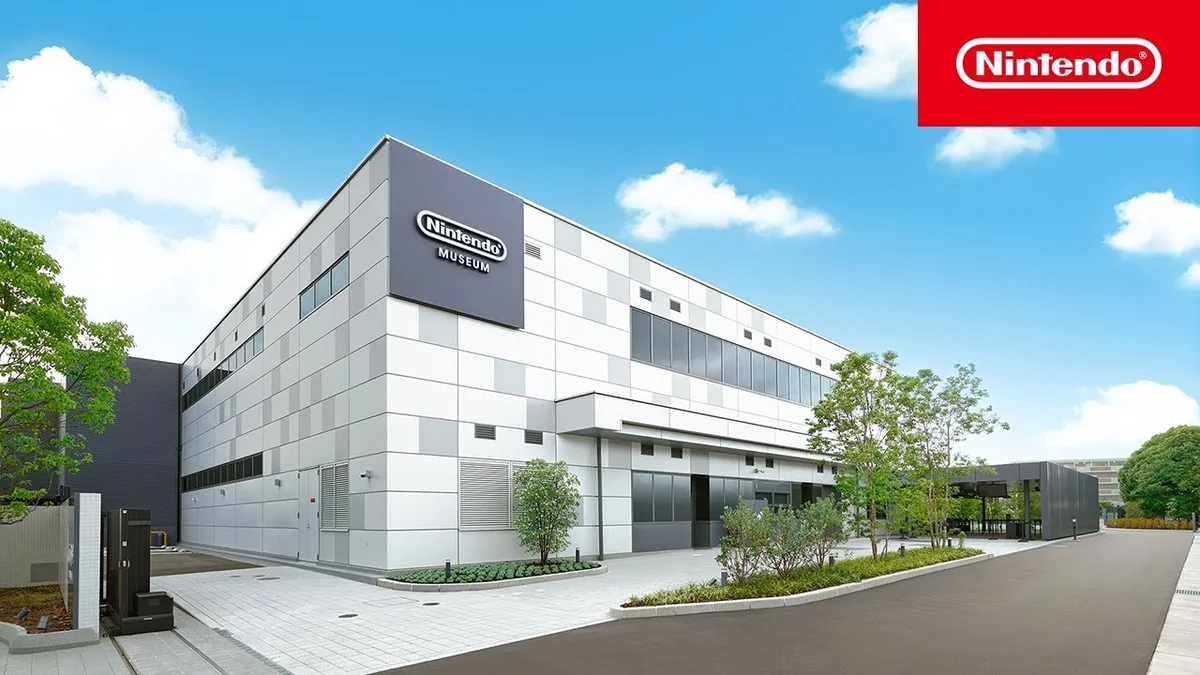
Unlike the public-facing Nintendo Museum in Uji, Kyoto, this digital archive is not designed for public browsing. Instead, it serves as a daily operational asset tailored for three core internal divisions:
- Nintendo Switch Online Emulation Teams: Having instant access to exact circuit schematics and motherboard revisions from legacy systems makes it significantly easier to diagnose and fix emulation quirks across Nintendo 64, GameCube, and Game Boy Advance libraries.
- Studios Building Switch 2 Remakes and Remasters: Locating complete, well-documented source materials prevents developers from having to reverse-engineer compiled retail ROMs, a critical technical advantage as the Zelda: Ocarina of Time Switch 2 remake codenamed "Owl" blends classic design with modern engine architecture.
- Legal and Intellectual Property Teams: As explicitly noted in the job posting, Nintendo's legal department is one of the primary stakeholders in this repository. During patent disputes or intellectual property litigation, being able to retrieve dated engineering blueprints or software prototypes from the 1980s and 1990s in seconds provides ironclad prior-art evidence in court.
My Perspective
I find this initiative both fascinating and genuinely moving. People often picture Nintendo as an ultra-organized vault where every single line of code from 1986 is neatly stored in a climate-controlled safe, yet the reality of game development in the 1980s and 1990s was far more improvised. Storage drives were routinely overwritten for the next project, design notes were scribbled in notebook margins, and clever hardware workarounds often lived solely inside the heads of two or three engineers.
As Bastien "Orion" pointed out to me this morning while we were looking over the Redmond listing, the most valuable part of this role isn't even backing up binary files, it is recording oral interviews with veteran staff. Raw source code tells you how a routine runs, but only the engineer who wrote it thirty years ago can explain why they had to bypass a specific memory bottleneck or video chip quirk. Even if this vault remains strictly locked behind internal doors in Redmond and Kyoto, knowing that this living memory won't quietly fade away is wonderful news for the future of classic games.

Based on the outskirts of New York City, Chaya 'Chayane' spent five years studying software engineering in Montreal before returning to her home state. A Full-Stack developer and Deep Learning AI architecture researcher, she explores neural networks and algorithmic optimization while engineering data pipelines for Retrocharting and Gamescharting alongside Grimtag. A gamer for over 20 years and an avid collector of Nintendo history and The Legend of Zelda, she explored World of Warcraft's Azeroth before bringing her deep technical background to video game analysis.