mfsrVersion 13.60, 120Hz Output, and 3,850 MHz CPU Boost: What GTA 6's PS5 Metadata Reveals
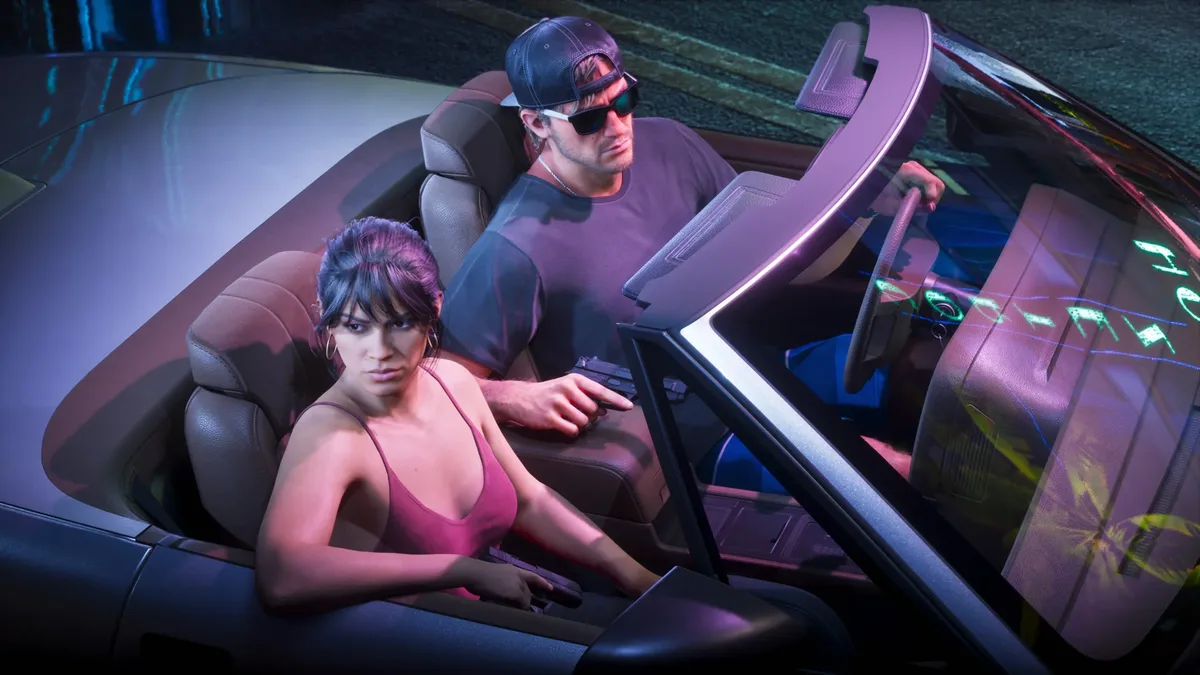
Just hours after PlayStation backend files exposed active GTA Online session hooks inside the retail build, the technical parameter manifest for Grand Theft Auto VI has revealed how the game taps into Sony's mid-generation hardware. With ten days remaining before the November 19, 2026 global launch from Rockstar Games, newly extracted PS5 metadata highlights three low-level optimizations built for the PS5 Pro.
An Unreleased PSSR 13.60 Build Spotted in the PS5 Manifest
Prominent Rockstar dataminer Tez2 (also known as TezFunz2) shared the findings on November 9, 2026 via GTAForums before the technical breakdown gained traction on Reddit r/PS5. While inspecting the title configuration parameters on Sony's servers, he identified the mfsrVersion string set to 13.60.
Inside Sony Interactive Entertainment's software development kit (SDK), MFSR (Multi-Frame Super Resolution) is the internal designation for PSSR (PlayStation Spectral Super Resolution), the AI-driven upscaler exclusive to the PS5 Pro. Notably, major third-party releases currently running second-generation PSSR2 libraries, including Cyberpunk 2077 and Assassin's Creed Shadows, both list version 13.00A.
Jumping to version 13.60 confirms that Rockstar's rendering engineers are compiling GTA 6 against a newer branch of Sony's neural reconstruction library. Following the leaked PlayStation France PS5 Pro store listing, this updated 13.60 revision aims to minimize temporal shimmering across Vice City's neon reflections, dense foliage, and fine geometric alpha effects on the console's 300 TOPS accelerator.

Bit 22 Enabled: Unlocking the PS5 Pro 3.85 GHz CPU Boost
The second discovery addresses the primary bottleneck of modern open-world simulations: processor overhead. By cross-referencing the game's parameter attribute bitmask against PlayStation SDK documentation, Tez2 confirmed that bit 22 is enabled in GTA 6's hardware profile.
Bit 22 triggers the PS5 Pro's High CPU Frequency Mode. When active, the system pushes its 8-core, 16-thread AMD Zen 2 processor from the base PS5 clock of 3.50 GHz up to 3.85 GHz.
That 10% clock speed boost trades roughly 1% of GPU frequency for vital CPU headroom inside the RAGE 9 engine. Between calculating dense vehicle traffic, individual NPC schedules across Leonida, and updating BVH acceleration structures every frame for ray-traced global illumination, every extra megahertz directly stabilizes frame pacing in crowded city blocks.

120Hz Display Output Declared Without Native VRR Support
The third parameter uncovered in the metadata governs display output. The configuration file flags support for a 120Hz high-frame-rate (HFR) display container, yet omits native support for Variable Refresh Rate (VRR).
Enabling a fixed 120Hz output while leaving native VRR unchecked immediately sparked technical discussions around a locked 40 FPS Balanced or Fidelity mode. On an HDMI 2.1 television or monitor running at 120Hz, a 40 FPS target divides evenly into three display refreshes per frame, delivering consistent frame pacing without requiring VRR synchronization.
| PS5 / PS5 Pro Parameter | Detected Value | Current Benchmark | Technical Impact in GTA 6 |
|---|---|---|---|
AI Upscaler (mfsrVersion) | Version 13.60 | 13.00A (PSSR 2 in Cyberpunk 2077 and AC Shadows) | Cleaner 4K image reconstruction on neon lights, foliage, and fine geometry |
| Processor Profile (Attribute) | Bit 22 enabled | 3.50 GHz on base PS5 | Activates 3.85 GHz High CPU Frequency Mode (+10%) on PS5 Pro |
| Display Output Container | 120Hz active (no native VRR) | 60Hz standard (30 FPS = 33.3 ms) | System-level support for a locked 40 FPS container (25 ms per frame) |
Tez2 cautioned that while the 120Hz flag enables high-refresh output at the system level, shipping an actual 40 FPS graphics toggle on launch day remains entirely up to Rockstar Games.
My Take on the Spec Sheet
Looking strictly at frame-time math, these three parameter flags fit together like clockwork. On an aging Zen 2 CPU architecture tasked with handling ray-traced BVH updates and Leonida's physics simulation, cutting CPU frame time in half to hit 16.6 milliseconds (60 FPS) is a brutal ask, whereas targeting 25 milliseconds per frame (40 FPS inside a fixed 120Hz container) aligns with the 10% clock boost at 3.85 GHz unlocked via bit 22.
Pair that extra processor headroom with a newer PSSR 13.60 library offloading 4K reconstruction to the PS5 Pro's 300 TOPS GPU block, and you get the most realistic hardware blueprint to shave input latency below 30 FPS without gutting Vice City's crowd density on November 19.

Grand Theft Auto 6 (GTA 6)
Explore official trailers, technical specs and all latest coverage for Grand Theft Auto 6 (GTA 6).

PC hardware enthusiast and competitive gamer, Arthur 'Heimdall' splits his time between France and the UK working in enterprise B2B software solutions. A business school graduate passionate about component benchmarking, he has been building, modding, and tuning PCs since childhood, optimizing every thermal degree and millisecond of display latency. An avid gamer across Assassin's Creed and sandbox titles, he forged his alliance with Grimtag and Chaya during late-night World of Warcraft raids before joining Pro-Gamer.