Ray-Traced Moonlight and DLSS Ray Reconstruction: Bloodborne Gets Its First Real-Time Path Tracing Mod on PC
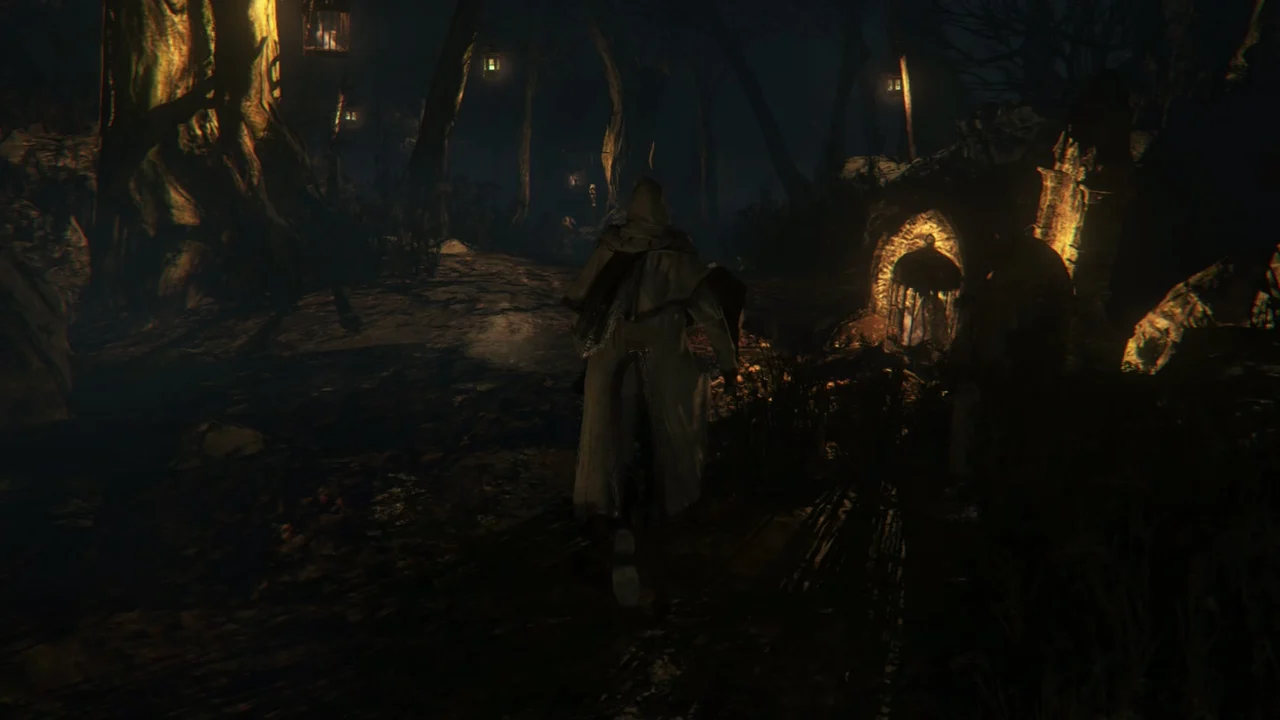
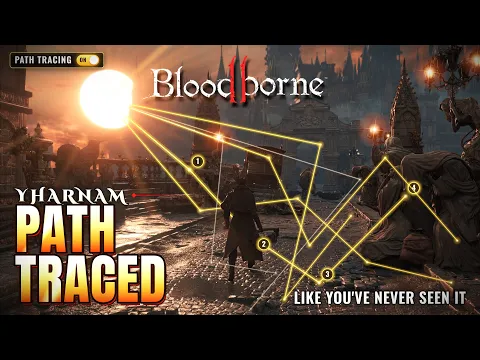
Even as Bloodborne surpasses 10.4 million lifetime sales while remaining locked at 30 FPS on PS4 and PS5, the community-driven Windows scene continues to push the 2015 classic into modern technical territory. Developer João Vitor Alves (known on GitHub as Joaovitor404silva) has released Alpha pt2.2 of his Ray-Traced Lighting Overhaul mod. Built specifically for version 1.9.8.4 of SuperMedo's unofficial Windows PC port, the project introduces a true real-time Vulkan path tracing pipeline across Yharnam.
Ray-Traced Moonlight, ReSTIR GI Bounce Lighting, and NVIDIA DLSS Ray Reconstruction
While FromSoftware only dipped its toes into ray-traced ambient occlusion and shadows with Elden Ring, Alves' overhaul rebuilds the PC port's core executable (bb-probe.exe) with a suite of custom Vulkan compute shaders. Rather than altering Hidetaka Miyazaki's original color grading or gothic palette, the mod replaces baked 2015 lighting approximations with physically traced illumination:
- Ray-Traced Moonlight and Sky Light: Moon visibility is sampled per pixel per frame within a default 1.5-degree half-angle cone, casting natural soft penumbras behind gothic spires and wrought-iron gates.
- Multi-Bounce Global Illumination (ReSTIR GI): Indirect bounce lighting illuminates wet cobblestones, Victorian facades, and the canopy of the Forbidden Woods while preserving the stock hemisphere fill lights so mid-ground details are not crushed into pure black.
- Water Mirrors, Puddle Reflections, and Traced Glass: Dedicated reflection probes trace glossy surfaces and rain-soaked puddles below a
0.4roughness threshold, alongside ray-traced glass on lamps and windows. - 4-State Opacity Micromaps (OMM): Alpha-tested foliage cutouts are evaluated directly inside the acceleration structure (TLAS/BLAS) while skipping depth-only shadow-map draw calls that previously caused angular geometry shards.
- NVIDIA DLSS Ray Reconstruction: By pairing NVIDIA's signed
nvngx_dlssd.dlllibrary with a custom DLSS bridge (bbport_dlss.dll), the engine denoises stochastic ray samples in real time.
What Alpha pt2.2 Fixes and Why You Should Grab the GitHub Installer
Arriving just days after the Hunter's Atlas mod brought 16 illustrated maps and direct lamp fast travel to Bloodborne on PC, version pt2.2 resolves a critical memory bug present in pt2 and pt2.1. In those earlier builds, the loading screen filled the path tracer's dedicated memory without ever freeing it, which could leave the game stuck on stock lighting for an entire play session. The engine now flushes that buffer at the end of every frame and ships with an updated MSYS2 LLVM C++ runtime (libc++.dll) required by version 1.9.8.4 of the port.
Players looking to test the overhaul should keep one crucial detail in mind before downloading: because Nexus Mods blocks executable (.exe) files, the Nexus archive only contains the three supporting DLLs. To get the complete 27.83 MB package containing the rebuilt bin/bb-probe.exe path-tracing engine and the one-click batch installer (Install Path Tracing.bat), head directly to the official Bloodborne PC Path Tracing GitHub release page (pt2.2).
Running the mod requires a hardware ray-tracing GPU (NVIDIA GeForce RTX or AMD Radeon RX 6000 series and newer) alongside SuperMedo's Bloodborne PC 1.9.8.4 build. Because the path tracer is not yet compatible with FSR 4.1 (the launcher's default automatic selection) or frame generation, the installer automatically switches the upscaler to DLSS on NVIDIA hardware or FSR 3.1 on AMD cards. Once in-game, pressing F9 toggles path tracing on and off on the fly, requiring roughly three seconds for auto-exposure to settle. Note that the mod currently works in standard play only, as the launcher's Seamless Co-op mode runs on a separate executable (bb-probe-seamless.exe).
My Take
Digging through João Vitor Alves' Vulkan engineering notes makes it immediately clear why this project stands miles apart from a screen-space ReShade preset. Because the path tracer builds real BVH acceleration structures (TLAS and BLAS) directly from the port's draw calls, it can solve lighting problems that screen-space shaders simply cannot see. Look at how the reflection pass was optimized: by tightening the maximum traced roughness cutoff from 0.6 down to 0.4 and gating puddle probes so they only fire when a water floor mesh is actually present in the TLAS, reflection frame time dropped from 4.0 ms to 0.7 ms at 3440x1334, lifting performance from 43.7 FPS to 51.0 FPS on the exact same Yharnam street. Even the bonfires in the Forbidden Woods got bespoke geometric logic: because the surrounding log piles enclosed 56% to 58% of the light source, the engine initially misclassified open campfires as enclosed glass wall lamps, over-lighting the woods. Checking upward ray occlusion and lifting the emitter point by 0.5 meters above the sticks brought ground luminance right back in line with FromSoftware's stock balance. It is still an early Alpha with fire, fog, and light sources actively being rebuilt, but seeing a 2015 PS4 engine handle ReSTIR GI and DLSS Ray Reconstruction this cleanly is a remarkable feat of low-level rendering work.

PC hardware enthusiast and competitive gamer, Arthur 'Heimdall' splits his time between France and the UK working in enterprise B2B software solutions. A business school graduate passionate about component benchmarking, he has been building, modding, and tuning PCs since childhood, optimizing every thermal degree and millisecond of display latency. An avid gamer across Assassin's Creed and sandbox titles, he forged his alliance with Grimtag and Chaya during late-night World of Warcraft raids before joining Pro-Gamer.