Mario Kart World Is Already Running on Mac: How an nxnative Fork Boots the Nintendo Switch 2 Exclusive Without an Emulator
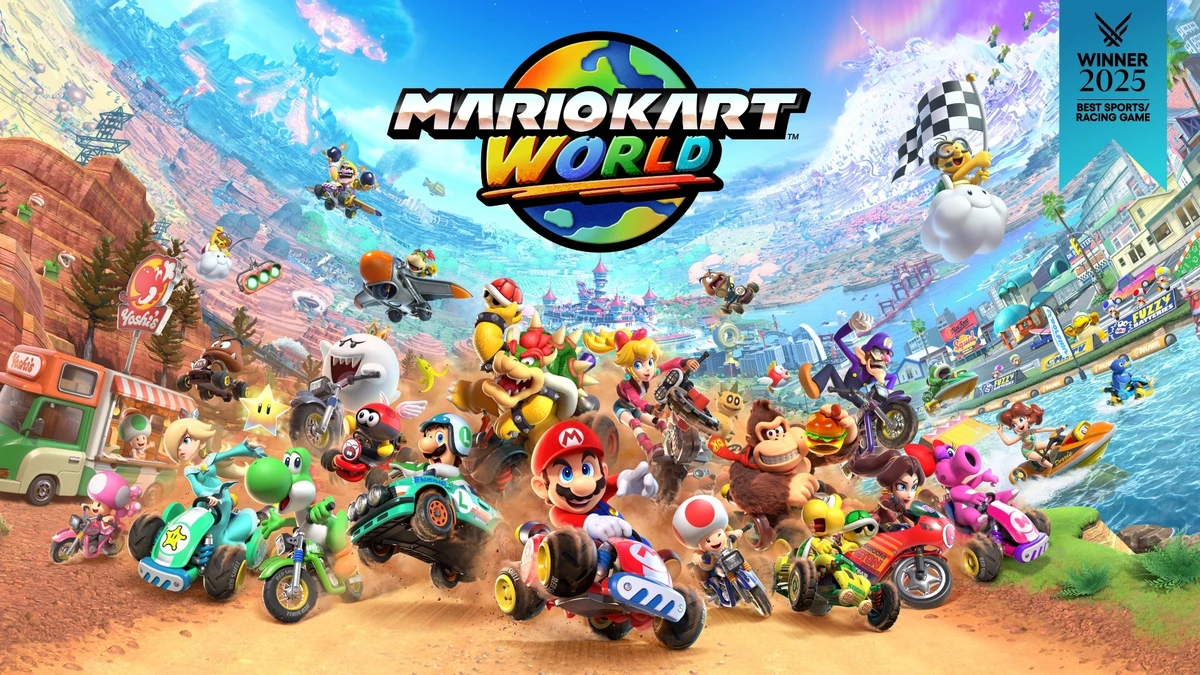
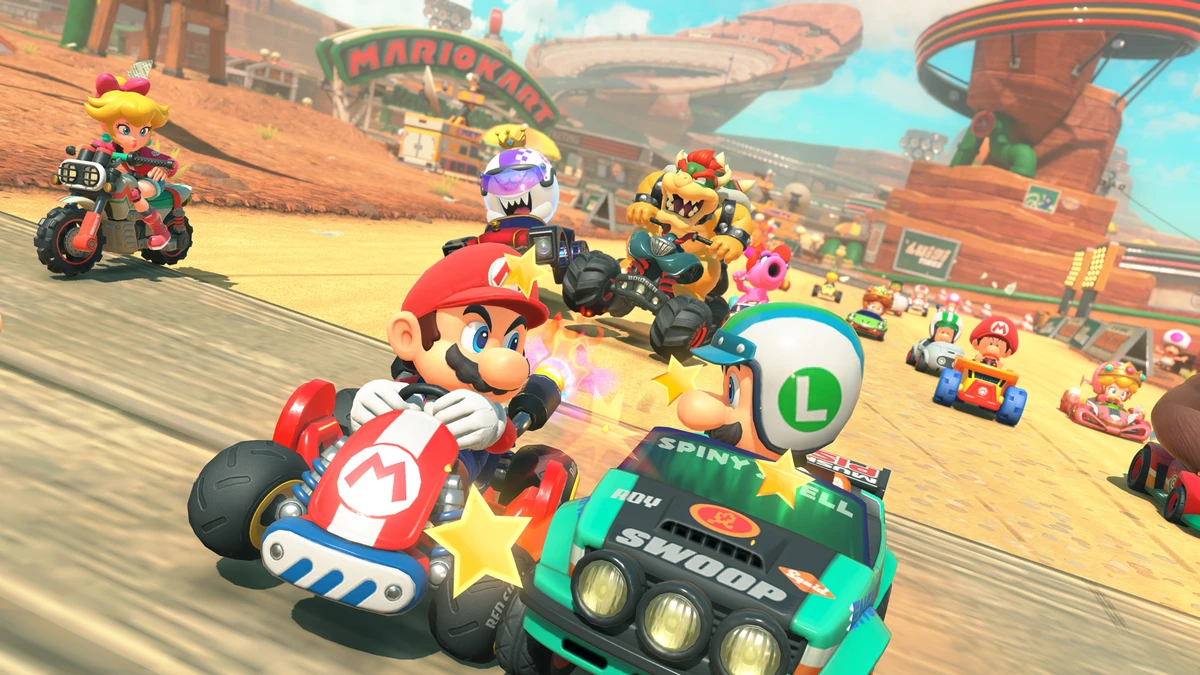
It took less than twenty-four hours for theory to turn into a working proof of concept. Just after the first extracted Nintendo Switch 2 game files surfaced online yesterday and were widely deemed unplayable due to the complete absence of a dedicated emulator, developer Will Faust has shared a technical demonstration showing Mario Kart World booting and running in real time on an Apple Silicon Mac under macOS.
From OunceCake Memory Extraction to Native ARM64 Execution on Apple Silicon
This breakthrough builds directly upon the userland exploit chain opened by security researcher Sammy Hajhamid (known online as pepsipu) with his ns2jb software jailbreak on Nintendo Switch 2 firmware 23.0.1. By pairing that vulnerability with a remote procedure call (RPC) interface created by developer Kurumuz and the open-source OunceCake utility built by misshexa66, researchers gained the ability to transfer decrypted in-memory directories of a legitimately launched game over local FTP, specifically the RomFS asset folder and the ExeFS partition containing the .NSO executable binaries.
Rather than waiting years for a traditional full-system emulator to be written from scratch to virtually simulate the console's hardware, Will Faust bypassed the bottleneck by adapting the architecture behind nxnative, which already runs Switch games natively on Mac and iPhone. Originally created by developer seedds for first-generation Switch titles, the open-source project exploits a fundamental hardware commonality: just like the processor inside the Nintendo Switch 2, Apple Silicon chips (M1 through M4) use the ARM64 instruction set architecture.
For players looking to pick up the official release for Nintendo's hybrid console at the best verified price, check out our live comparison table below:
Translating the NVN2 Graphics API to Metal: How the Experimental Fork Works
Using an experimental fork of nxnative tailored to parse second-generation executable structures, the tool never emulates the console's CPU. Instead, the original ARM64 machine code of Mario Kart World is statically patched and rewritten so that it executes directly on the Apple Silicon processor cores at native speed, without requiring an interpreter or just-in-time (JIT) compilation.
The heavy lifting takes place across two specialized translation layers surrounding that native code execution:
- Horizon OS High-Level Emulation (HLE) Host: a lightweight compatibility layer intercepts proprietary Switch 2 operating system calls (handling memory allocation,
RomFSfile access, threading, and controller input) and maps them directly to native macOS system services. - NVN2-to-Metal Graphics Bridge: whereas the original Switch relied on the NVN graphics API, the Nintendo Switch 2 introduces an expanded hardware graphics interface referred to as NVN2. Will Faust's experimental fork intercepts these updated rendering commands and recompiles the game's shaders into Metal Shading Language using an intermediate SPIR-V and SPIRV-Cross pipeline.
Missing Ground Textures and Yellow Tinting: Current Prototype Limitations
While the demonstration proves that Mario Kart World can already boot past its title screen, navigate menus, and render karts racing on tracks at a remarkably high frame rate thanks to direct ARM64 CPU execution, the visuals immediately reveal how early this reverse-engineering effort is. The footage exhibits heavy graphical artifacts, including missing ground geometry, lighting glitches, and a compositor bug that casts a noticeable yellow tint across the screen.
These rendering errors stem directly from the new features introduced by NVN2. Because the updated graphics pipeline and buffer formats on the Nintendo Switch 2 are not yet fully documented or supported by nxnative's Metal backend, any unmapped graphics function results in missing textures or improperly compiled shaders.
Furthermore, this proof of concept remains strictly a developer experiment rather than a consumer-ready tool. Because the Nintendo Switch 2 kernel and master cryptographic keys remain completely locked down, running the build requires owning a Switch 2 console on firmware 23.0.1 and a legitimate copy of Mario Kart World to extract the decrypted RomFS and ExeFS files from active memory.
My Perspective
As a software engineer, this is the exact kind of architectural plot twist that fascinates me. Just yesterday, the prevailing assumption was that it would take years before any Nintendo Switch 2 binary could execute outside its native hardware, given the lack of an emulator. That assumption underestimated just how dramatically static ARM64 binary rewriting changes the equation on Apple Silicon.
Because an M-series Mac processor speaks the exact same native instruction set as the Switch 2 CPU, Will Faust did not need to spend years building a complex CPU emulator from the ground up. Instead, all the engineering effort goes straight into translating Horizon OS calls and the new NVN2 graphics API into Metal. Even with missing road textures and a heavy yellow compositor tint, seeing Mario Kart World running natively on macOS just days after the ns2jb exploit proves that lightweight translation layers have officially overtaken brute-force emulation.

Based on the outskirts of New York City, Chaya 'Chayane' spent five years studying software engineering in Montreal before returning to her home state. A Full-Stack developer and Deep Learning AI architecture researcher, she explores neural networks and algorithmic optimization while engineering data pipelines for Retrocharting and Gamescharting alongside Grimtag. A gamer for over 20 years and an avid collector of Nintendo history and The Legend of Zelda, she explored World of Warcraft's Azeroth before bringing her deep technical background to video game analysis.