Intel Officially Lists Raptor Lake-S NEXT in PV Phase in Its Own Driver Docs as LGA 1700 Desktop CPUs Near Launch
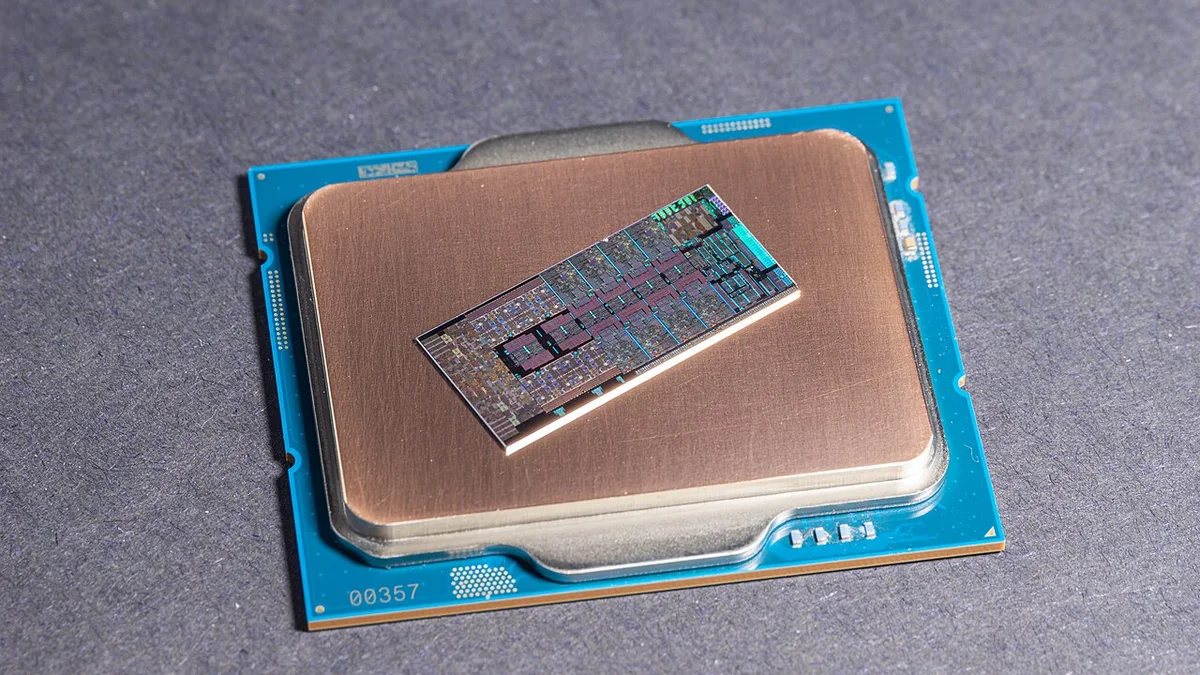
Until now, the name Raptor Lake-S NEXT only appeared in motherboard BIOS entries and shipping manifests. This time, the label comes straight from Intel itself. On November 26, 2026, Intel updated its official Intel Download Center page (ID #859372) with Version 2618, a 1.8 MB ZIP archive spotted the next day by hardware observer @momomo_us.
The key phrase in the release notes reads Raptor Lake-S NEXT PV. Inside Intel's development cycle, PV stands for Production Verification, the final hardware qualification stage before mass production and retail launch. Putting that status on intel.com confirms this LGA 1700 desktop refresh has moved well beyond early lab work.
What Changed Between Version 2400 and Version 2618
Comparing the May 28, 2026 package with the November 26, 2026 revision makes the update clear. Intel now lists Bartlett Lake-S and Raptor Lake-S NEXT together inside the same driver documentation.
| Intel Field (#859372) | Version 2400 (May 28, 2026) | Version 2618 (November 26, 2026) |
|---|---|---|
| Introduction | Bartlett Lake-S Hybrid MR3 and 12P MR1 | Bartlett Lake-S Hybrid MR4, 12P MR2, and Raptor Lake-S NEXT PV |
| Processor Platforms | Intel Bartlett Lake-S | Intel Bartlett Lake-S and Raptor Lake S NEXT |
| Platform Phase | Bartlett Lake-S (Hybrid MR3 and 12P MR1) | Bartlett Lake-S (Hybrid MR4 and 12P MR2) and Raptor Lake S NEXT PV |
| Host OS / Guest OS | Ubuntu 24.04 / Windows 11 | Ubuntu 26.04 / Windows 11 |
The same update bumps Bartlett Lake-S to Hybrid MR4 and 12P MR2 (up to 12 P-cores) while shifting the reference Linux host from Ubuntu 24.04 to Ubuntu 26.04. Grouping both families in one package underlines their shared LGA 1700 desktop foundation.
A Virtualization Display Driver, Not a Gaming Graphics Package
It helps to keep the scope clear: this download is not a consumer gaming graphics driver. Intel publishes it as a Windows Indirect Display Driver (IDD) Zero Copy virtualization package.
Under the hood, the stack combines a user-mode driver (UMD), a kernel-mode driver (KMD), IOCTL interfaces, and virtio. It routes display frames from a Linux QEMU hypervisor running Ubuntu 26.04 to a Windows 11 guest virtual machine without redundant memory copies, supporting multi-display setups, hot-plug detection (HPD), and hardware cursors.
What the Intel Page Confirms and What Remains Open
To keep speculation separate from fact: Intel's November 26 document lists no clock speeds, no core counts, no pricing, and no release date. All it proves directly on intel.com is the Raptor Lake-S NEXT name and its Production Verification milestone.
The broader picture rests on earlier hardware clues from this fall. Board partners have already prepared 600-series and 700-series updates, including when Gigabyte moved to extend LGA 1700 lifespan with Raptor Lake NEXT BIOS support. Earlier shipping records also pointed to four Raptor Lake NEXT LGA 1700 CPUs scaling up to 20 cores, keeping DDR4 memory viable while DDR5 prices remain steep.
My Test Bench
Having Intel publish Raptor Lake-S NEXT PV on its own download portal turns board-partner breadcrumbs into an official record. With DDR5 memory still inflating upgrade costs, letting B660, B760, and Z790 owners drop in a newer CPU while keeping their DDR4 sticks makes real sense. A PV listing alone does not prove value, though: until Intel shares final core layouts, clocks, and retail prices, I will wait for hard numbers. Even so, extending LGA 1700 is a welcome option for builders.

PC hardware enthusiast and competitive gamer, Arthur 'Heimdall' splits his time between France and the UK working in enterprise B2B software solutions. A business school graduate passionate about component benchmarking, he has been building, modding, and tuning PCs since childhood, optimizing every thermal degree and millisecond of display latency. An avid gamer across Assassin's Creed and sandbox titles, he forged his alliance with Grimtag and Chaya during late-night World of Warcraft raids before joining Pro-Gamer.