144MB L3 Cache, Native DDR5-8000, and a 5.5 GHz Cap: Leaked Specs Detail 7 Intel Core Ultra 4000 "Nova Lake-S" CPUs
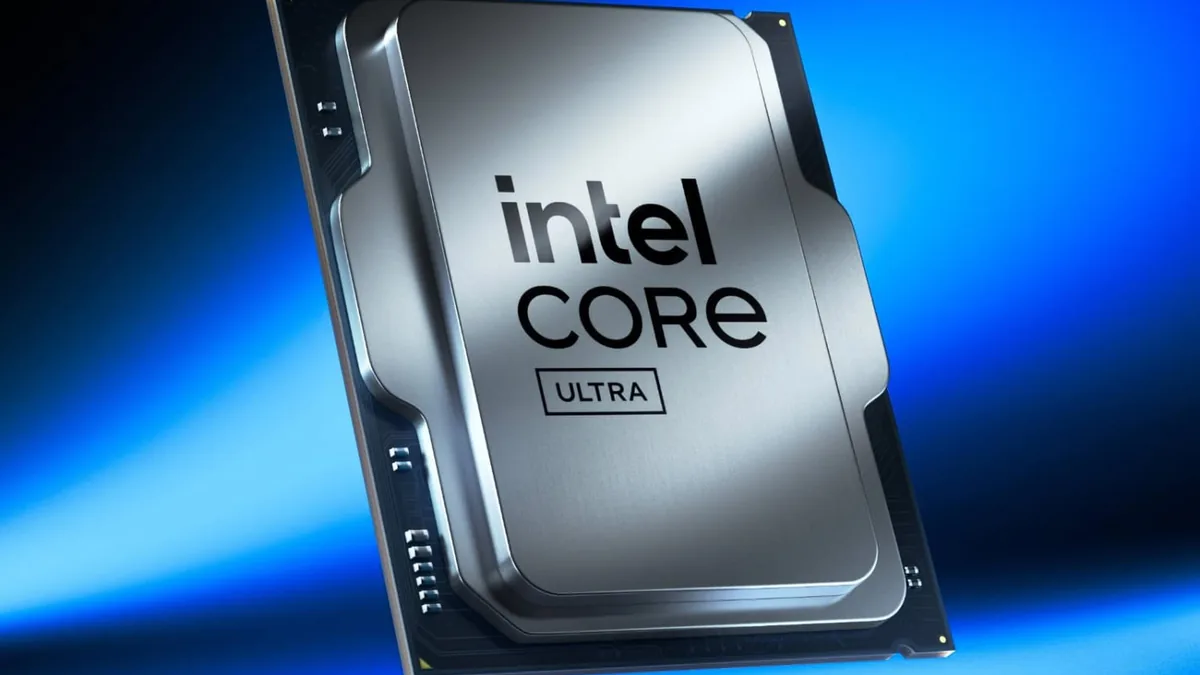
Intel's 2027 desktop processor stack just came into much sharper focus. An internal Intel document covering C1-stepping qualification samples (QS) outlines preliminary specifications for seven Intel Core Ultra 4000 "Nova Lake-S" desktop CPUs built for the LGA 1954 socket. Instead of chasing 6 GHz headline clocks on these early qualification chips, Intel is clearly leaning on two core gaming upgrades: a massive bLLC (BFC-branded) L3 cache scaling up to 144MB and out-of-the-box DDR5-8000 memory support.
Core Ultra 9 4970K BFC and 4870K BFC: Intel's Direct Answer to Ryzen X3D
Leading the seven-chip stack is the Intel Core Ultra 9 4970K BFC, packing 28 hybrid cores split across 8 P-Cores (Coyote Cove), 16 E-Cores (Arctic Wolf), and 4 Low-Power E-Cores (LP-E). Its standout feature is not peak clock speed, which sits at 5.5 GHz on C1 qualification silicon, but its 144MB L3 cache pool. Directly below it sits the Core Ultra 9 4950K with the exact same 28-core layout (8P+16E+4LP-E) and a 5.4 GHz boost clock, minus the BFC cache expansion, leaving it with 36MB of standard L3 cache.
That specification also clears up earlier October confusion suggesting the 4950K might drop LP-E cores entirely. Intel repeats the same cache split in the Core Ultra 7 tier with the Core Ultra 7 4870K BFC and Core Ultra 7 4850K. Both chips feature 24 cores (8P+12E+4LP-E), a 5.2 GHz boost ceiling, and a 125W base TDP, yet the 4870K BFC quadruples the L3 cache pool to 144MB compared to the standard 4850K's 36MB.
Rounding out the stack are the mainstream Core Ultra 5 4650K and 4650KF, each combining 22 cores (6P+12E+4LP-E), 30MB of L3 cache, a 5.1 GHz boost clock, and a 125W base TDP, with the KF variant omitting integrated graphics. Unlike previous rumors surrounding 52-core dual-tile Nova Lake-S silicon drawing up to 474W, every processor in this initial lineup stays firmly within a 65W to 125W base power envelope.
Complete Leaked Specs Table: 7 Intel Core Ultra 4000 Nova Lake-S CPUs
All figures below come from C1-stepping qualification sample documentation. Qualification samples this close to launch rarely change core counts or cache configurations, though Intel can still tune final retail boost clocks slightly before shelf availability.
| Model | Cores (P+E+LP-E) | L3 Cache | P-Core Base / Boost | E-Core Base / Turbo | Base TDP |
|---|---|---|---|---|---|
| Core Ultra 9 4970K BFC | 28 (8+16+4) | 144MB (bLLC) | 3.3 / 5.5 GHz | 2.7 / 4.6 GHz | 125W |
| Core Ultra 9 4950K | 28 (8+16+4) | 36MB | 3.4 / 5.4 GHz | 2.7 / 4.6 GHz | 125W |
| Core Ultra 9 4900 BFC | 22 (6+12+4) | bLLC (Expanded) | 2.0 / 5.3 GHz | Not listed | 65W |
| Core Ultra 7 4870K BFC | 24 (8+12+4) | 144MB (bLLC) | 3.2 / 5.2 GHz | 2.6 / 4.4 GHz | 125W |
| Core Ultra 7 4850K | 24 (8+12+4) | 36MB | 3.5 / 5.2 GHz | 2.8 / 4.4 GHz | 125W |
| Core Ultra 5 4650K | 22 (6+12+4) | 30MB | 3.6 / 5.1 GHz | Not listed | 125W |
| Core Ultra 5 4650KF | 22 (6+12+4) | 30MB | 3.6 / 5.1 GHz | Not listed | 125W (No iGPU) |
The Unusual 65W Core Ultra 9 4900 BFC and a Missing Midrange bLLC Chip
The biggest wildcard in the lineup is the Core Ultra 9 4900 BFC. Despite carrying the flagship Ultra 9 badge, it uses a 22-core layout (6P+12E+4LP-E), giving it fewer total cores than both Core Ultra 7 models. It is also the sole non-K, 65W chip in the leaked roster, pairing a 2.0 GHz base clock with a 5.3 GHz boost and Intel's large bLLC cache, a profile clearly aimed at compact or thermally constrained gaming builds.
Just as telling is what is missing from this launch stack: the previously rumored 125W 6P+12E+4LP-E bLLC chip does not appear anywhere on the sheet. That omission aligns with hardware leaker Jaykihn's recent claim that Intel shifted its midrange 125W big-cache SKU to the follow-up Razor Lake-S generation instead.
Native DDR5-8000 Support and a Late February 2027 Berlin Launch Window
Every Nova Lake-S processor on the list bumps official memory support to DDR5-8000, a substantial jump over Arrow Lake-S's native DDR5-6400 baseline. Combined with expanded on-die L3 cache, Intel is directly targeting the memory latency bottleneck that held back its previous desktop generation in CPU-heavy games.
From a timing standpoint, C1 qualification silicon surfacing now fits cleanly with Intel's planned four-day European desktop event in Berlin from February 22 to 25, 2027, which is widely expected to serve as the official launch stage for Nova Lake-S and 900-series LGA 1954 motherboards.
My Test Bench
Let's keep expectations grounded first: these are leaked C1 qualification sample figures, not tested retail silicon from my bench. Even with that caveat, the Core Ultra 7 4870K BFC immediately jumps out as the chip PC gamers should watch. On paper, it keeps the exact same 8 P-Cores and 144MB of L3 cache as the flagship 4970K BFC without forcing players to pay extra for four additional E-Cores that rarely move the needle on gaming frametimes.
Boost clocks topping out between 5.1 GHz and 5.5 GHz might look conservative next to 6 GHz Raptor Lake parts, but raw clock speed means little when a CPU stalls waiting on memory. If 144MB of bLLC cache paired with native DDR5-8000 meaningfully lifts 1% lows and Coyote Cove delivers real IPC gains, Intel finally has a serious blueprint to challenge AMD's Ryzen X3D dominance on frames per dollar. Still, skipping a 125W Core Ultra 5 BFC model at launch leaves the budget-friendly gaming tier wide open for the competition.

PC hardware enthusiast and competitive gamer, Arthur 'Heimdall' splits his time between France and the UK working in enterprise B2B software solutions. A business school graduate passionate about component benchmarking, he has been building, modding, and tuning PCs since childhood, optimizing every thermal degree and millisecond of display latency. An avid gamer across Assassin's Creed and sandbox titles, he forged his alliance with Grimtag and Chaya during late-night World of Warcraft raids before joining Pro-Gamer.