Up to 474W Across 52 Cores: Why Intel Nova Lake-S Desktop Processors Call for Three 8-Pin CPU Connectors
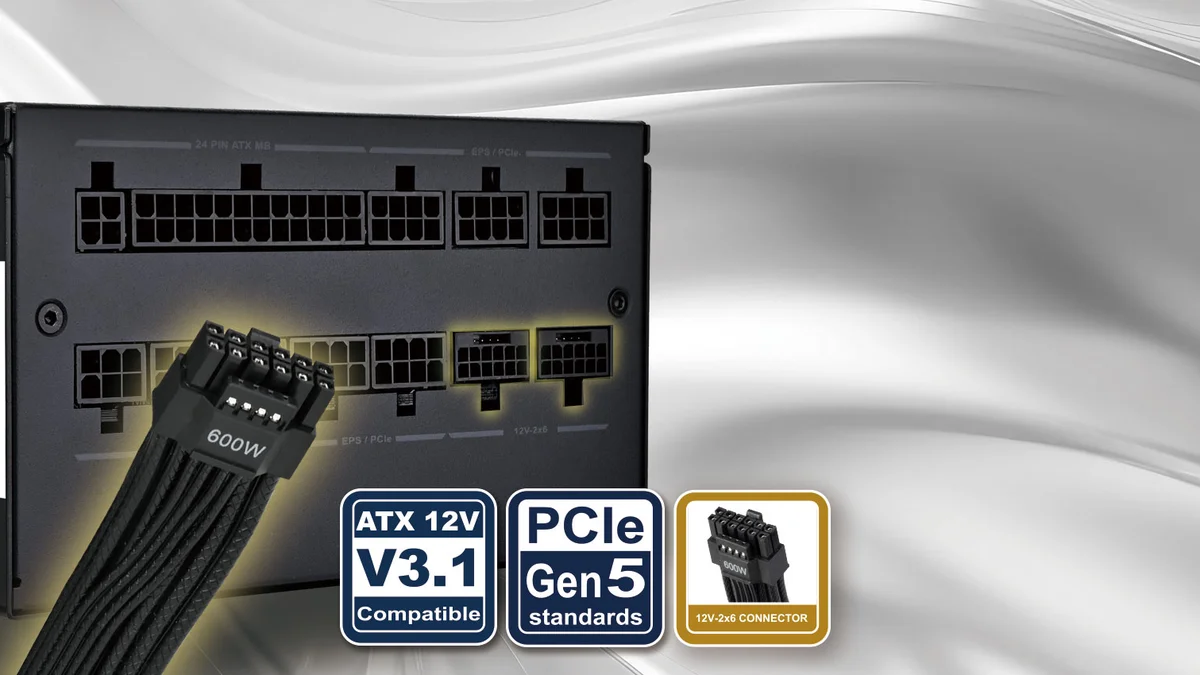
Desktop processor power delivery is heading into workstation territory. Set to debut on the upcoming LGA 1954 socket alongside Intel's 900-series chipsets, the Intel Core Ultra Series 400 "Nova Lake-S" lineup is driving a notable shift in motherboard and power supply wiring. According to technical specifications shared by hardware leakers Jaykihn and LC Tech Leaks, alongside official product documentation for the new SilverStone HELA 1350Rz power supply, Intel's unlocked 52-core flagship is prompting enthusiast Z990 motherboards and high-wattage ATX 3.1 units to support up to three 8-pin EPS12V connectors dedicated solely to the CPU.
52 Dual-Tile Cores and a 474W PL2 Power Target
To go head-to-head in heavy multi-threaded workloads against AMD's upcoming Zen 6 desktop processors on TSMC's N2X node, Intel is scaling up its hybrid architecture on Nova Lake-S. The top-tier unlocked configuration combines dual compute tiles to deliver 52 physical cores: 16 Coyote Cove P-Cores, 32 Arctic Wolf E-Cores, and 4 low-power LP-E Cores on an island architecture, complemented on select SKUs by high-capacity bLLC (Big Last Level Cache) configurations.
While the baseline processor power (PL1) remains anchored at the familiar 150W mark, full all-core boost across fifty-two cores changes the electrical equation. Data revealed by Jaykihn and LC Tech Leaks indicates that the maximum turbo power limit (PL2) on the 52-core Nova Lake-S reaches 474W with power limits unleashed. Under extreme manual overclocking with high-end custom liquid loops or sub-zero cooling, total package draw can climb past 500W to 650W+.

Why Z990 Motherboards and the SilverStone HELA 1350Rz Ship With Three EPS12V Cables
That 474W PL2 ceiling directly explains a key specification on the official product sheet for the SilverStone HELA 1350Rz, a 1350W 80 Plus Platinum unit compliant with ATX 3.1 and PCIe 5.0 standards. Whereas conventional flagship power supplies bundle two CPU power leads, SilverStone includes three 4+4-pin EPS cables out of the box, explicitly stating that the triple-cable setup is designed for the high power demands of upcoming Intel NVL-S (Nova Lake-S) processors.
From an electrical engineering standpoint, the math behind triple 8-pin CPU headers is clear:
- A single standard 8-pin EPS12V connector is rated to safely carry around 300W to 336W of continuous power depending on wire gauge (16 AWG vs. 18 AWG).
- While a dual 8-pin arrangement technically covers up to roughly 600W, sustaining 474W in PL2 alongside sharp transient spikes during rapid load transitions pushes dual cables closer to their thermal margin.
- Adding a third 8-pin EPS12V connector on flagship Z990 motherboards distributes the current across more pins and PCB traces, keeps connector temperatures low, prevents voltage sag (Vdroop) across the VRM stages, and provides clean headroom for extreme overclocking.
Do PC Gamers Need a New Power Supply for Nova Lake-S?
When a consumer desktop processor rivals a flagship graphics card in peak wattage, upgrade questions naturally follow, but PC gamers do not need to panic. As clarified by Jaykihn, the third 8-pin EPS12V header on upcoming Z990 reference and partner designs is an optional vendor feature rather than a mandatory requirement to boot the system.
During actual gaming sessions, workloads never saturate all 52 cores at 100% capacity simultaneously. Real-world gaming power draw on high-core-count hybrid chips typically sits between 150W and 220W, well within the comfort zone of standard dual 8-pin EPS12V connectors found on current quality power supplies. However, for 3D rendering workstations, heavy code compilation, or enthusiasts unlocking the full 474W PL2 profile on a flagship Z990 board, pairing a 360mm or 420mm AIO liquid cooler with a 1200W to 1350W ATX 3.1 PSU equipped with three dedicated EPS cables will be essential for rock-solid stability.
My Test Bench
Whenever a mainstream desktop socket climbs to a 474W factory PL2 rating, it immediately reminds me of the wildest days of X299 and workstation HEDT platforms. From a hardware reliability perspective, I welcome SilverStone and Z990 motherboard engineers adding a third 8-pin EPS12V connector: after everything the PC community has witnessed with high-draw GPU power plugs running near their thermal limits, spreading nearly 500W of CPU load across three robust 8-pin EPS headers is smart engineering. On my own gaming test rig, I will still run two 8-pin cables and cap PL2 at a sensible ceiling in the BIOS, because burning an extra 250W of heat just to squeeze out a few extra points in synthetic all-core benchmarks makes no sense for daily gaming.

PC hardware enthusiast and competitive gamer, Arthur 'Heimdall' splits his time between France and the UK working in enterprise B2B software solutions. A business school graduate passionate about component benchmarking, he has been building, modding, and tuning PCs since childhood, optimizing every thermal degree and millisecond of display latency. An avid gamer across Assassin's Creed and sandbox titles, he forged his alliance with Grimtag and Chaya during late-night World of Warcraft raids before joining Pro-Gamer.