Up to 40-Week AI Server Wait Times: Why NVIDIA Could Cut GeForce RTX 50 Supply Further While RTX 60 Slips to 2028
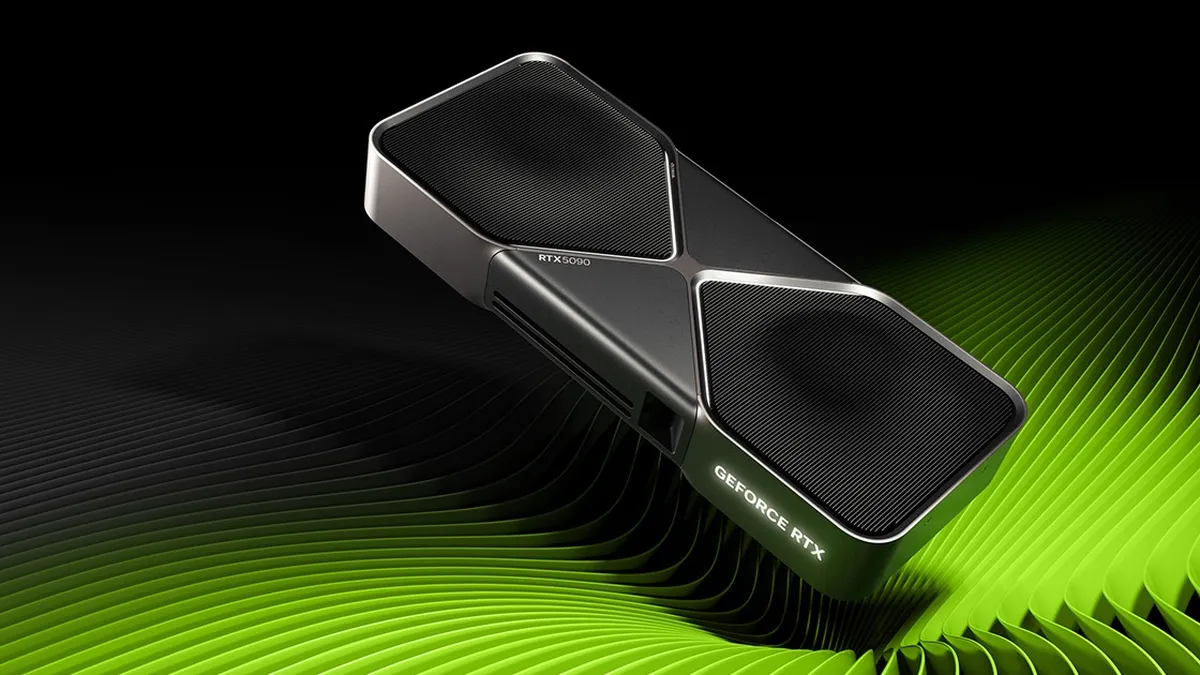
PC gamers hoping for breathing room on graphics card pricing heading into 2027 may be in for a long wait. According to late November 2026 supply-chain reports from Taiwan's financial daily Commercial Times (CTEE), NVIDIA is reportedly preparing to further trim GeForce RTX 50 Series shipments. Behind the squeeze sits a familiar double bottleneck: AI data-center lead times stretching from 14 to over 40 weeks and persistent GDDR7 memory constraints, while consumer GeForce RTX 60 (Rubin) GPUs increasingly point toward a 2028 release window.
14-to-40-Week AI Server Queues Are Absorbing Manufacturing Capacity
Separating confirmed market facts from supply-chain reporting matters here. NVIDIA's overwhelming focus on enterprise AI revenue and severely inflated late-2026 retail GPU pricing are well-documented realities. The exact scope of any additional GeForce allocation reductions, however, remains unconfirmed by NVIDIA and is reported conditionally by Taiwanese ODM and component sources cited by Commercial Times and DigiTimes.
According to those supply-chain accounts, order backlogs for NVIDIA's enterprise hardware have grown long enough to saturate both TSMC advanced packaging capacity and Taiwanese ODM assembly lines:
| NVIDIA Enterprise / AI Lineup | Reported Lead Time (Late Nov. 2026) | Spillover Impact on GeForce |
|---|---|---|
| B300 GPUs (Blackwell Ultra) | 26 to 40 weeks | New orders pushed into Q2/Q3 2027, top TSMC wafer priority |
| GB300 Rack Systems | 14 to 26 weeks | Heavy saturation across Taiwanese ODM partners |
| Workstation Superchips & RTX PRO / DGX Station | Around 26 weeks or longer | Direct competition for high-capacity GDDR7 supply |
| Vera Rubin Platform | Priority production ramp | Pulls packaging and engineering resources away from consumer lines |
The underlying math leaves little mystery. Every silicon wafer and memory stack routed into enterprise racks delivers dramatically higher margins than a desktop gaming GPU. Industry updates circulating through Board Channels over recent quarters have already pointed to periodic allocation cuts ranging from 15% up to 30% to 40% for board partners, hitting high-VRAM 16GB cards such as the RTX 5070 Ti and RTX 5060 Ti 16GB hardest.
GDDR7 Scarcity and the Missing RTX 50 SUPER Refresh
GPU dies are only half the bottleneck. Memory makers Samsung, SK hynix, and Micron continue to funnel advanced DRAM output toward HBM and enterprise server modules, keeping consumer GDDR7 supply tight and expensive.
That memory squeeze also explains why a mid-cycle GeForce RTX 50 SUPER refresh has yet to materialize in late 2026. Planned higher-capacity configurations relying on 3GB GDDR7 modules have run straight into a wall of component costs roughly triple those of standard 2GB chips. This aligns directly with the recent shelving of 3GB GDDR7-based 24GB GeForce RTX 5080 plans, leaving NVIDIA's original RTX 50 lineup to carry the entire cycle alone.
Late November 2026 Street Prices Show Zero Margin for Error
If NVIDIA does tighten consumer shipments further going into Q1 2027, the cut will hit a retail market already stretched far past launch targets. Across major US retailers such as Newegg, Best Buy, and Micro Center in late November 2026, actual in-stock pricing remains starkly detached from original launch expectations:
- GeForce RTX 5090 (32GB): Sporadic restocks regularly land between $6,250 and $7,000+ for custom partner cards, with European availability hovering well above 5,600 EUR.
- GeForce RTX 5080 (16GB): In-stock partner models trade largely between $1,979 and $2,399 in the US, and around 1,999 EUR to 2,050 EUR in Western Europe.
- GeForce RTX 5070 Ti (16GB): Retail listings sit broadly between $1,339 and $1,599 in the US, and roughly 1,399 EUR to 1,479 EUR across European shops.
With shelves already this thin on 16GB and 32GB cards, even a modest additional trim to add-in-board allocations would shut the door on meaningful price normalization well into 2027.
GeForce RTX 60 (Rubin) Targeting 2028 Breaks the Two-Year Cadence
The second major takeaway from Taiwan's supply-chain reporting involves what comes next. With enterprise Vera Rubin infrastructure taking priority on TSMC and ODM roadmaps, mass production of consumer GeForce RTX 60 GPUs (the GR20x family) is reportedly at risk of slipping out of late 2027 altogether. That assessment mirrors tracking from well-known hardware leakers Kopite7kimi and Kepler_L2, reinforcing earlier signs of a 2028 window for consumer Rubin GeForce RTX 60 cards.
Should that timeline hold, Blackwell will effectively serve as a three-year gaming generation, breaking NVIDIA's long-standing two-year release rhythm without a mainstream SUPER refresh to bridge the gap.
My Test Bench
Looking strictly at real-world frames per dollar in late November 2026, the value equation on high-end GeForce cards is brutal. Paying nearly $1,500 for an RTX 5070 Ti or north of $2,000 for an RTX 5080 is already hard to justify, and reports of 40-week B300 server queues make it painfully clear where NVIDIA's manufacturing priorities lie.
If your rig is already running smoothly on an RTX 4070 Ti, RTX 4080, or RX 7900 XT at 1440p, sitting this cycle out remains the smartest play I can recommend. If you genuinely need an upgrade soon because older hardware is failing, target brief first-party retail restocks rather than waiting for a miraculous spring price crash. Between GDDR7 tightness and a likely 2028 wait for RTX 60, relief is nowhere on the immediate horizon.

PC hardware enthusiast and competitive gamer, Arthur 'Heimdall' splits his time between France and the UK working in enterprise B2B software solutions. A business school graduate passionate about component benchmarking, he has been building, modding, and tuning PCs since childhood, optimizing every thermal degree and millisecond of display latency. An avid gamer across Assassin's Creed and sandbox titles, he forged his alliance with Grimtag and Chaya during late-night World of Warcraft raids before joining Pro-Gamer.