GTA V Runs Natively on Nintendo Switch 2: How Experimental Recompilation via kaiHEN Bypasses Emulation
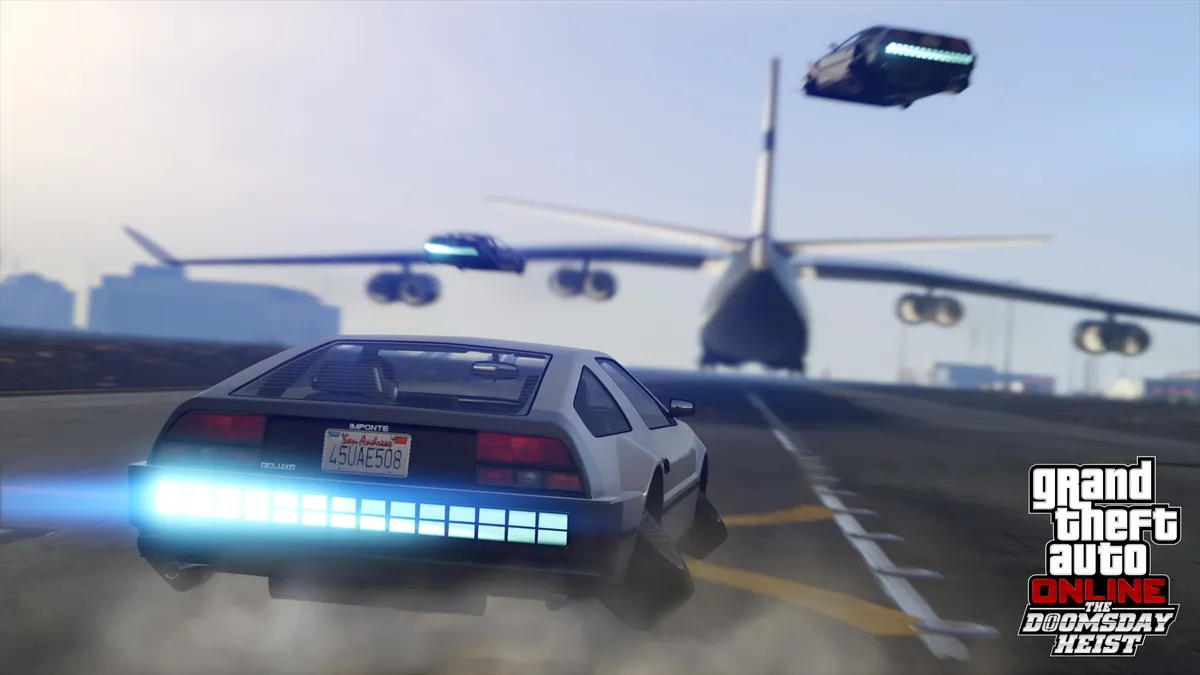
While the entire gaming industry counts down the final hours before the global launch of Grand Theft Auto VI, the console homebrew scene has quietly achieved a major technical milestone on Nintendo's newest hybrid hardware. Developer PLK, widely recognized for systems engineering and tooling across PlayStation platforms, has demonstrated an experimental native recompilation of Grand Theft Auto V running directly on modified Nintendo Switch 2 hardware.
From the North Yankton Prologue to Shader Fixes: Inside the Build
In video demonstrations shared by the developer, Rockstar Games' blockbuster boots cleanly past the initial splash logos and loads straight into the snow-covered North Yankton bank heist prologue. Far from a static menu proof of concept, the footage captures active character movement inside the vault, a fully functional HUD with a live minimap, and dynamic mission objectives running in real time.
While the earliest test build exhibited visual artifacts and lighting anomalies caused by translating the RAGE engine's material pipeline, a follow-up showcase confirmed that those initial shader glitches have already been resolved. Crucially, no cloud streaming or heavyweight virtual machine is involved: the binary executes natively on the console's ARM64 silicon, following the same architectural philosophy we explored in our breakdown of how native recompilation is replacing traditional emulation.
Under the Hood of kaiHEN and OunceVK: Tapping into Switch 2 Silicon
Running a massive open-world engine without the severe CPU overhead of an emulator relies on the newly released kaiHEN homebrew environment developed by OunceBrew and researcher Kurumuz. Built as a minimal custom firmware for the Nintendo Switch 2 (internally codenamed Ounce), kaiHEN grants low-level system access, maps custom .NRO binaries into client processes through its ldr:ro service, and enables full Just-In-Time (JIT) code execution.
Equally vital to this demonstration is the accompanying Ounce Devkit toolchain and its custom graphics driver, OunceVK. Built on top of NVK, Mesa's open-source Vulkan driver for Nvidia GPUs, OunceVK exposes full Vulkan 1.4 support alongside OpenGL and OpenGL ES 3.1 through the Zink translation layer directly on the console's default window surface. Back in September 2026, when modding collective Paralympics Productions and developer M0jso squeezed an unofficial native build onto the original 2017 Switch, heavy overclocking was required on the aging Tegra X1 just to scrape together 30 FPS. On the Switch 2, expanded memory bandwidth and modern Nvidia compute units provide vastly more headroom.

Build Instructions and Navigating Take-Two's Legal Radar
Recent history in the reverse-engineering community dictates extreme caution regarding intellectual property. When the original Switch port surfaced in September 2026 using elements tied to the late-2023 source code leak, Take-Two Interactive shut the repository down within days via a cease-and-desist notice. To avoid distributing proprietary Rockstar assets, PLK indicated plans to release only the build instructions, requiring users to supply their own legally purchased game data to compile the executable locally.
At a moment when global broadband providers are already straining under GTA 6's massive 212 GB pre-load traffic, seeing its predecessor boot natively on Nintendo's newest portable highlights just how fast the Switch 2 homebrew toolchain is maturing. Future tests will reveal how the recompiled build handles high-speed asset streaming across downtown Los Santos and whether frametimes hold steady outside the linear prologue.
My Take on the Spec Sheet
Looking strictly at the hardware pipeline, the real breakthrough here goes beyond watching Michael and Trevor walk through the North Yankton vault on a portable screen: it is how fast the OunceVK driver stack managed to harness the Switch 2's Nvidia GPU architecture through Mesa NVK and Vulkan 1.4. Native recompilation strips away the massive instruction-translation overhead of traditional emulation, allowing the engine to talk directly to the ARM64 cores and unified memory pool without burning half the thermal budget. Chaya was just telling me this morning that Rockstar is bound to announce an official Switch 2 port of GTA V once the November 19 launch frenzy settles down, while Bastien has been tracking every static recompilation milestone all year: before Take-Two even makes an official move, the OunceBrew toolchain has already proven that the silicon can handle the RAGE engine natively.

PC hardware enthusiast and competitive gamer, Arthur 'Heimdall' splits his time between France and the UK working in enterprise B2B software solutions. A business school graduate passionate about component benchmarking, he has been building, modding, and tuning PCs since childhood, optimizing every thermal degree and millisecond of display latency. An avid gamer across Assassin's Creed and sandbox titles, he forged his alliance with Grimtag and Chaya during late-night World of Warcraft raids before joining Pro-Gamer.