No PS5 Booths at Paris Games Week: Why Hamaguchi Only Demoed FF7 Revelation on Switch 2
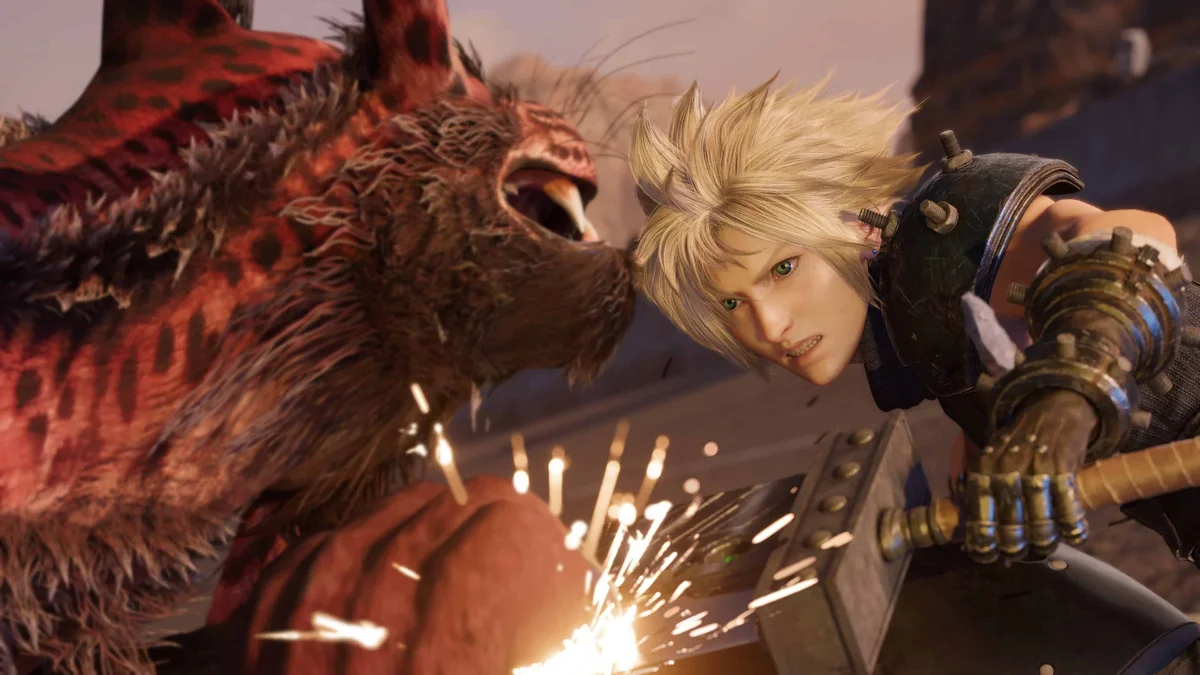
From October 22 to October 25, 2026, attendees at Paris Games Week waited in hour-long lines at Nintendo's booth to get their hands on eight demo stations running Final Fantasy VII Revelation, while director Naoki Hamaguchi hosted a 30-minute live gameplay showcase on the publisher's main stage. Yet one question kept coming up among show-goers speaking with the director on the floor: why wasn't the PlayStation 5 version playable anywhere at the event? Sitting down for an extensive retrospective interview with French creator and streamer mistermv (Xavier Dang), translated by Grégoire Hellot, the Square Enix director revealed that making the Nintendo Switch 2 build the sole playable version in Paris was a deliberate move ahead of the game's simultaneous worldwide launch on April 8, 2027.
Silencing Hardware Doubts Hands-On With the Nintendo Switch 2 Build
Unlike the first two installments in the remake project, which launched as timed PlayStation console exclusives before migrating to other platforms later on, Final Fantasy VII Revelation will release day-and-date across PlayStation 5, Xbox Series X/S, PC, and Nintendo Switch 2. During Paris Games Week, numerous attendees told Naoki Hamaguchi that they had hoped to test the PS5 edition as well to see the trilogy's finale pushing high-end hardware.
Instead, Square Enix intentionally left the PS5 kiosks behind. Knowing that players naturally wondered how a massive open-world conclusion would scale down to a hybrid system with lower specifications than a PS5 or gaming PC, Hamaguchi wanted fans to experience the Switch 2 framerate and visual clarity firsthand:
"Many people at Paris Games Week told me they wanted to also try the PS5 version of Final Fantasy VII Revelation, but we wanted to show how well the game runs on Switch 2! Our aim was to show that the game runs well on the Switch 2 and on hardware with lower specs." (Naoki Hamaguchi, Director of Final Fantasy VII Revelation)
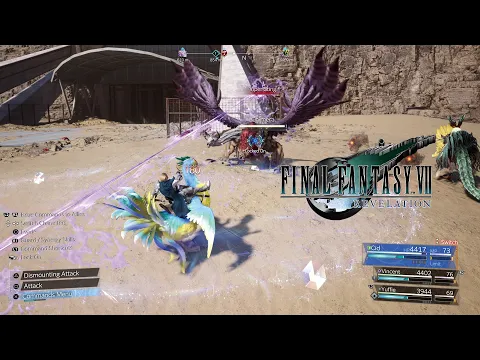
Running in docked TV mode on Nintendo's show floor, the 15-minute hands-on demo put players directly in control of the party's two newly playable members: Cid Highwind, fighting as an acrobatic Dragoon who uses his spear to control mid-range spacing and leap out of harm's way, and Vincent Valentine, who alternates between precision gunfire from afar and ferocious close-quarters monster transformations that trade defensive stats for devastating burst damage.
Even during particle-heavy clashes against demo boss Jenova DEATH, while chaining skills through the new Share Materia (which allows every active party member to cast a linked spell such as Cure or Fire) and swapping between the four class roles of the FITS (Flexible Style Tactical System, Warrior, Summoner, Black Mage, and Fighter), the Switch 2 version held up smoothly without noticeable slowdowns. As Hamaguchi explained alongside his recent breakdown of how Summons are leaving Chadley's VR simulator to return to open-world exploration in Final Fantasy VII Revelation, the core team develops primarily around PS5 and PC specifications while a dedicated optimization team tailors graphical assets for Switch 2, ensuring zero compromises to gameplay scale or Highwind airship traversal, which unlocks roughly six hours into the story and draws inspiration from the vertical freedom of The Legend of Zelda: Breath of the Wild.
From 30 Developers on Remake to Over 300 on Revelation: The Trilogy's Hardest Climb
During the same conversation with mistermv, Naoki Hamaguchi also reflected on his decade-long journey steering the remake project. While Final Fantasy VII Revelation is by far the largest and most mechanically ambitious installment of the three, the director revealed that 2020's Final Fantasy VII Remake, despite being the most linear entry, confined entirely to Midgar, was actually the hardest game in the trilogy to develop.
The reason comes down to how the project was rebuilt. When Square Enix restarted development internally from scratch, the initial team consisted of just 30 developers. That small core had to simultaneously recruit hundreds of staff, establish an entire production pipeline, lock down the visual identity, and invent the hybrid real-time ATB combat system from a blank slate under immense pressure from fans of the 1997 classic.
By contrast, both Final Fantasy VII Rebirth and Final Fantasy VII Revelation were built atop that established technical and organizational foundation. Scaling up to more than 300 developers while retaining nearly the entire core leadership across all three games allowed the studio to plan well ahead: veteran scenario writer Kazushige Nojima began structuring Revelation's script a full year before Rebirth shipped, allowing the combat team to seamlessly transition into refining Zack Fair's bespoke combat system and three-character synergy rules in Final Fantasy VII Revelation without a single month of downtime.
Beyond April 8, 2027: Why Naoki Hamaguchi Wants a New Final Fantasy or Original IP Next
With the April 8, 2027 finish line in sight, bringing character-driven mini-games such as Tifa's expanded piano recitals, Nanaki's Queen's Blood matches, and Vincent Valentine's snowboarding sequences, all complete with an optional auto-clear toggle for players who only want the story rewards, questions are naturally turning toward what awaits Square Enix's Creative Studio I once the trilogy concludes.
Asked whether his team might tackle another major remake afterward, Naoki Hamaguchi made it clear that he is ready to turn the page. While he noted that a different internal division at Square Enix would be better suited to handle any future remake projects, his personal preference is for his seasoned team to develop either a brand-new mainline Final Fantasy installment or an entirely original IP, emphasizing that taking on fresh creative challenges is essential for inspiring developers and reaching new audiences.
Official Final Fantasy VII Revelation Combat and Exploration Deep Dive Trailer
My Take: Unplugging the PS5 to Put the Switch 2 Build to the Test Takes Real Confidence
In an industry where publishers routinely hide lower-spec or handheld ports behind high-end PC footage until launch day, Naoki Hamaguchi's strategy at Paris Games Week deserves real credit. Leaving PS5 kiosks off the show floor so European attendees could test Final Fantasy VII Revelation directly on Nintendo Switch 2 five months before release is the strongest vote of technical confidence Square Enix could possibly deliver.
Just as exciting is hearing the director who helped grow this team from 30 pioneers into a 300-person powerhouse ask for a blank canvas after April 8, 2027. After spending a full decade honoring 1997's legacy, this crew has more than earned the right to build a brand-new world of their own.
Based on the outskirts of New York City, Chaya 'Chayane' spent five years studying software engineering in Montreal before returning to her home state. A Full-Stack developer and Deep Learning AI architecture researcher, she explores neural networks and algorithmic optimization while engineering data pipelines for Retrocharting and Gamescharting alongside Grimtag. A gamer for over 20 years and an avid collector of Nintendo history and The Legend of Zelda, she explored World of Warcraft's Azeroth before bringing her deep technical background to video game analysis.