16 Years of Solo Development and a 500 MB Footprint: Annapurna Interactive's Faraway Launches November 5, 2026
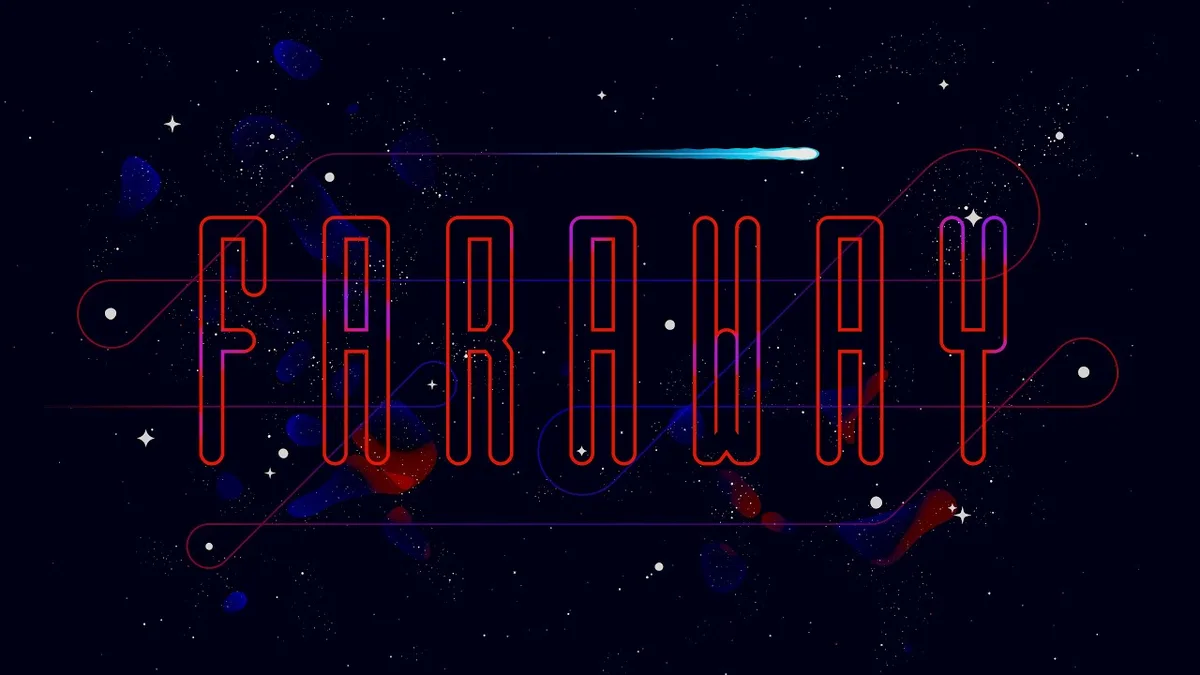
First revealed in 2010 and recognized early on as a Nuovo Award finalist at the 2011 Independent Games Festival, the minimalist arcade-puzzle game Faraway finally has an official launch date. Crafted solo over nearly sixteen years by Steph Thirion and published by Annapurna Interactive, the title will release on November 5, 2026 for PC (via Steam and the Epic Games Store), PlayStation 5, Xbox Series X|S, Nintendo Switch, and Nintendo Switch 2.
At a time when AI vibe coding pushed Steam past 21,388 releases in 2026 at a pace of 66 games a day, Thirion's project stands at the opposite end of the development spectrum. Best known for the 2009 multi-touch classic Eliss, the game designer, creative coder, and musician built the physics, real-time visuals, and reactive soundtrack entirely on his own.
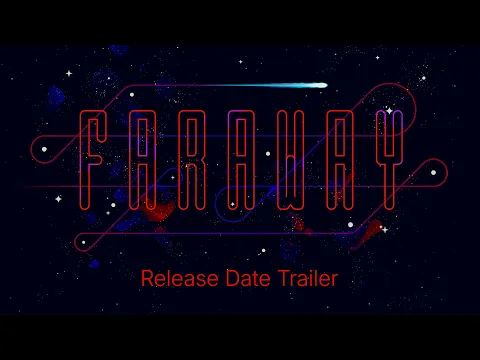
One-Button Gravitational Slingshotting Across a Procedural Cosmos
The core premise of Faraway casts you as a fleeting shooting star fighting to stay alive in deep space. To keep your spark from fading out, you must continuously link surrounding stars together, harvesting their energy while drawing freeform constellations across the firmament.
Built around a single-button control scheme, movement relies entirely on momentum, orbital swinging, and gravitational slingshotting. Locking onto a star's pull at the exact millisecond bends your trajectory, letting you chain high-risk geometric paths for bonus energy and score multipliers.
Every session in the endless core mode starts from nothing inside a universe generated in real time around your performance. As your accuracy improves, your shooting star accelerates into denser, more demanding regions of space while competing on global Steam Leaderboards.
Sixteen Handcrafted Puzzle Stages and a 500 MB DirectX 12 Footprint
Alongside its endless arcade mode, Faraway features 16 handcrafted puzzle stages designed to test specific orbital mechanics. These curated challenges force players to rethink their approach, uncover advanced slingshot techniques, and refine their timing outside the pressure of an endless run.
Under the hood, the game's custom real-time rendering architecture is a masterclass in software efficiency. In the middle of a month where over 8,000 demos and 1,054 AI disclosures at Steam Next Fest October 2026 sparked debates over bloated asset flips, every visual frame and musical cue in Faraway is synthesized mathematically on the fly.
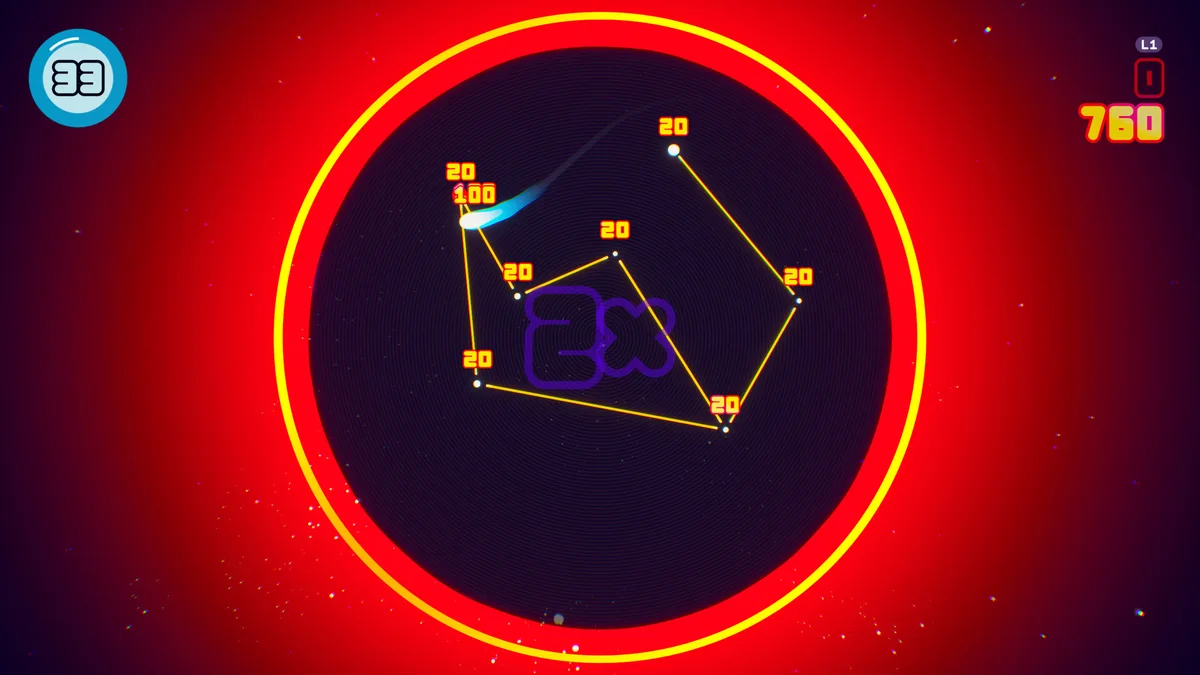
Because it relies on pure procedural code rather than massive pre-baked textures, the PC build requires just 500 MB of storage space under DirectX 12. Official system requirements are remarkably accessible, starting with an Intel Core i3-540 or AMD FX-4350 and a 2 GB GeForce GT 640 for minimum specs, or a Core i3-8100 and GeForce GTX 660 for recommended play.
My Test Bench: 500 MB of Pure Real-Time Code Against Today's Shader Bloat
Looking at Faraway's system requirements after spending the week benchmarking power-hungry GPUs, seeing a DirectX 12 release weigh in at 500 MB is a rare treat for any hardware enthusiast. Generating crisp vector geometry and synchronized interactive audio purely through real-time code proves that smart programming still beats brute-force VRAM consumption.
On a high-refresh OLED monitor or the Nintendo Switch 2 handheld display, a momentum-based one-button arcade game lives and dies by its frame pacing and input latency. Come November 5, sixteen years of solo fine-tuning will finally face the ultimate benchmark on global leaderboards.

PC hardware enthusiast and competitive gamer, Arthur 'Heimdall' splits his time between France and the UK working in enterprise B2B software solutions. A business school graduate passionate about component benchmarking, he has been building, modding, and tuning PCs since childhood, optimizing every thermal degree and millisecond of display latency. An avid gamer across Assassin's Creed and sandbox titles, he forged his alliance with Grimtag and Chaya during late-night World of Warcraft raids before joining Pro-Gamer.