"I'm All Nervous": How Young Developers Who Never Played the 1998 Original Helped Eiji Aonuma Build the Zelda: Ocarina of Time Remake
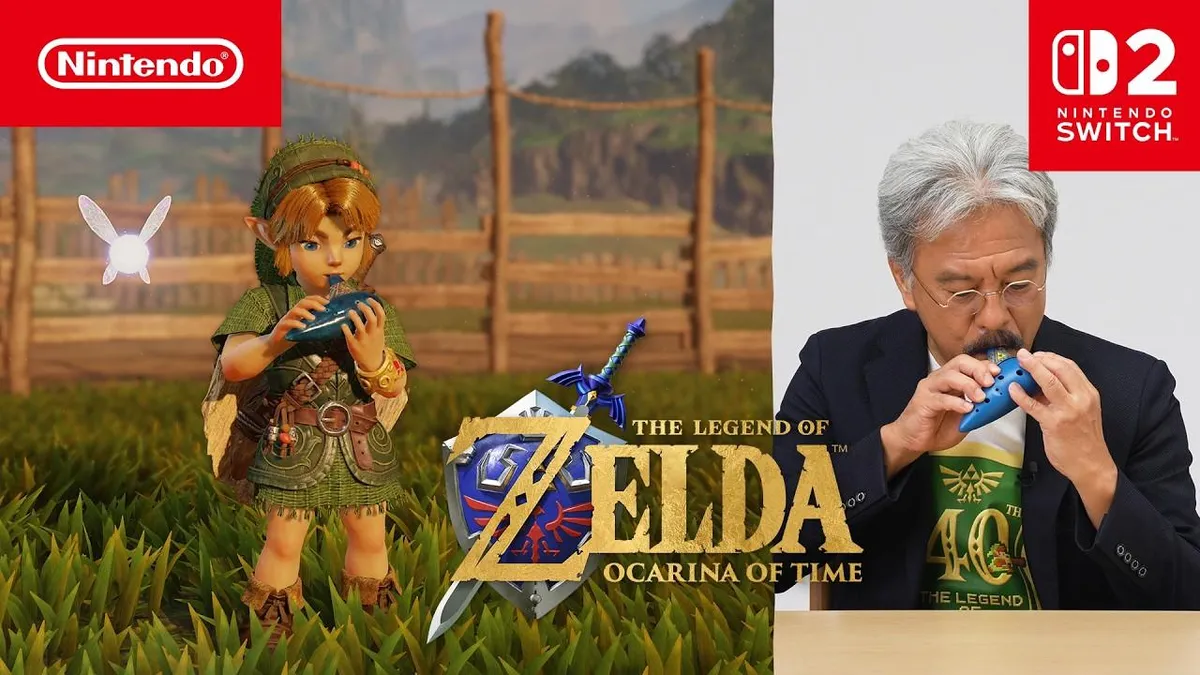
He may have spent more than a quarter-century steering one of gaming's most revered franchises and overseen more than 55 million combined sales across its last two mainline entries, yet Eiji Aonuma still feels pre-launch jitters. Speaking with Agence France-Presse (AFP) during his visit to the French capital following his recent investiture as a Knight of the Order of Arts and Letters in Paris, two decades after his mentor Shigeru Miyamoto received the same honor, the longtime The Legend of Zelda producer opened up about the making of the The Legend of Zelda: Ocarina of Time remake launching November 5, 2026 on Nintendo Switch 2, and his plans for the future of the series.
"I Can't Stop Thinking About It": Handing a 1998 Monument to a New Generation
With just eight days remaining before the 40th anniversary centerpiece lands on shelves worldwide, the 63-year-old Japanese creator admitted that awaiting player feedback on such a sacred classic has kept him on edge: "I'm all nervous about releasing the remake of Ocarina because I don't know how it's going to turn out, I can't stop thinking about it." While the franchise regularly alternates between flagship chapters, smaller adventures, and re-releases, this Switch 2 edition stands as the most ambitious remake Nintendo has ever undertaken for the saga created in 1986.
To bring the 1998 Nintendo 64 landmark into the modern era without trapping it in nostalgia, Aonuma revealed a telling detail about his development team in Kyoto: several of the younger staff members working on the project had never played the original Ocarina of Time. Rather than treating that lack of history as a hurdle, the studio leaned on their fresh perspective to rethink the controls and shape the new gameplay features in the Zelda: Ocarina of Time Switch 2 remake.
"It's thanks to these young people, by thinking about how to adapt the game in the best possible way, how to make it fun once you have the controls in your hands, that this remake came into being," Aonuma told AFP. He also hopes the ground-up overhaul will serve as a bridge for newer audiences: "I hope that those who know the recent Zelda games will understand how the series evolved from these foundations."
From Karakuri Automatons in 1998 to 55 Million Open-World Sales
The November 5 release carries deeply personal weight for Aonuma because the original Ocarina of Time was the very first project he tackled alongside Shigeru Miyamoto. Born in Nagano Prefecture as the middle child of three and the son of a telecommunications engineer, the avid sketch artist joined Nintendo almost by chance in the late 1980s as a graphic designer before Miyamoto recruited him to build the dungeons for the fifth mainline Zelda installment.
"It was the first time Nintendo was creating games in 3D," Aonuma recalled. "At university, I studied design, and in particular 3D composition through Karakuri dolls, which are traditional Japanese automatons. That matched up well with my work at the time, which consisted of designing the dungeons of Ocarina of Time." As he noted, the 1998 release established a lasting template for the franchise by weaving an emotional narrative that shifted between Link's childhood and adulthood all the way to the final confrontation against Ganondorf.
After directing its 2000 sequel Majora's Mask and stepping into the producer role in the early 2000s, Aonuma steadily expanded Hyrule's scale across wind-swept oceans and sky islands, culminating in Breath of the Wild (2017) and Tears of the Kingdom (2023), which have sold more than 55 million copies between them. "I've worked a lot on using space to surprise players and spark their imagination," he explained, aiming to "create games that instill in them the joy of exploration, that desire to try an action, see what happens, and apply that reasoning afterward." That experimental freedom is where he feels he has left his mark, calling it "the very essence of Zelda today."
Not Ready to Pass the Baton: Thinking Together About the Next Zelda
Although Aonuma acknowledged during his thank-you speech to French Culture Minister Catherine Pégard that "the road traveled has not always been easy," the 63-year-old producer made it clear that he has no intention of retiring after the 40th anniversary celebrations and the launch on Nintendo Switch 2.
Instead, he intends to stay closely involved in shaping the franchise's future chapters alongside his newer recruits: "I'm very interested to see what the younger staff will imagine" for upcoming titles, Aonuma said, adding that he is "extremely happy" to offer his guidance so they can "think together" about the next Zelda.
My Perspective
There is something quietly inspiring about the way Eiji Aonuma handles his own legacy. Where many industry veterans might have treated every corner of 1998's Ocarina of Time like an untouchable museum piece, he trusted young developers who had zero nostalgic baggage from the Nintendo 64 era to rethink how the game actually feels in a player's hands today. Pairing the structural discipline of a master who learned 3D space through traditional Karakuri automatons with a new generation focused purely on moment-to-moment fun is the exact reason Zelda never stagnates. Knowing that this same cross-generational team is already brainstorming the next mainline entry together is the best 40th anniversary reassurance fans could ask for.
Based on the outskirts of New York City, Chaya 'Chayane' spent five years studying software engineering in Montreal before returning to her home state. A Full-Stack developer and Deep Learning AI architecture researcher, she explores neural networks and algorithmic optimization while engineering data pipelines for Retrocharting and Gamescharting alongside Grimtag. A gamer for over 20 years and an avid collector of Nintendo history and The Legend of Zelda, she explored World of Warcraft's Azeroth before bringing her deep technical background to video game analysis.