2,100 MHz, 280W TDP, and 18-Phase VRM: Unreleased ASUS ROG Matrix Radeon RX 5700 XT Prototype Surfaces Seven Years Later
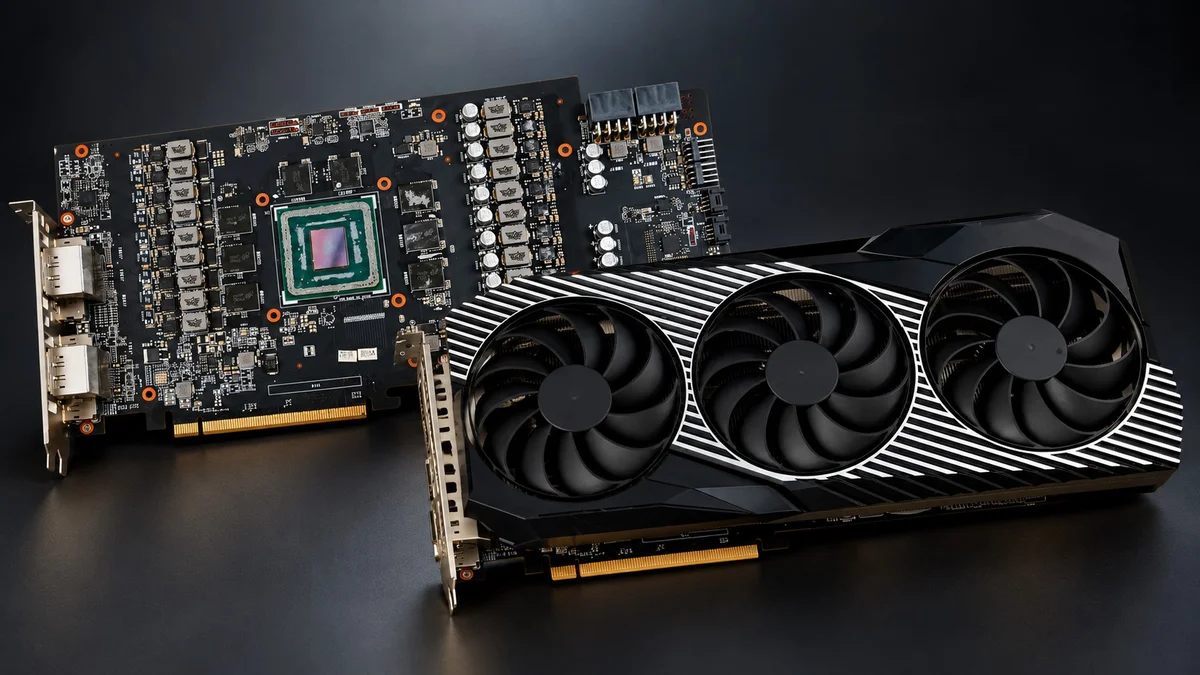
Seven years after AMD introduced its first-generation RDNA architecture in the summer of 2019, a rare piece of cancelled graphics card engineering has finally been disassembled on camera. Showcased in a teardown video by hardware workshop Orange Cat Hardware Lab on Bilibili and highlighted by hardware sleuth @unikoshardware, a fully functional prototype of the unreleased ASUS ROG Matrix Radeon RX 5700 XT has surfaced online. Built as an extreme halo model, the card was engineered to push AMD's Navi 10 silicon far beyond the thermal and electrical boundaries of standard retail models.
An Unlocked 280W VBIOS Targeting 2,100 MHz Compiled in July 2020
The physical teardown of the prototype was quickly backed up by the appearance of its internal firmware in the TechPowerUp VGA BIOS Collection (file 283832.rom, version 017.001.000.068.000000). The BIOS dump confirms that ASUS assigned this engineering sample a unique hardware identifier (Subsystem ID 1043 1043 paired with Device ID 1002 731F), setting it apart from retail ROG Strix and TUF Gaming boards.
While the retail ROG Strix Radeon RX 5700 XT topped out at a 2,010 MHz boost clock in OC mode, GPU-Z readings from the Bilibili unit show a 1,990 MHz base clock and a 2,035 MHz boost clock, while the uploaded VBIOS table pushes the rated Boost Clock all the way to 2,100 MHz (with an adjustment range reaching 2,150 MHz on the core and 1,900 MHz on the 8GB GDDR6 memory). To sustain those frequencies on TSMC's 7nm node, ASUS configured the default Total Power Limit at a massive 280W, the highest of any RX 5700 XT ever built, complete with a +50% power adjustment slider allowing theoretical peaks up to 420W and a maximum current draw of 250A on the GPU core.
Custom 18-Phase VRM PCB and Redesigned 7-Heatpipe Cooler
Delivering that level of power required a ground-up redesign of the printed circuit board. Whereas the retail ROG Strix model relied on an 11+3 phase layout, the black custom PCB of the ROG Matrix RX 5700 XT features two symmetrical vertical columns of nine Super Alloy Power II chokes flanking the Navi 10 die, totaling 18 main power phases supported by four auxiliary inductors. That level of electrical headroom mirrors the philosophy behind overbuilt power delivery layouts like the 16+2+2 phase VRM on Gigabyte's B850 AORUS ELITE-P motherboard, built to eliminate voltage droop under extreme loads.
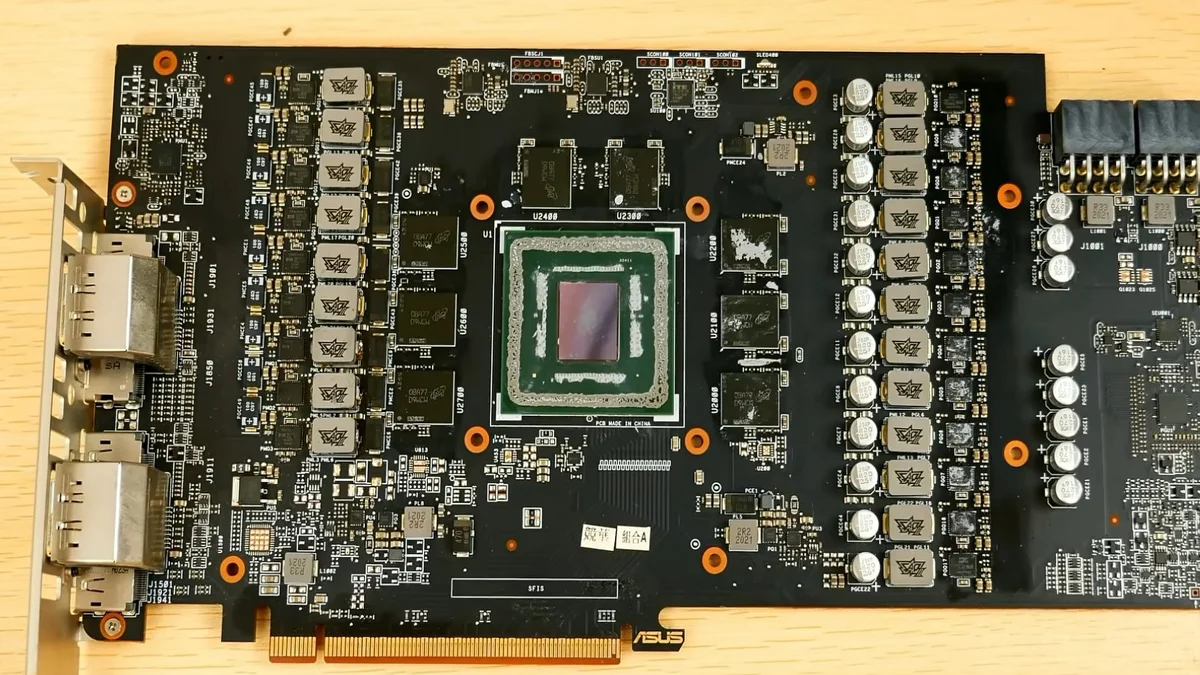
Fed by dual 8-pin PCIe power connectors, the right edge of the board retains dual 4-pin FanConnect II headers to tie chassis fans directly to GPU temperatures, alongside voltage monitoring points along the top edge. Notably, the Navi 10 GPU package omits the surrounding metal reinforcement frame found on the retail Strix board to maximize direct contact pressure with the heatsink base.
Beneath its custom black shroud accented with white and silver diagonal stripes and three axial fans, the heatsink upgrades the Strix's six-pipe array to seven nickel-plated copper heatpipes. More importantly, ASUS replaced the separate mid-plate design with a massive, unified MaxContact nickel-plated copper baseplate that makes direct contact with both the GPU die and all eight surrounding Micron GDDR6 memory modules (marked D9WCW) via dedicated thermal pads.
Technical Specifications: ROG Matrix Prototype vs. Retail ROG Strix RX 5700 XT
| Specification | ASUS ROG Matrix RX 5700 XT (Cancelled Prototype) | ASUS ROG Strix RX 5700 XT OC (Retail Version) |
|---|---|---|
| GPU Architecture | AMD Navi 10 XT (RDNA 1, TSMC 7nm) | AMD Navi 10 XT (RDNA 1, TSMC 7nm) |
| VBIOS Version / Device ID | 017.001.000.068 (1002 731F / Sub ID 1043 1043) | 017.001.000.042 (1002 731F / Sub ID 1043 04E2) |
| GPU Clocks (Base / Boost) | 1,990 MHz / Up to 2,100 MHz (VBIOS target) | 1,770 MHz / Up to 2,010 MHz (OC Mode) |
| Video Memory | 8GB Micron GDDR6 (14 Gbps / 1,750 MHz, 256-bit) | 8GB GDDR6 (14 Gbps / 1,750 MHz, 256-bit) |
| VRM Power Delivery | 18 main power phases (dual 9-choke columns) | 11+3 power phases (14 total) |
| Cooling Solution | Triple-fan, 7 heatpipes, unified copper GPU + VRAM base | Triple-fan, 6 heatpipes, GPU-only copper cold plate |
| Board Power (TDP) | 280W default (adjustable up to +50% / 420W) | 225W default |
| Power & Display Outputs | 2x 8-pin PCIe / 3x DisplayPort 1.4, 1x HDMI 2.0b | 2x 8-pin PCIe / 3x DisplayPort 1.4, 1x HDMI 2.0b |
Why ASUS Shelved the Project in Summer 2020
The factory stickers attached underneath the heatsink cold plate (bearing manufacturing batch dates of April 11, May 11, and May 19, 2020) alongside the VBIOS compilation timestamp (July 21, 2020 at 03:12) solve the mystery of why this card never reached store shelves. Engineered in spring 2020, the Matrix cooler directly addressed the mounting pressure controversy that had plagued early production runs of the retail ROG Strix RX 5700 XT earlier that year.
By late July 2020, however, the release calendar had already run out of road. With AMD preparing to unveil its next-generation RDNA 2 architecture (Radeon RX 6800 and RX 6900 XT) just three months later, mass-producing a heavily binned RX 5700 XT with 18 VRM phases and a seven-heatpipe cooler made little financial sense. Unlike the pricing distortions seen on specialized graphics cards like the 32GB Intel Arc Pro B70, the mid-range gaming GPU market of 2020 was fiercely price-sensitive: charging GeForce RTX 2070 Super or RTX 2080 Super money for a first-generation Navi 10 card on the eve of RDNA 2 would have made the ROG Matrix an impossible sell.
My Test Bench: The Forgotten Swan Song of Navi 10
Examining the internals of this ROG Matrix Radeon RX 5700 XT seven years later is a genuine treat. It is easy to forget how turbulent the first-generation RDNA era was for board partners. In early 2020, ASUS took heavy criticism from PC builders over loose cooler mounting screws on the original ROG Strix RX 5700 XT. Looking at the massive unified copper cold plate on this Matrix prototype, which finally pulls heat directly from the Micron GDDR6 modules while adding a seventh heatpipe, I see a direct statement of pride from Taipei's thermal engineers.
Pushing a 251 mm² mid-range die to 2,100 MHz out of the box with a 280W power target and 18 VRM phases was pure hardware excess. From a business standpoint, pulling the plug in July 2020 right before the Radeon RX 6000 series landed was the only logical call. On a test bench, though, this cancelled Matrix stands as the ultimate proof of what the Navi 10 silicon could actually achieve when paired with uncompromising power delivery and heavy copper.

PC hardware enthusiast and competitive gamer, Arthur 'Heimdall' splits his time between France and the UK working in enterprise B2B software solutions. A business school graduate passionate about component benchmarking, he has been building, modding, and tuning PCs since childhood, optimizing every thermal degree and millisecond of display latency. An avid gamer across Assassin's Creed and sandbox titles, he forged his alliance with Grimtag and Chaya during late-night World of Warcraft raids before joining Pro-Gamer.