From 16 GB Back to 8 GB of RAM: Why ASUS Expects Entry-Level PCs to Downgrade Memory With Microsoft's Help
Just when PC gamers and everyday users finally considered 16 GB of system memory the non-negotiable baseline for a modern computer, the hardware industry is preparing to shift into reverse. Speaking during the company's third-quarter financial results briefing, published via the official ASUS Investor Relations portal, ASUS Co-CEO S.Y. Hsu warned that entry-level and mid-range PCs may soon scale back to 8 GB of RAM to offset surging component manufacturing costs.
A DRAM Cost Surge That Budget PC Buyers Refuse to Absorb
The financial metrics presented by Co-CEOs S.Y. Hsu and Samson Hu alongside CFO Nick Wu paint a picture of a sharply divided PC market. On one hand, ASUS delivered an all-time quarterly revenue record of NT$258.8 billion (up 36% year-over-year), expanding its global PC market share to 8.7% according to IDC data. On the other hand, relentless price inflation across DDR5, LPDDR5X DRAM, and NAND flash chips is squeezing margins on mainstream and budget configurations.
To protect its production lines against the supply chain bottlenecks that recently prompted TeamGroup CEO Gerry Chen's warning over the global DDR5 RAM shortage, ASUS aggressively stockpiled components, pushing its inventory duration to 196 days, with raw materials accounting for roughly 60% of that stock. After enacting sequential retail price increases of roughly 5% across the third and fourth quarters, ASUS leadership noted that budget-conscious consumers are now delaying upgrades rather than absorbing additional price hikes at checkout.
Confronted with this retail price ceiling, S.Y. Hsu candidly outlined the hardware compromise taking shape for upcoming lineups: "It used to be that a mid to low tier machine will still ship with 16 GB of memory, but now they may move to 8 GB due to the memory cost increases." Rather than pushing entry-level laptops past a psychological price barrier in stores, OEMs are preparing to halve the baseline memory allocation on affordable systems.
Microsoft's 180-Degree Pivot to Make 8 GB Viable on Windows 11
Rolling back hardware specifications created an immediate software roadblock: the heavy memory footprint of Windows 11. Ever since introducing the Copilot+ PC standard, Microsoft had enforced 16 GB of RAM as a strict floor to run local AI models. Back in May 2026, Microsoft's official documentation even briefly recommended a minimum of 32 GB of RAM for an optimal user experience before quietly scrubbing that reference as DRAM spot prices spiraled upward.
According to S.Y. Hsu, ASUS did not make this hardware pivot unilaterally, working directly with Redmond's engineering teams to prevent severe performance degradation: "We have worked with Microsoft on this one. The old 16 GB spec was really about ensuring user experience. On the new operating system, Microsoft has made adjustments such that even 8 GB is able to yield an acceptable experience."
Behind the scenes, Microsoft's effort to trim Windows 11's memory overhead has already resulted in scaling back or removing several always-on Copilot integrations from built-in system utilities, including File Explorer. While major memory manufacturers remain locked in the federal DRAM price-fixing lawsuit targeting Samsung, SK Hynix, and Micron, Microsoft has been forced to tighten memory compression and background process management so that upcoming 2027 budget laptops do not choke the moment users open a multi-tab web browser.
My Test Bench
On paper, having Microsoft strip away background bloatware to reduce Windows 11's baseline RAM consumption is a welcome win for every PC user. In practice, however, calling an 8 GB configuration "acceptable" heading into 2027 is a pure crisis compromise, and I strongly advise caution if you plan to shop for a budget or mid-range laptop over the coming months.
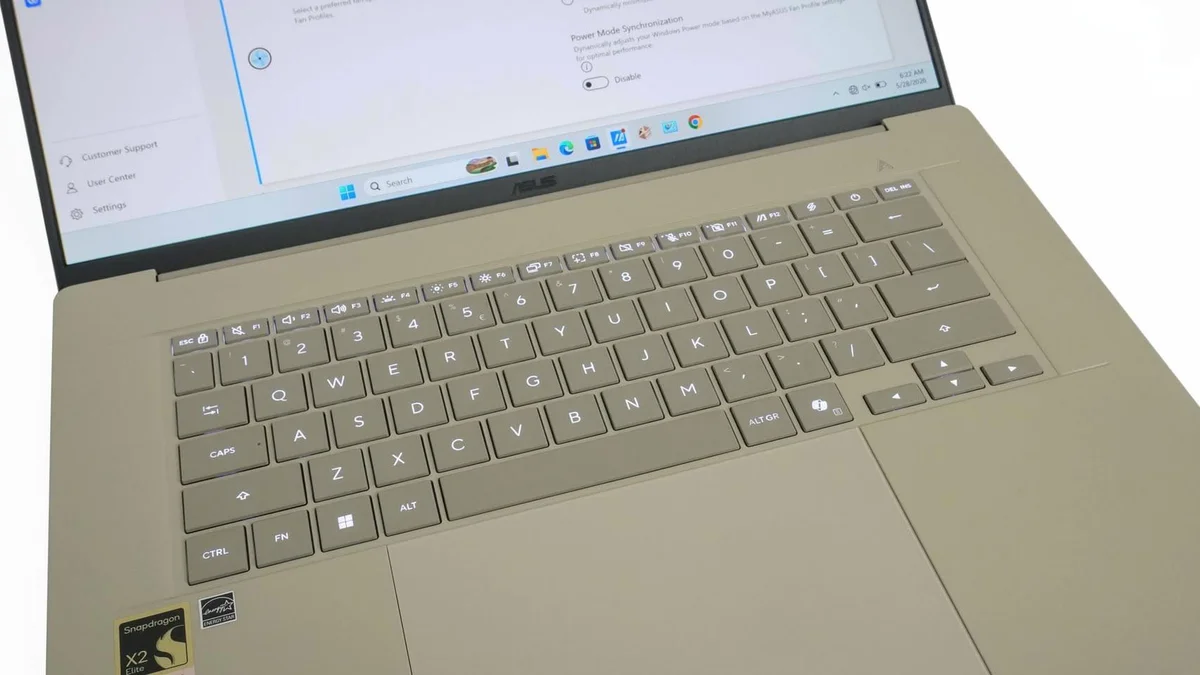
The real hardware trap lies in how modern mainstream laptops are built. A growing share of thin-and-light notebooks rely on LPDDR5X memory soldered directly onto the motherboard, leaving zero SO-DIMM slots to upgrade your RAM later. Even worse, on systems without a discrete graphics card, the integrated GPU (iGPU) carves its video memory (VRAM) directly out of that same 8 GB system pool. Once the iGPU claims 1 GB to 2 GB for display rendering and Windows 11 consumes its usual 3.5 GB, very little headroom remains for active applications, forcing the OS to constantly hammer the NVMe SSD pagefile. If you are shopping for an affordable machine right now, prioritize existing 16 GB inventory while prices hold, or verify that the chassis includes user-accessible SO-DIMM slots before buying.

PC hardware enthusiast and competitive gamer, Arthur 'Heimdall' splits his time between France and the UK working in enterprise B2B software solutions. A business school graduate passionate about component benchmarking, he has been building, modding, and tuning PCs since childhood, optimizing every thermal degree and millisecond of display latency. An avid gamer across Assassin's Creed and sandbox titles, he forged his alliance with Grimtag and Chaya during late-night World of Warcraft raids before joining Pro-Gamer.