VCT Pacific 2027 Restructuring: 8 Partner Teams Without DRX and Up to $400,000 Guaranteed for Valorant Open Qualifiers
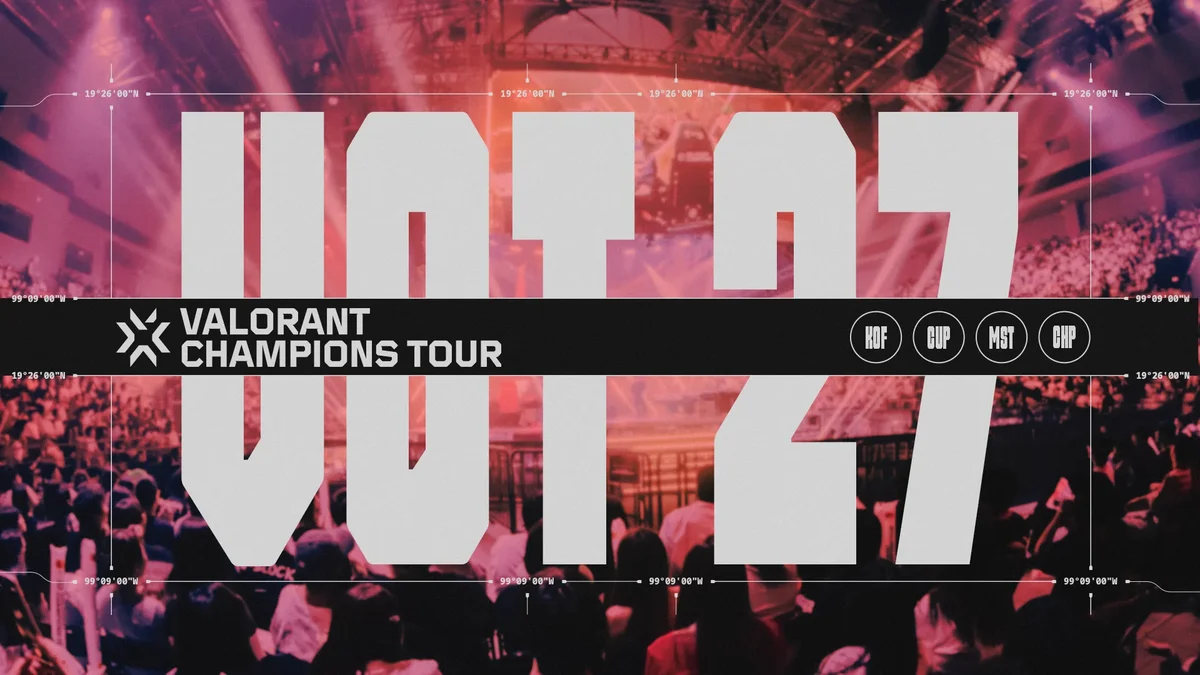
The VALORANT Champions Tour (VCT) Pacific is undergoing a complete structural transformation for the 2027 season. On October 28, 2026, Riot Games and VCT Pacific Head Jake Sin officially unveiled the tournament roadmap, regional slot allocations, and financial support framework for the Asia-Pacific circuit. With the initial four-year partnership agreements from 2023 reaching their conclusion, VCT Pacific is retiring its static closed-league format in favor of a tournament-driven, semi-open ecosystem featuring eight partnered organizations and fixed qualification payouts ranging from $100,000 to $400,000 USD for non-partnered teams.
Eight Partner Teams for 2027 to 2028: Crazy Raccoon and GAM Esports Join as DRX Misses Out
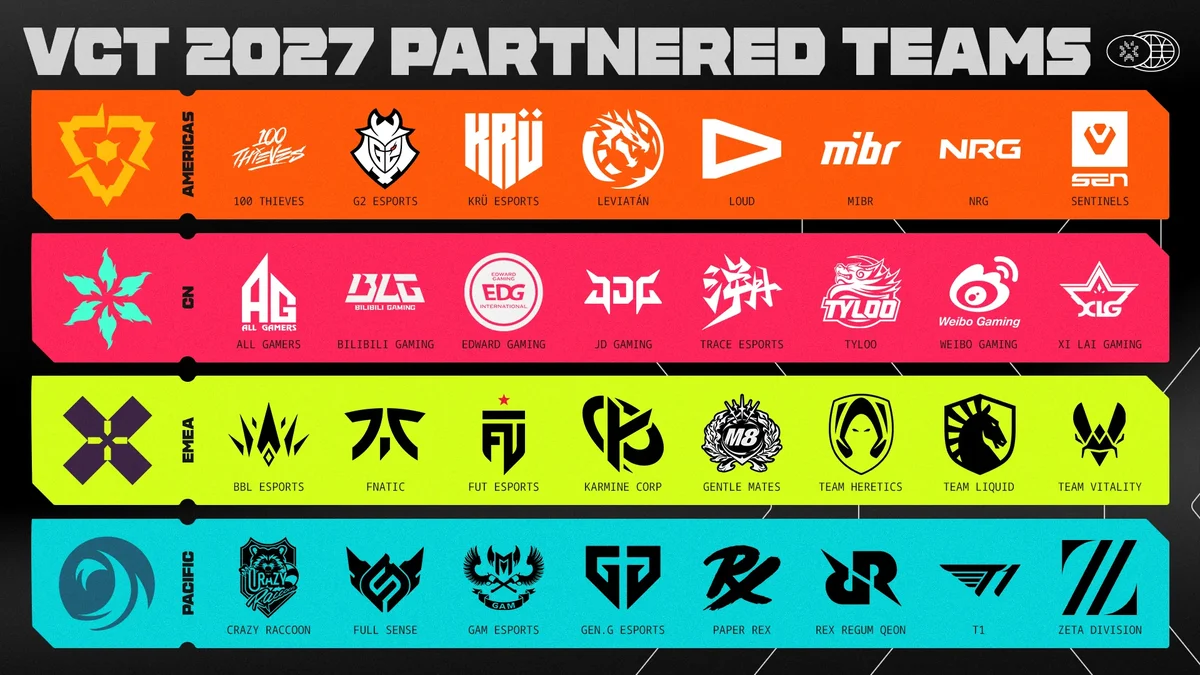
As part of the global VCT 2027 Global Tour overhaul, which features more than 50 tournaments across 15 cities worldwide, Riot Games selected 32 partner organizations globally (eight per territory across Americas, EMEA, Pacific, and China) after reviewing over 100 applications. These new partnership agreements operate on a two-year renewable cycle covering at least the 2027 and 2028 seasons.
In the Pacific region, trimming the partner lineup down to eight organizations has reshaped the competitive hierarchy. South Korean powerhouses T1 and Gen.G (GEN) retain their partner status alongside Paper Rex (PRX), ZETA DIVISION (ZETA), Rex Regum Qeon (RRQ), and Thailand's FULL SENSE (FS), while Japanese fan-favorite Crazy Raccoon (CR) and Vietnamese giant GAM Esports (GAM) officially enter the program. Conversely, legacy organizations such as DRX, Team Secret, and Global Esports are absent from the eight partnered slots and will now have to battle through open qualifiers to reach major stages. This competitive shake-up arrives right as players adapt to the meta shifts introduced in Valorant Patch 13.09 featuring new Duelist Hush and Clove nerfs.
Check Valorant deals on Allkeyshop→
Up to $400,000 in Guaranteed Payouts for Non-Partner Teams
To ensure sustainable operations for independent rosters competing outside the partnership program, Riot Games has established fixed financial support tied directly to tournament qualification. While the eight partnered organizations continue to receive annual stipends and revenue sharing from in-game digital goods (including the 2027 Season Bundle where the Ghost replaces the Classic), non-partnered teams that earn their way into major VCT events will receive guaranteed payouts:
- $100,000 USD (approximately 130 million KRW) per event for qualifying for VCT Pacific Kickoff or either of the regional Cups.
- $200,000 USD (approximately 260 million KRW) for qualifying for an international Masters tournament (Seoul or Valencia).
- $400,000 USD (approximately 520 million KRW) for qualifying for VALORANT Champions in Austin.
This performance-based funding model reinforces Riot Games' broader competitive and community push across its flagship titles, arriving alongside major in-game events such as the free Rustiest Blitzcrank skin challenge in League of Legends.
Bangkok, Manila, and Tokyo: Full 2027 Schedule and the End of Partner Immunity After Kickoff
The most consequential rule change for 2027 eliminates year-round safety nets for partnered organizations. Registration for regional Open Qualifiers opens soon ahead of a November 2026 kickoff, featuring multi-round open brackets, play-ins, and playoffs where teams eliminated in early qualifiers can re-enter subsequent waves.
The 2027 VCT Pacific calendar revolves around three flagship regional LAN events:
- VCT Pacific Kickoff in Bangkok (January 14 to February 7, 2027): Features 12 teams in total. The 8 partner teams receive their only direct seeded invitation of the year here, joined by 4 teams advancing from regional Open Qualifiers (1 from South Korea, 1 from Japan, 1 from Southeast Asia, and 1 from the Kickoff Last Chance Qualifier). Top finishers advance to Masters Seoul (February 20 to March 3, 2027).
- VCT Pacific Cup 1 in Manila (April 29 to May 23, 2027): Serves as the qualification stage for Masters Valencia (June 5 to June 20, 2027). From this point forward, partner status no longer grants automatic entry. Every team, including all eight partners, must compete through regional playoffs to claim one of the 12 Cup slots.
- VCT Pacific Cup 2 in Tokyo (August 5 to August 29, 2027): Follows the same 12-team open qualification structure to determine Pacific representatives for VALORANT Champions Austin (September 16 to October 10, 2027 in Texas), which will also host the Game Changers Championship finale.
For both the Manila and Tokyo Cups, the 12 participating slots are distributed across strict sub-regional quotas: 3 slots for South Korea, 3 slots for Japan, 2 slots for Southeast Asia (SEA), 1 slot for Thailand, 1 slot for Indonesia, 1 slot for Vietnam, and 1 slot via the Last Chance Qualifier (LCQ), where top runners-up from the Thailand, Indonesia, Vietnam, and wider regional playoffs can fight for the final berth. Because South Korea (T1, Gen.G) and Japan (ZETA DIVISION, Crazy Raccoon) each hold only two partnered teams against three allocated Cup spots, non-partnered teams are mathematically guaranteed representation in the Cups even if every single partner organization qualifies.
My Take
This is the exact competitive wake-up call the Valorant esports ecosystem needed after four years of closed franchise leagues that occasionally rewarded complacency. Seeing a storied powerhouse like DRX left off the eight-team partner list is an undeniable shockwave for Korean fans, but Riot Games' new tournament framework fixes the biggest flaw of the original partnership era. By stripping away automatic seeding after the Bangkok Kickoff and forcing T1, Gen.G, and Paper Rex to grind through regional playoffs just to reach the Manila and Tokyo Cups, no organization can coast on brand value alone. Pair that meritocracy with guaranteed checks ranging from $100,000 to $400,000 for Open qualifier rosters that break through to major LANs, and Tier 2 organizations across Asia finally have a genuine financial lifeline starting this November.

SEO consultant for over 20 years and digital entrepreneur, Charles 'Grimtag' Ronchain is the founder of Pro-Gamer.gg, Retrocharting.com, and Gamescharting.com. A competitive gamer, streamer, and retro game collector, he has worked in the video game industry for over 15 years, notably as a consultant for leading game price comparison platforms. Passionate about real-time performance data and gaming technology, he analyzes competitive esports, gaming hardware benchmarks, and creator workflows on Pro-Gamer.gg with an authentic player perspective.