Fried Chicken, Floppy Disks, and Raytraced Audio: How Housemarque Built the Sound of Saros on PS5
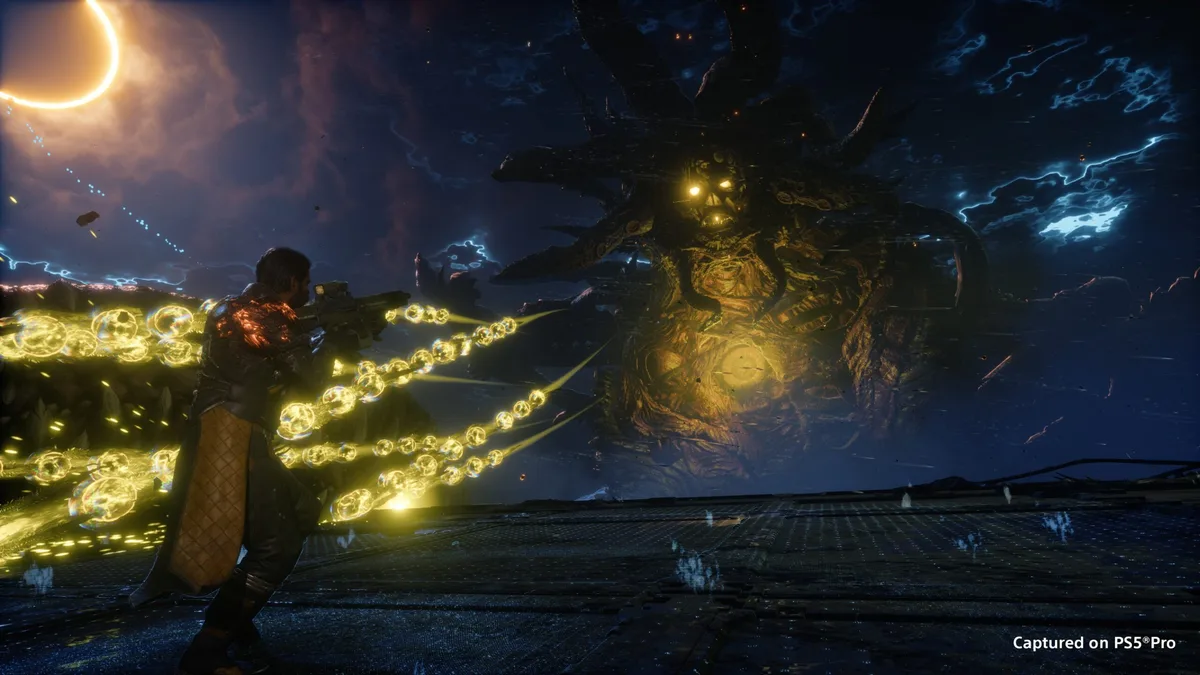
How do you give a voice to the Yellow King, make an alien ocean roar, and let players dodge hundreds of incoming projectiles blind without cluttering the HUD? In a detailed technical post on the official PlayStation Blog, Loïc Couthier, Senior Sound Design Supervisor at PlayStation Studios, detailed the audio engineering behind Saros on PS5. Working alongside Housemarque, the sound team built the sonic identity of the hostile planet Carcosa around a clear directive set on day one by the Finnish studio: refinement, not reinvention, building directly on the foundation of Returnal.
Fried Chicken, Floppy Disks, and a Didgeridoo for the Yellow King
To shape the oppressive world navigated by protagonist Arjun Devraj (performed by Rahul Kohli) and the Echelon IV crew, the audio team searched early on for a sonic anchor tied to the Eclipse. The breakthrough came during a studio recording session with a didgeridoo. Heavily processed and manipulated, the instrument took on the resonance of a deep, otherworldly voice, becoming the core foundation for the Yellow King vocalizations and the wider sonic language of the Corruption spreading across Carcosa.
That philosophy of transforming grounded organic recordings into alien textures runs through the entire game. The very first enemy players fight, a hostile mechanical drone, was constructed partly from processed floppy disk drive recordings. Even more unexpected is the ocean washing against the Yellow Shore, which was crafted by recording marinated chicken, frying chicken in a pan, and walnuts being moved around a bowl. Those organic foley layers merge directly into composer Sam Slater's score of distorted voices, raw synthesizers, guitars, and dark experimental textures, a sonic achievement that already helped Saros sweep three trophies at the 2026 Music + Sound Awards.
Mongolian Throat Singing, Human Screams, and Bullet-Hell Audio Priority
In a third-person Housemarque action game where hundreds of projectiles fill the screen at once, audio is far more than set dressing: it is a survival radar. So players can instantly recognize an incoming attack fast enough to dodge or absorb it with Arjun's shield, the team split Carcosa's threats into three distinct sonic families: organic, mechanical, and cosmic.
The cosmic enemies, tied directly to the divine influence of the Yellow King and the hierarchy of Carcosa's five Overlord bosses, needed to sound both menacing and hauntingly beautiful. Their low-end foundation relies on Mongolian throat singing, while higher vocal layers weave together human singers and the traditional Japanese shakuhachi flute. Incoming fire receives the same precise distinction:
- Blue projectiles (Normal): crisp electric and liquid textures for standard volleys.
- Yellow projectiles (Corrupted): built from the deep didgeridoo-based Corruption palette.
- Red projectiles (Nova): sharp tonal material sculpted from heavily processed human screams.
To prevent bullet-hell chaos from turning into muddy noise, a multi-layered prioritization system ranks every enemy in real time based on threat level, distance, screen visibility, and combat state. Projectiles are dynamically grouped by type and proximity so the mix stays dense while keeping lethal cues crystal clear.

Raytraced PS Acoustics, Abbey Road Mastering, and DualSense Ammo Cues
Under the hood on PS5, Saros pushes Tempest 3D AudioTech and full vertical Dolby Atmos mixing further by showcasing PS Acoustics. Built by PlayStation's Audio Tools and Tech team, this system uses real-time raytracing to calculate reverberation, obstruction, occlusion, and early wall reflections based on the absorption properties of surrounding surfaces. In areas like The Passage, Arjun's voice, Echelon IV radio chatter, and enemy calls physically bounce off the geometry of the room. To cap off production, the final audio mix was completed at the legendary Abbey Road Studios in London alongside Housemarque's Creative Director.
The DualSense wireless controller was engineered as half of that sensory loop from day one. On bullet-based weapons, as ammunition runs low, the haptic vibration frequency shifts in your hands, warning you that your magazine is nearly dry without ever forcing you to glance at a corner UI counter. Developed in tandem with the PlayStation Accessibility Team, the audio menu also includes a Dialogue Priority enhancer, a toggle to reduce high-pitched ringing, independent volume sliders for combat and exploration music, built-in Bass and Treble EQ controls, and custom Dynamic Range calibration.
My Perspective
Anyone who spent dozens of hours grinding through Returnal with a headset strapped on knows Housemarque treats PS5 audio and haptics as core gameplay mechanics rather than back-of-the-box bullet points. On Atropos, you survived late-game rooms because you heard a turret charging behind your left shoulder or felt the alt-fire cooldown click directly through the DualSense grip. Shifting the controller's haptic frequency as your magazine runs dry and distinguishing blue, yellow, and red projectiles through didgeridoo bass or processed screams is a massive quality-of-life leap for high-speed combat. When two hundred glowing orbs are flooding Carcosa's ruins, your eyes hit their cognitive limit fast; offloading ammo tracking to your palms and off-screen threat detection to raytraced 3D audio is what makes Housemarque's combat feel unmatched in your hands.

Based on the outskirts of New York City, Chaya 'Chayane' spent five years studying software engineering in Montreal before returning to her home state. A Full-Stack developer and Deep Learning AI architecture researcher, she explores neural networks and algorithmic optimization while engineering data pipelines for Retrocharting and Gamescharting alongside Grimtag. A gamer for over 20 years and an avid collector of Nintendo history and The Legend of Zelda, she explored World of Warcraft's Azeroth before bringing her deep technical background to video game analysis.