Maestro on Nintendo Switch 1 and 2: How Joy-Con Motion Conducting Holds Up Across Beethoven, Star Wars, and Attack on Titan
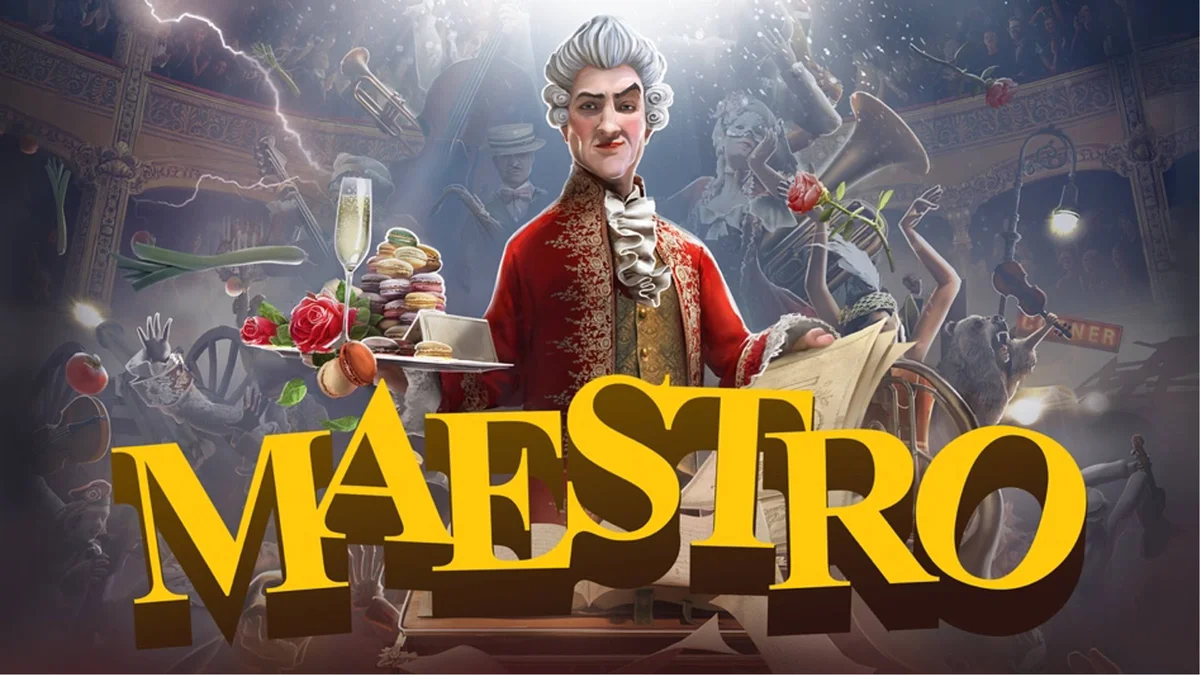
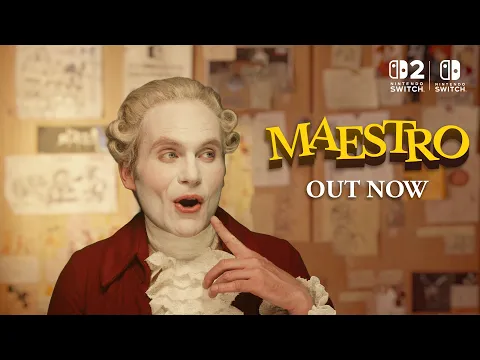
After claiming 2024 VR Game of the Year honors on Meta Quest, Maestro has stepped out from behind the isolation of virtual reality headsets and into the living room on Nintendo Switch and Nintendo Switch 2. Developed by Parisian studio Double Jack in collaboration with Suncrest Games and published physically by Microids, this orchestral rhythm simulation trades optical hand tracking for dual Joy-Con gyroscopic motion controls. Bringing the podium to a flat screen turns every symphonic arrangement into a frantic test of physical coordination.
One Joy-Con in Each Hand: Rebuilding the Podium for Flat Screens
Whereas the original virtual reality release relied on headset cameras to track bare fingers in 3D space, the Nintendo console adaptation reimagines orchestral conducting around a pair of detached controllers. Standing at the podium of a grand Parisian opera house in front of a full symphony orchestra, players split their responsibilities between both hands:
- The Right Joy-Con acts as the baton: players wave it steadily to keep the ensemble on tempo and snap their wrist sharply to hit accented beats.
- The Left Joy-Con manages cues and dynamics: pointing directly toward the strings, brass, or percussion cues each section into the arrangement, while raising or lowering a flat palm controls volume swells (crescendos, decrescendos, forte, and piano).
Because rapid baton swings can occasionally push gyroscopic sensors out of alignment during fast passages, Double Jack built a single-button instant calibration feature directly into the control scheme. A quick press re-centers tracking on the fly without breaking rhythm, while a completely reworked dynamic camera system and on-screen hand animations keep visual prompts clear in both docked TV play and tabletop mode.
From Beethoven to Attack on Titan: Over 35 Tracks in the Repertoire
Designed to be approachable without prior sheet-music knowledge, the gameplay pairs traditional rhythm-game highway prompts with four difficulty tiers, global leaderboards, and unlockable cosmetic gloves and batons. On higher difficulties, maintaining a steady time signature with the right hand while simultaneously cueing brass sections and shaping volume dynamics with the left demands genuine ambidextrous focus.
The base tracklist spans more than 35 pieces blending classical masterworks with blockbuster film and television scores. Alongside symphonic staples by Beethoven, Mozart, Brahms, Vivaldi, and Wagner (including a relentless rendition of Ride of the Valkyries), conductors can tackle iconic themes from Star Wars (Duel of the Fates), The Lord of the Rings, Harry Potter, and Game of Thrones.
Both the Nintendo Switch and Nintendo Switch 2 editions also bundle "Ashes on the Fire" from Attack on Titan directly into the base game. Available digitally via the Nintendo eShop and at retail for $39.99, the port joins the growing lineup of new physical and digital Nintendo Switch 2 releases, supported by optional expansion packs such as the Pirates of the Caribbean track collection.
My Perspective
Porting a game built from the ground up for optical finger tracking in VR onto a standard television screen could have easily devolved into imprecise motion-control waggle. Instead, splitting the beat-keeping baton in the right hand from section cues and volume swells in the left gives the Joy-Con setup a surprisingly tactile rhythm. Once you step up to frantic arrangements like Ashes on the Fire or Ride of the Valkyries on higher difficulties, your living room quickly turns into glorious symphonic chaos where every missed cue echoes across the pit. Trading the solitary nature of a VR headset for a pass-the-controller living room stage makes the Switch version a natural fit for the platform.
Based on the outskirts of New York City, Chaya 'Chayane' spent five years studying software engineering in Montreal before returning to her home state. A Full-Stack developer and Deep Learning AI architecture researcher, she explores neural networks and algorithmic optimization while engineering data pipelines for Retrocharting and Gamescharting alongside Grimtag. A gamer for over 20 years and an avid collector of Nintendo history and The Legend of Zelda, she explored World of Warcraft's Azeroth before bringing her deep technical background to video game analysis.